The 108-Bead Mala (Phreng-ba)
Why 108 Beads—and Why Practitioners Flip Back at the Guru Bead
Called phreng-ba (“garland”) in Tibetan, a 108-bead mala serves as a tactile anchor for breath and mantra recitation—keeping body, speech, and wandering mind together.
Why 108? Both Philosophy and Practical Honesty
Classical commentaries explain 108 in two complementary ways. Symbolically, six sense faculties (eye, ear, nose, tongue, body, mind) multiplied by three feeling tones (pleasant, unpleasant, neutral), across two states (stained vs. purified) or three times (past, present, future) yield 108 modes of experience. Practically, Tibetan retreat masters add a wonderfully honest reason: human minds wander! Counting 108 beads as “100” leaves an 8-bead buffer for moments of distraction or mispronounced syllables.
Never Stepping Over the Guru Bead
Crowning the mala is a larger three-holed bead topped by a small conical stupa (representing Mount Meru, the Dharmakāya, and one’s teachers). When fingers finish the 108th bead and touch this Guru Bead, one pauses—waking up from mechanical autopilot—flips the mala around, and begins the next round in reverse rather than crossing over the stupa.
How It Is Practiced in Living Tradition
Held gently in the left hand across Tibetan traditions, drawing each bead inward toward oneself with the thumb.
Common Questions & Clarifications
Does a more expensive gemstone mala bring more merit?
Padmasambhava’s tantric instructions famously rank plain bodhi-seed beads highest of all because they suit every peaceful and active practice without inspiring material vanity.
Primary Sources & Further Reading
- Khenpo Konchog Gyaltsen, Jewel Ornament of Liberation glossary & ritual notes
Connected in the Mandala Graph
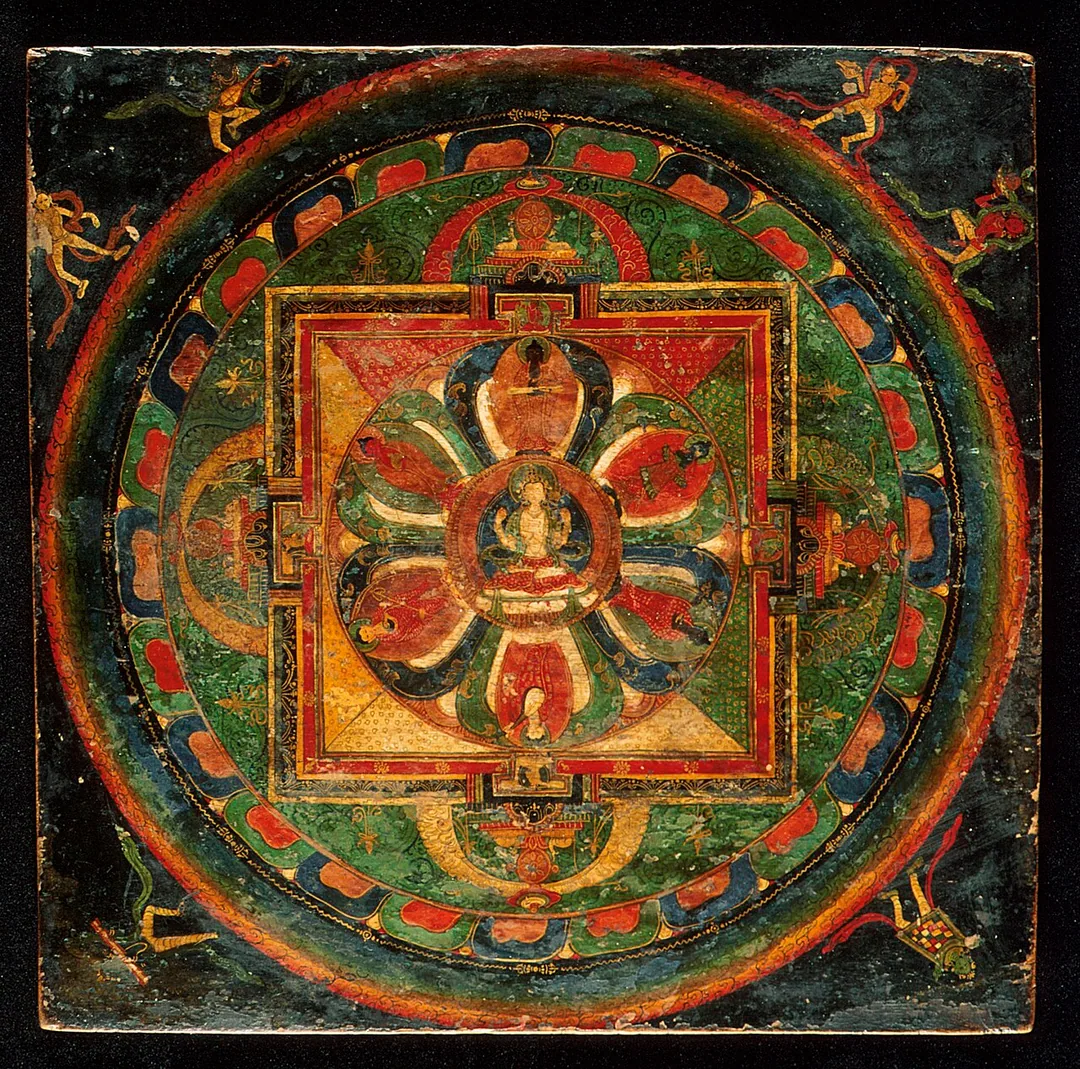
Oṃ Maṇi Padme Hūṃ (Six-Syllable Mantra)
Literally invoking the “Jewel in the Lotus,” these six syllables condense the entire Mahāyāna path: altruistic method (the wish-fulfilling jewel, maṇi) inseparable from wisdom realizing emptiness (the lotus, padma).
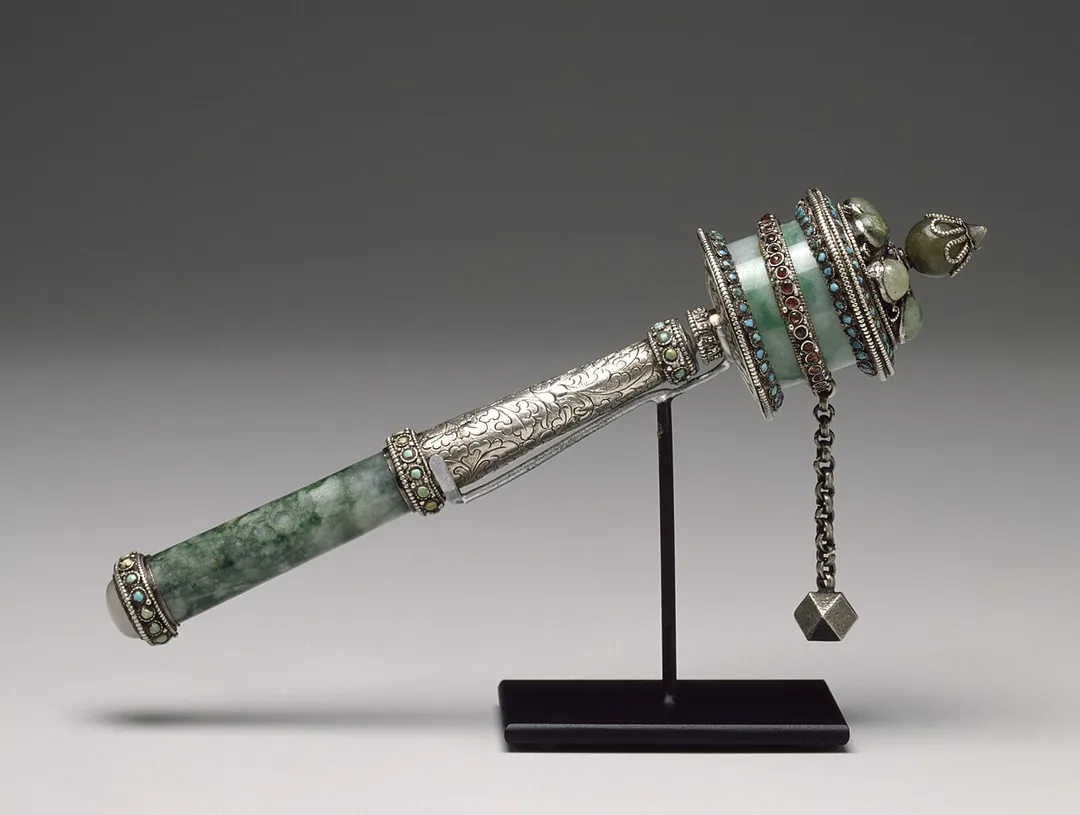
Tibetan Prayer Wheel (Mani Khorlo)
Far more than handheld brass cylinders, Tibetan prayer wheels harness mountain streams, high-pass wind, and rising butter-lamp heat so consecrated texts keep turning even while human bodies sleep.
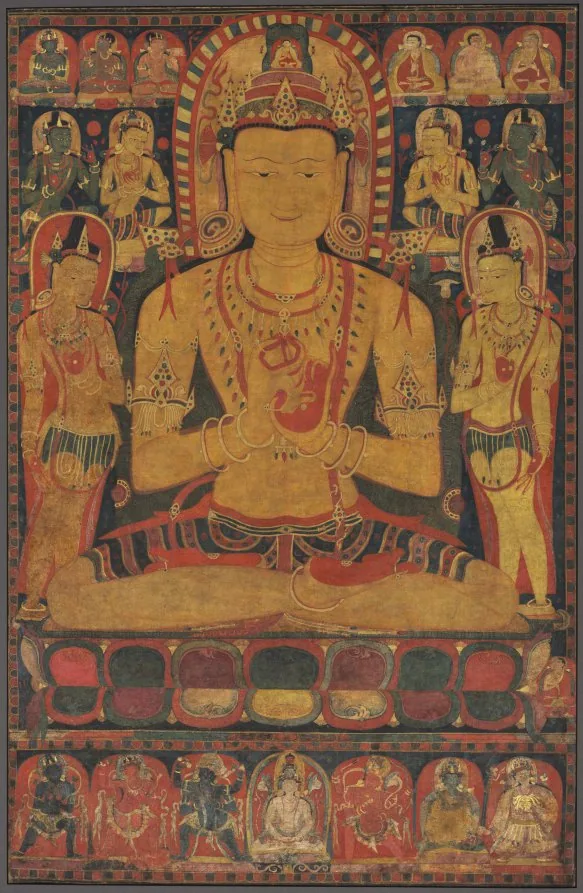
Vajrasattva Mantra & the Hundred Syllables
Whether recited in its full 100-syllable Sanskrit invocation or its six-syllable essence Oṃ Vajrasattva Hūṃ, this mantra asks awakening awareness to remain steady beside us while we clean the slate.