Dedication of Merit (Bsngo-ba · 回向)
Classic Tibetan Dedication Verses & How Private Worry Widens into Care
No Tibetan contemplation, sutra reading, or prayer-wheel turn ends abruptly; it concludes with bsngo-ba (“turning toward”)—deliberately widening a private wish so everyone walking the same hard road is included.
Psychological Alchemy: Why Widening a Wish Calms Anxiety Immediately
When someone sits up at 2 a.m. praying “Let MY test come back clean” or “Let MY application pass,” the mind remains contracted in solitary threat mode. Dedication performs a quiet shift in perspective: “May my mother recover—and may everyone waiting in a hospital hallway tonight also hear reassuring news.” At the exact moment attention widens from isolated fear to shared humanity, the nervous system softens.
Four Authentic Dedication Verses (Tibetan & Mahāyāna Classics)
You never need ornate bureaucratic formulas to dedicate a wish; sincerity in plain words is fully authentic. Alongside personal words, these classical four-line verses close almost every Tibetan liturgy:
文殊師利勇猛智,普賢慧行亦復然;我今迴向諸善根,隨彼一切常修學。
Just as courageous Mañjuśrī knows reality, and just as Samantabhadra acts—following them both, I dedicate all these roots of goodness.
From the Bhadracarīpraṇidhāna (King of Aspiration Prayers): the universal two-stanza seal recited at the close of almost every Tibetan session (Jampäl Shépa…).
此福已得一切智,摧伏一切過患敵;生老病死猶波濤,願度有海諸有情。
By this merit may all attain omniscience, overcoming every harmful fault; from the stormy waves of birth, aging, sickness, and death, may all beings cross the ocean of existence.
Traditional four-line Tibetan liturgical dedication (Sönam Diyi Thamdze Zikpa Nyid…).
乃至有虛空,以及眾生住;願吾住世間,盡除眾生苦。
For as long as space endures, and for as long as living beings remain, until then may I too abide to dispel the misery of the world.
Śāntideva, Bodhicaryāvatāra (Way of the Bodhisattva, 10.55)—revered by the 14th Dalai Lama as his daily personal aspiration.
願以此功德,普及於一切;我等與眾生,皆共成佛道。
May the goodness gathered here reach everywhere without exception; may we and all living beings together realize the awakened way.
From the Lotus Sūtra (Kumārajīva translation)—concise, egalitarian, and timeless across the Sinosphere.
How It Is Practiced in Living Tradition
Paired in lived practice with a concrete small pledge—making an unhurried phone call to parents, offering patience to a stranger, or sharing helpful guidance with those behind you.
Common Questions & Clarifications
If I share or dedicate merit to others, does my own family get less?
Classic sutras use the metaphor of lighting lamps: lighting a hundred candles from a single butter lamp never dims the first flame—the room only grows brighter.
Primary Sources & Further Reading
- Śāntideva (8th c.), Bodhicaryāvatāra (A Guide to the Bodhisattva Way of Life, Ch. 10)
Connected in the Mandala Graph
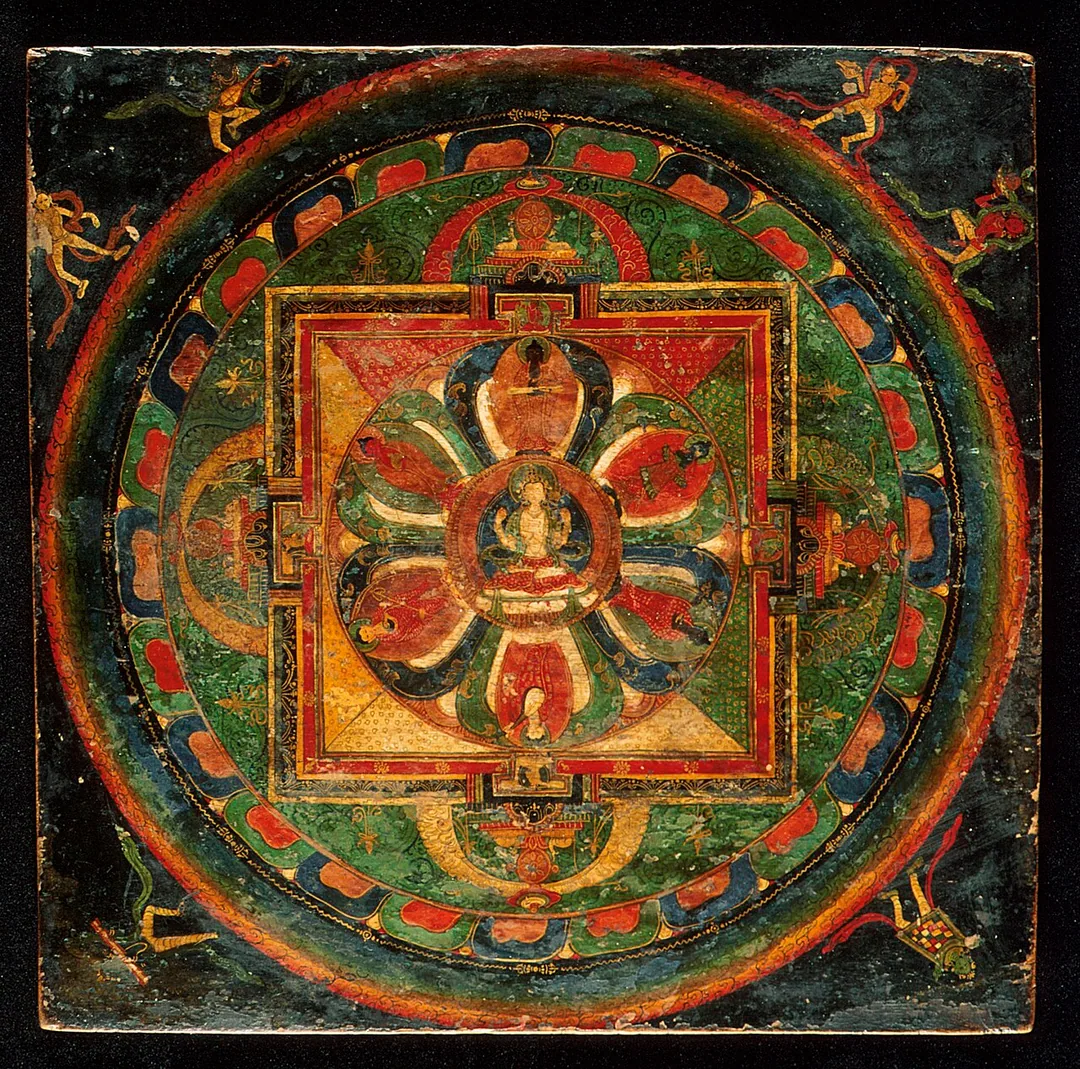
Oṃ Maṇi Padme Hūṃ (Six-Syllable Mantra)
Literally invoking the “Jewel in the Lotus,” these six syllables condense the entire Mahāyāna path: altruistic method (the wish-fulfilling jewel, maṇi) inseparable from wisdom realizing emptiness (the lotus, padma).
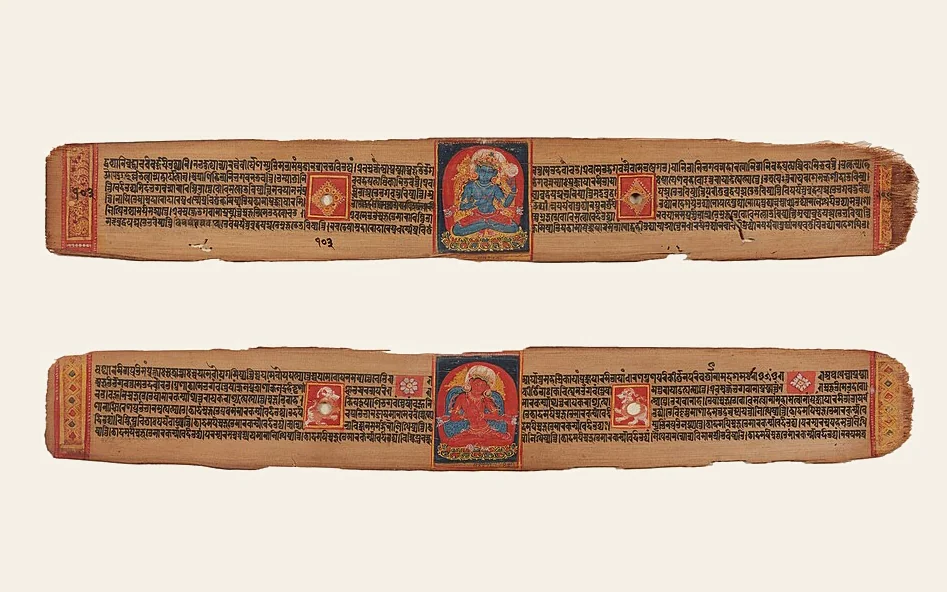
The Heart Sūtra (Sherab Nyingpo · 心经)
In 260 Chinese characters (and a slightly longer framed dialogue in the Tibetan Kangyur), Avalokiteśvara explains to Śāriputra why seeing emptiness—interdependent openness—dissolves fear.
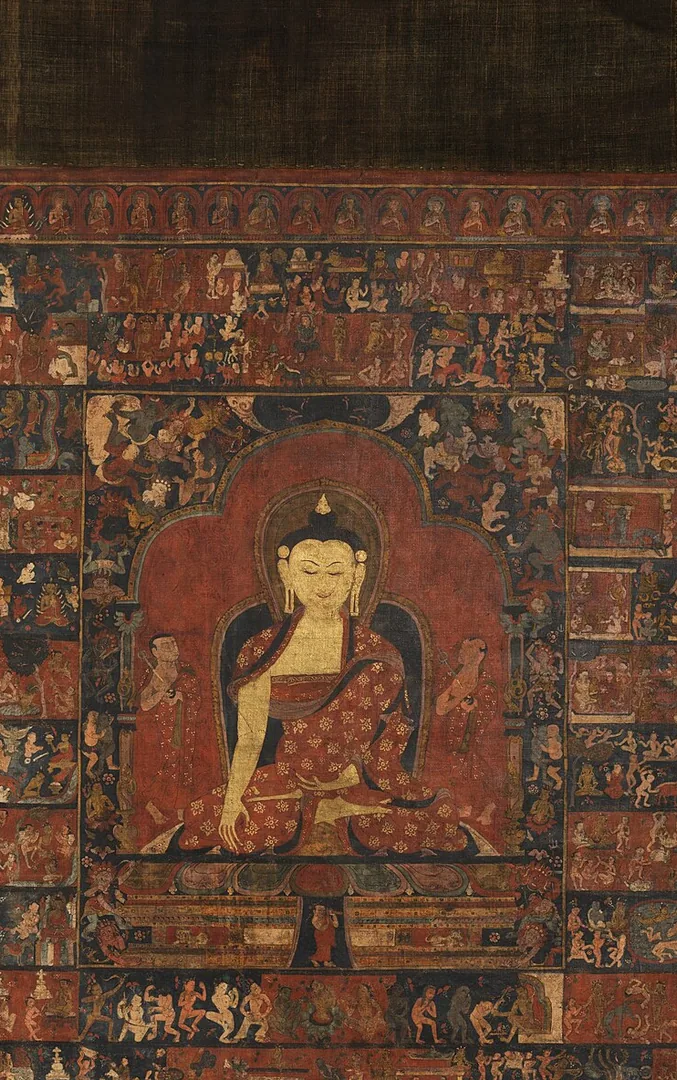
Karma & Interdependence: Why It Is Never Fatalism
In Sanskrit and Tibetan (las), karma literally means “action,” never “predestined fate.” While past choices shape today’s conditions, how one responds right now writes the next cause.
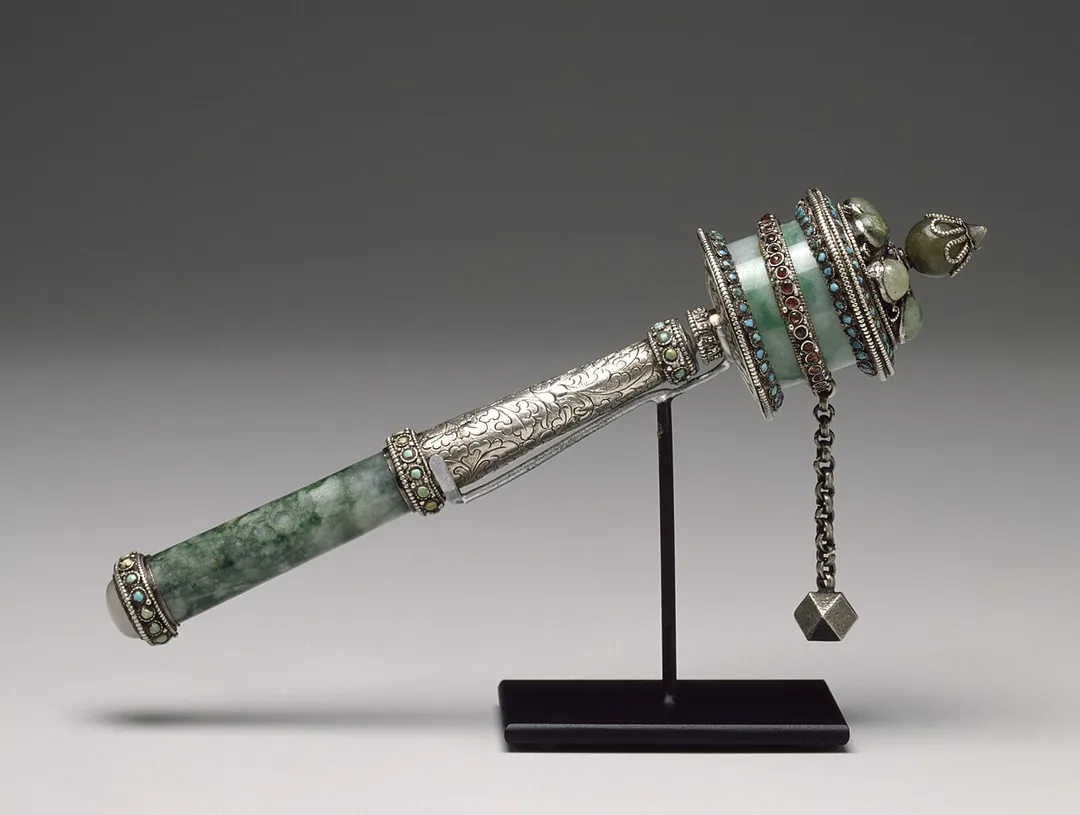
Tibetan Prayer Wheel (Mani Khorlo)
Far more than handheld brass cylinders, Tibetan prayer wheels harness mountain streams, high-pass wind, and rising butter-lamp heat so consecrated texts keep turning even while human bodies sleep.