Avalokiteśvara (Chenrezig)
Bodhisattva of Universal Compassion · Patron of the Snowland
Known in Tibetan as Chenrezig (“One Who Gazes with Unwavering Eyes”), the four-armed white form embodies impartial compassion united with emptiness, associated with the Six-Syllable Mantra Oṃ Maṇi Padme Hūṃ.
Etymology: What “Chenrezig” Actually Means
In Tibetan, spyan means “honorable eye,” ras signifies “continuity without interruption,” and gzigs means “to look or behold.” Rather than a distant deity sitting in judgment, Chenrezig names the capacity of awareness to witness suffering steadily without looking away or burning out in despair.
While East Asian Mahāyāna iconography came to depict Guanyin predominantly in flowing feminine robes, Himalayan thangka painting preserves the Indian Tantric conventions codified between the 7th and 11th centuries—most famously the Four-Armed (Phyag-bzhi-pa) and Thousand-Armed Eleven-Faced forms.
Reading the Four Arms as a Complete Psychological Map
Every limb in a Four-Armed Chenrezig painting functions as a mnemonic diagram. The four arms correspond to the Four Immeasurables—loving-kindness, compassion, empathetic joy, and equanimity—as well as the four liberating activities.
The central pair of hands rests at the heart, gently cupping a dark-blue wish-fulfilling jewel: the union of method and wisdom held carefully at one’s center. The outer right hand turns a crystal rosary, drawing beings continuously out of repetitive habit, while the outer left holds a pristine white lotus that grew through mud without taking on its stain. Over the left shoulder drapes a deerskin (krishnasara), an ancient Himalayan emblem of gentleness: according to legend, the compassionate deer forfeits its own safety to stop hunters from fighting.
How It Is Practiced in Living Tradition
Across Tibet, Ladakh, Bhutan, and Nepal, Chenrezig contemplation is practiced daily by monastics and laypeople alike—through vocal recitation of Oṃ Maṇi Padme Hūṃ, carving mani stones along mountain trails, and turning handheld or stream-driven prayer wheels.
Common Questions & Clarifications
Are Chenrezig and Guanyin the exact same figure?
Yes. Both translate the Sanskrit Avalokiteśvara. Differences in gender expression, attire, and number of arms reflect regional artistic transmissions from India to China versus India and Nepal to Tibet.
Why is a small red Buddha often painted in Chenrezig’s hair crown?
That figure is Amitābha (“Infinite Light”), head of the Lotus (Padma) Buddha Family to which Avalokiteśvara belongs, honoring one’s spiritual root.
Primary Sources & Further Reading
- Kāraṇḍavyūha Sūtra (Toh 116), 84000: Translating the Words of the Buddha
- Thangtong Gyalpo (14th c.), Sadhana of Chenrezig For the Benefit of All Beings Equal to Space
Connected in the Mandala Graph
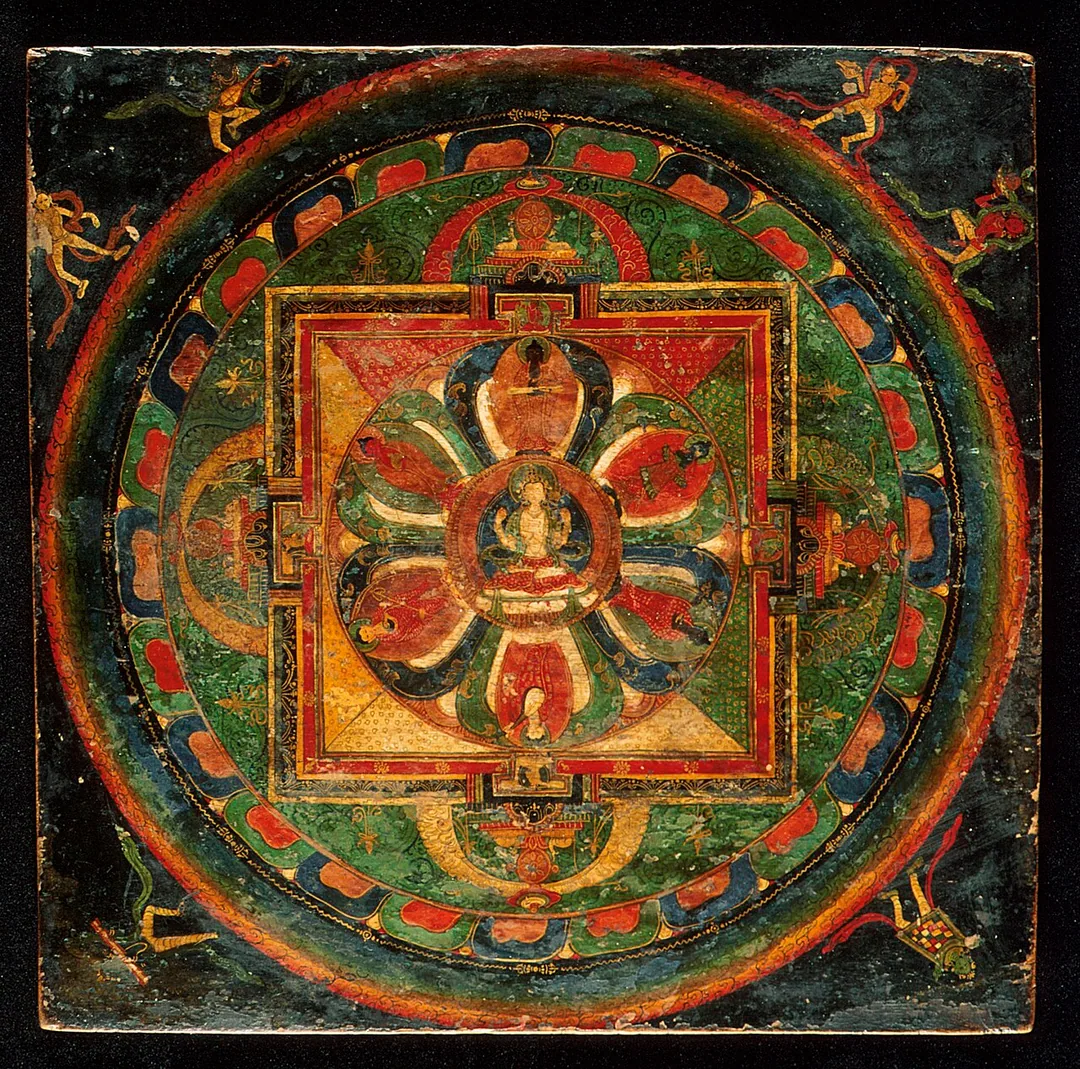
Oṃ Maṇi Padme Hūṃ (Six-Syllable Mantra)
Literally invoking the “Jewel in the Lotus,” these six syllables condense the entire Mahāyāna path: altruistic method (the wish-fulfilling jewel, maṇi) inseparable from wisdom realizing emptiness (the lotus, padma).
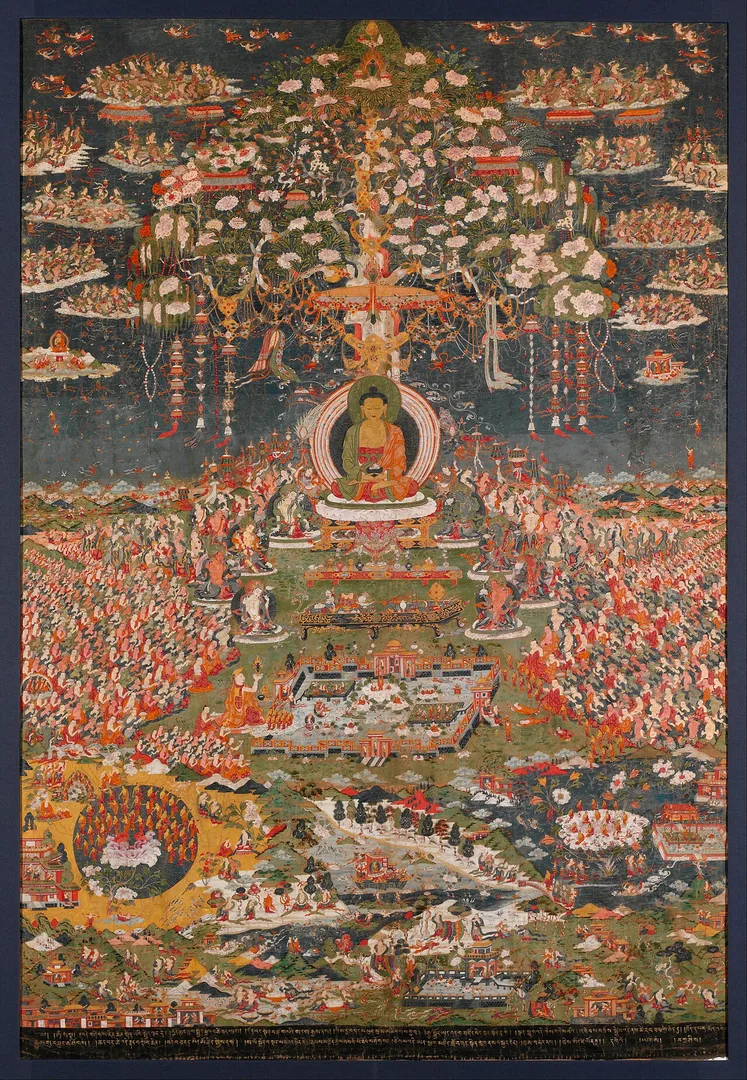
Amitābha (Öpakmé · Buddha of Infinite Light)
Radiating warm sunset-ruby red in the West of the Tibetan mandala, Amitābha (“Infinite Light,” Tibetan Öpakmé) rests both hands in meditation equipoise cradling an alms bowl of ambrosial nectar (amṛta), presiding over the Lotus Family to which Chenrezig and Padmasambhava belong.
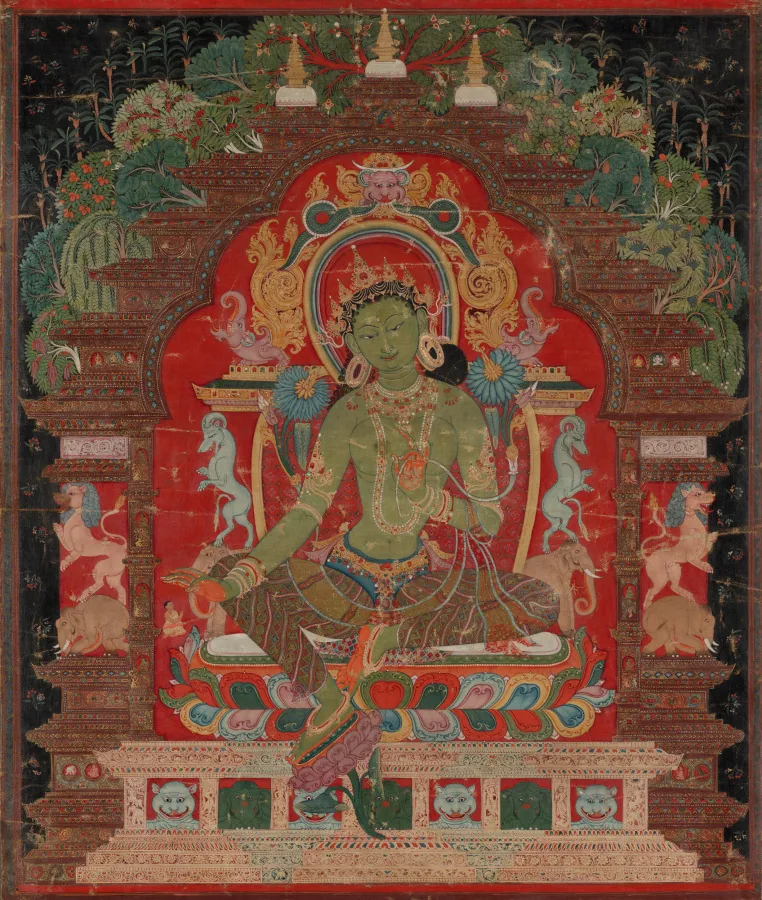
Green Tārā (Sgrol-ljang)
Seated in royal ease with her right foot already stepping off the lotus cushion, Green Tārā embodies enlightened compassion in immediate motion—green being the color of the Wind/Action Buddha Family.
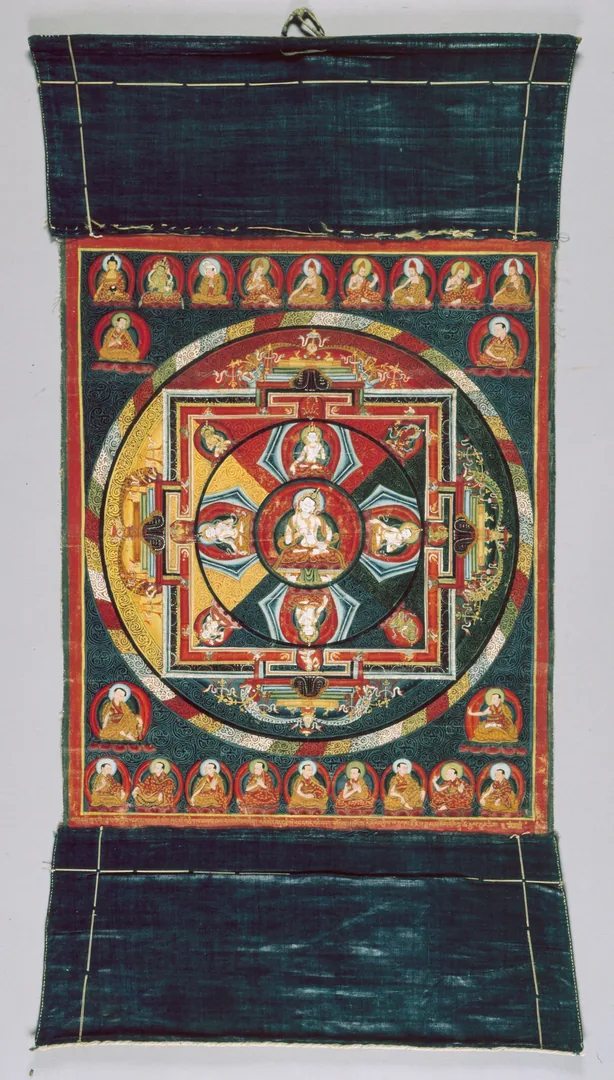
Vajrapāṇi (Chana Dorje · Wielder of the Thunderbolt)
Standing in midnight-blue warrior stance amidst blazing wisdom flames and brandishing a five-pronged vajra overhead, Vajrapāṇi embodies fearless spiritual power—completing Tibet’s beloved Rigsum Gönpo triad alongside Chenrezig (compassion) and Mañjuśrī (wisdom).