Amitābha (Öpakmé · Buddha of Infinite Light)
Ruby-Red Sovereign of the Lotus Family & Western Pure Land
Radiating warm sunset-ruby red in the West of the Tibetan mandala, Amitābha (“Infinite Light,” Tibetan Öpakmé) rests both hands in meditation equipoise cradling an alms bowl of ambrosial nectar (amṛta), presiding over the Lotus Family to which Chenrezig and Padmasambhava belong.
Why the Buddha of the West Is Painted Sunset Red—and Rides Peacocks
In East Asian art Amitābha is usually gilded gold, so viewers encountering Tibetan thangkas are struck by his vivid coral-crimson body. In Vajrayāna color psychology, red corresponds to the setting sun in the West and to the fire of human longing and attachment. Rather than condemning warmth and affection as enemies of awakening, the Lotus Family transmutes clinging desire into “Discriminating Awareness Wisdom” (sor-rtog ye-shes)—the capacity to care deeply for each individual being in their uniqueness without possessiveness.
Beneath his lotus seat stand a pair of peacocks: in Indian lore, peacocks thrive by eating poisonous plants that transfigure into iridescent tail feathers—an unmistakable visual metaphor for turning emotional poison into luminous compassion.
Amitābha vs. Amitāyus: Two Faces of Measureless Light and Life
Sanskrit gives this Buddha two closely paired names: Amitābha (“Measureless Light,” Tibetan Öpakmé) and Amitāyus (“Measureless Life,” Tibetan Tsépakmé). Tibetan iconography differentiates them cleanly by attire: Amitābha wears simple monk’s robes holding an alms bowl, invoked in Dewachen (Pure Land) and Phowa end-of-life contemplations; Amitāyus wears royal five-pointed crowns and silk scarves holding a golden vase sprouted with a wish-fulfilling tree, forming the central figure of Tibet’s Three Long-Life Deities alongside White Tārā.
How It Is Practiced in Living Tradition
Chanted across Tibet in Karma Chakmé’s Aspiration for Rebirth in Dewachen, during Phowa retreats, and throughout the 49-day bardo vigil for departed loved ones.
Common Questions & Clarifications
Is Tibetan Dewachen the same Pure Land as East Asian Sukhāvatī?
Yes: Tibetan bde-ba-can (“Possessing Bliss”) is the exact literal translation of Sanskrit Sukhāvatī, grounded in the very same Kangyur and Taishō Pure Land sutras.
Primary Sources & Further Reading
- Sukhāvatīvyūha Sūtra (Array of the Blissful Realm, Toh 115), Kangyur
- Karma Chakmé (17th c.), Aspiration Prayer for Sukhāvatī (Namkhama)
Connected in the Mandala Graph
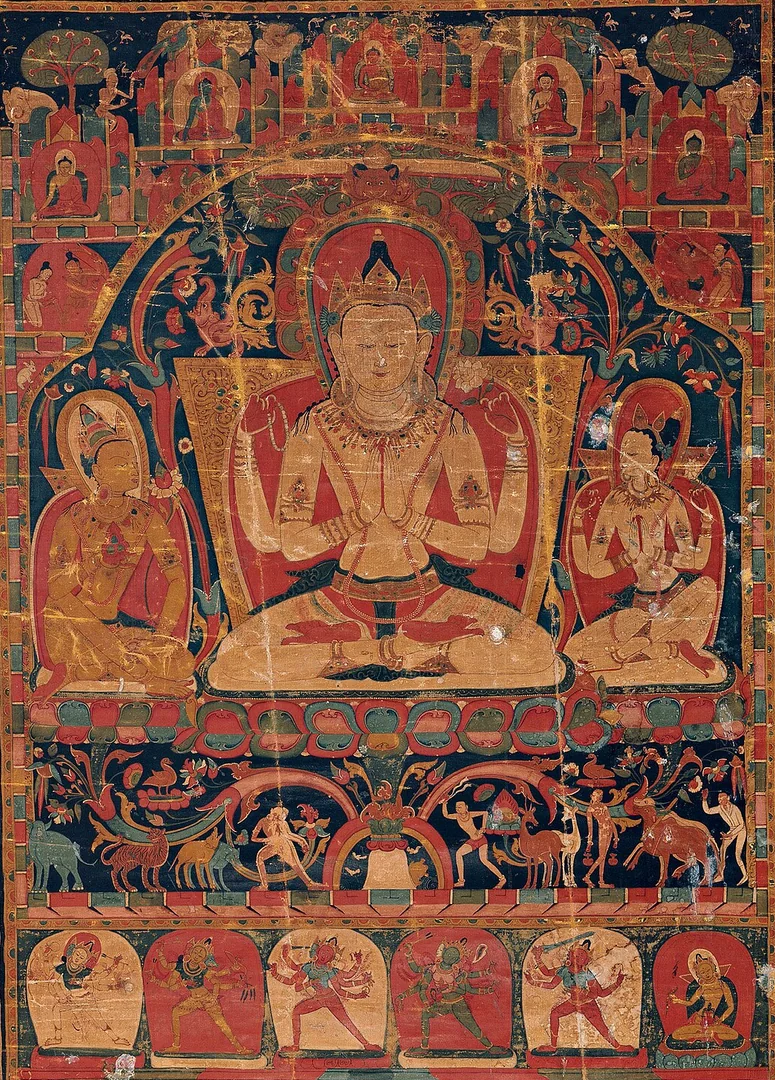
Avalokiteśvara (Chenrezig)
Known in Tibetan as Chenrezig (“One Who Gazes with Unwavering Eyes”), the four-armed white form embodies impartial compassion united with emptiness, associated with the Six-Syllable Mantra Oṃ Maṇi Padme Hūṃ.
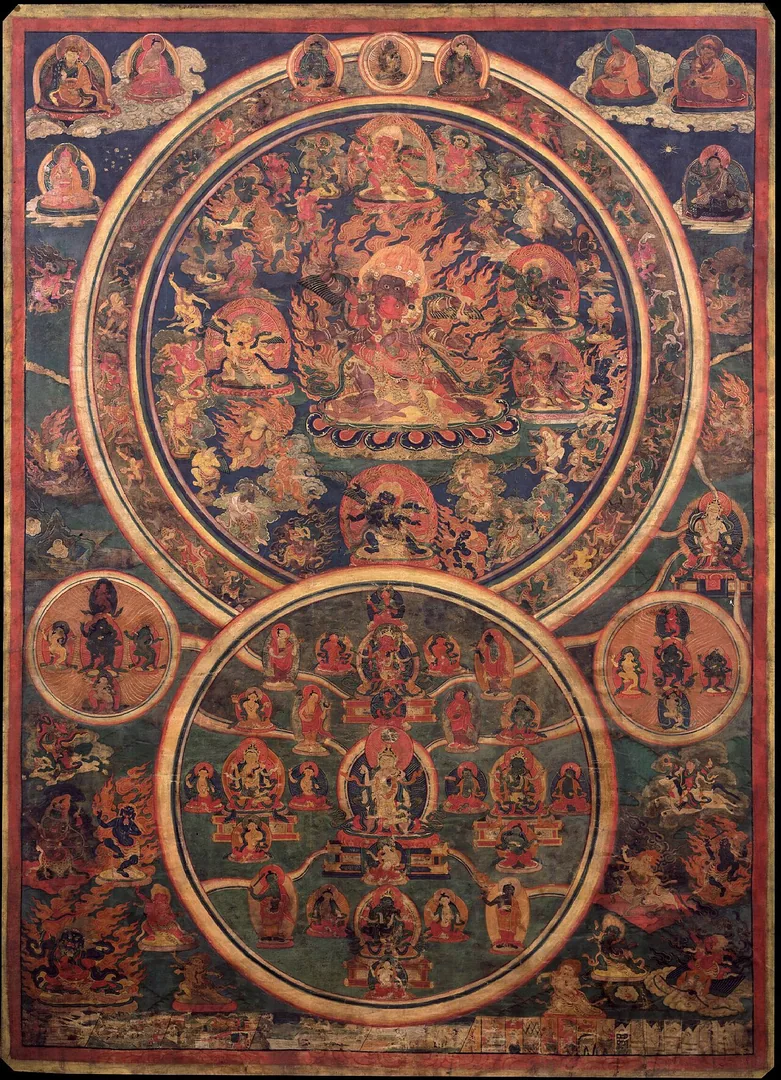
Bardo: The Six In-Between States
Literally “interval between two things” (bar-do), the famous Tibetan Book of the Dead (Bardo Thödol) maps not only death and rebirth, but six everyday transitional spaces—starting with this waking moment.
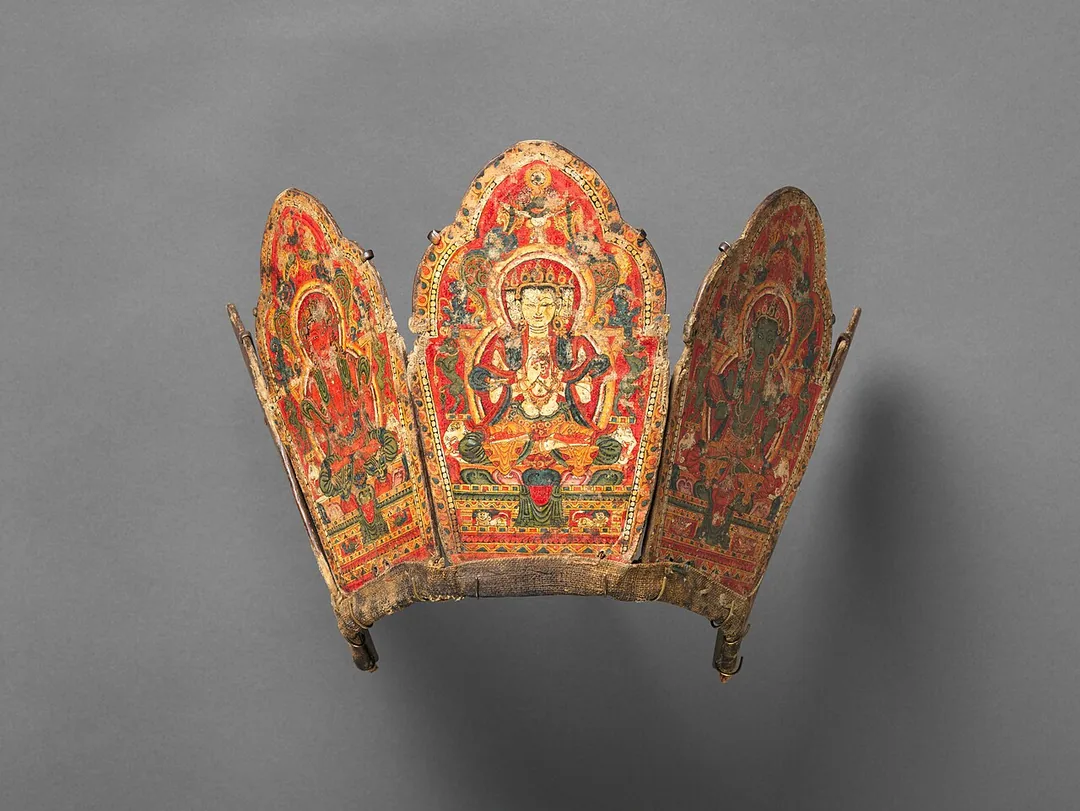
The Five Buddha Families & Five Wisdoms (Rigs-lnga)
Known in Tibetan as Gyalwa Rig-nga, the Five Buddha Families organize every mandala color, direction, element, and deity around one radical psychological premise: the raw energy inside our five most painful emotions is the exact same energy as the Five Awakened Wisdoms.
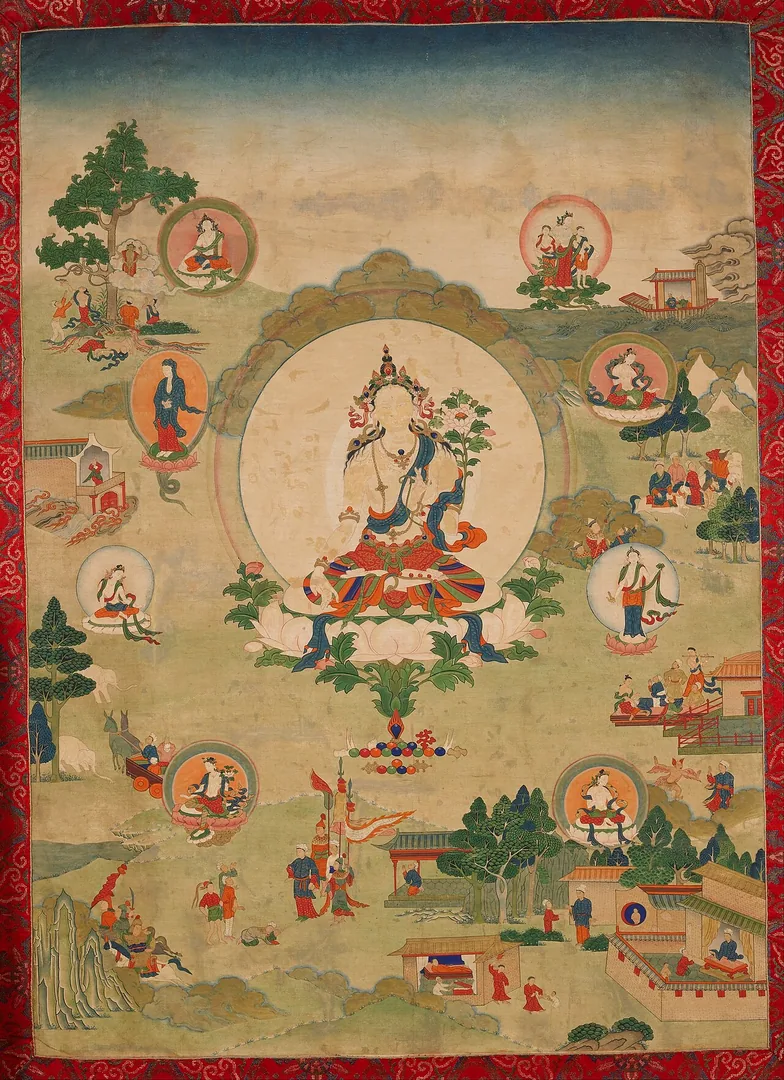
White Tārā (Sgrol-dkar)
Distinguished by seven eyes—on her forehead, palms, soles, and face—White Tārā sits in full vajra posture radiating autumn-moon serenity, forming one of Tibet’s Three Long-Life Deities.