Vajrasattva (Dorje Sempa)
Sovereign of Purification & Psychological Renewal
Radiant crystal-white in sambhogakāya ornaments, holding a five-pronged vajra at his heart and a silver bell at his hip, Vajrasattva embodies the indestructible purity underlying transient human mistakes.
Regret Without Self-Hatred: The Four Opponent Powers
Modern people often confuse remorse with toxic shame—believing “I made a mistake” means “I am fundamentally broken.” Vajrasattva’s very name (“Diamond-Mind Being”) refutes that confusion: just as mud never alters the molecular structure of gold or sky is never stained by smoke, harmful habits are adventitious—they can be removed because they are not one’s nature.
Tibetan tradition pairs Vajrasattva meditation with four lucid psychological steps (stobs bzhi): (1) Reliance—anchoring in compassion rather than isolation; (2) Honest Regret—acknowledging harm plainly, as if realizing one swallowed poison, without melodrama; (3) Remedial Action—reciting the Hundred-Syllable Mantra and making concrete repair; and (4) Resolve—setting a realistic boundary not to repeat the act.
| Opponent Power | Tibetan (Wylie) | Medical Analogy | Psychological Function |
|---|---|---|---|
| 1. Power of Reliance | rten gyi stobs | Trusting the skilled physician | Refusing isolation; anchoring in bodhicitta & clarity |
| 2. Power of Regret | rnam par sun ’byin pa’i stobs | Recognizing one swallowed poison | Clear-eyed honesty without melodrama or self-hatred |
| 3. Remedial Action | gnyen po kun tu spyod pa’i stobs | Taking the actual antidote medicine | Reciting the 100 Syllables & making concrete amends |
| 4. Power of Resolve | nyes pa las slar ldog pa’i stobs | Vowing not to drink poison again | Setting realistic, compassionate ethical boundaries |
How It Is Practiced in Living Tradition
Included in the foundational preliminaries (ngöndro) of all four Tibetan lineages, where practitioners accumulate 100,000 recitations of the Hundred-Syllable Mantra.
Common Questions & Clarifications
Why do vajra and bell always appear together in Tibetan art?
Never separated in Vajrayāna ritual, the five-pronged vajra represents indestructible compassionate method, while the hollow resonant bell represents wisdom realizing emptiness—two wings of one bird.
Why is Vajrasattva visualized facing the practitioner or seated above the crown?
In ngöndro manuals, visualizing Vajrasattva a cubit above one’s crown pouring luminous white nectar through the central channel engages somatic imagination—experiencing heaviness flushing away rather than ruminating conceptually on guilt.
Primary Sources & Further Reading
- Patrul Rinpoche (1890s), The Words of My Perfect Teacher (Kunzang Lama’i Shelung)
Connected in the Mandala Graph
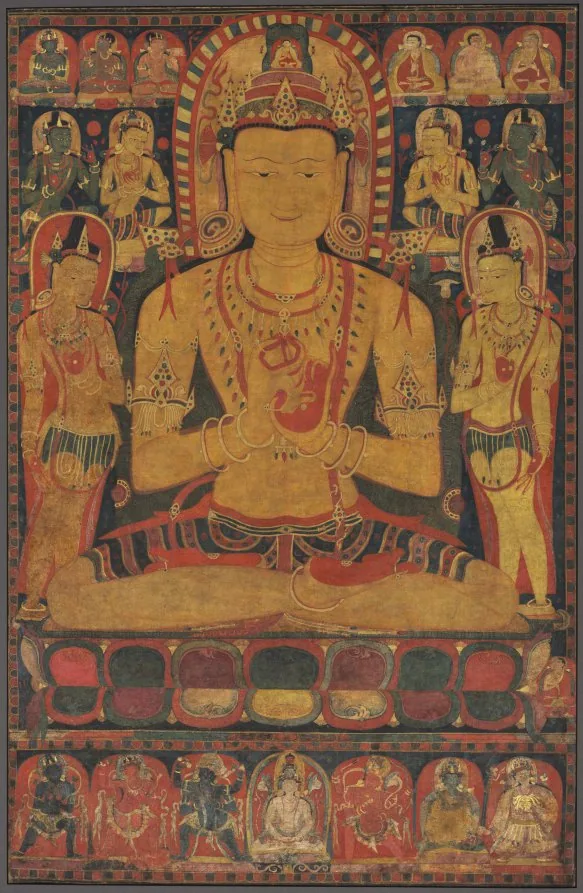
Vajrasattva Mantra & the Hundred Syllables
Whether recited in its full 100-syllable Sanskrit invocation or its six-syllable essence Oṃ Vajrasattva Hūṃ, this mantra asks awakening awareness to remain steady beside us while we clean the slate.
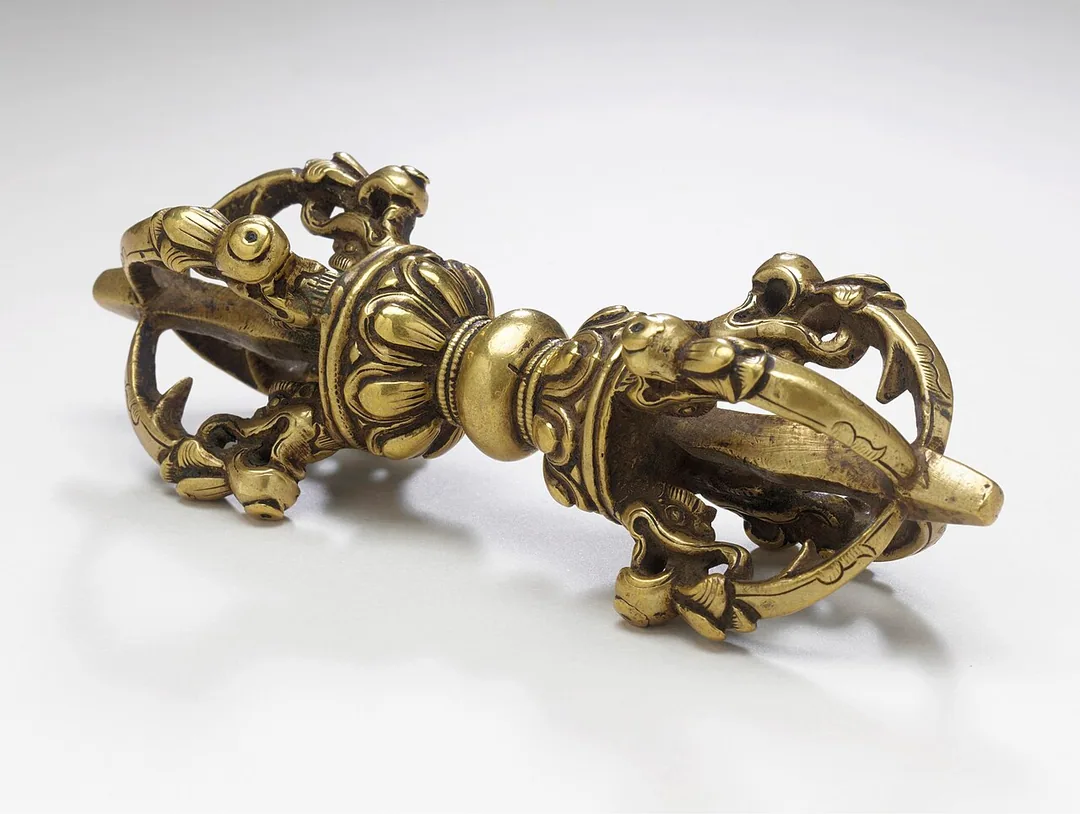
Vajra & Bell (Dorje & Drilbu · རྡོ་རྗེ་དང་དྲིལ་བུ།)
Never separated on a Tibetan altar, the brass five-pronged vajra held in the right hand embodies indestructible compassionate method (upāya), while the hollow bronze bell held in the left proclaims wisdom realizing emptiness (prajñā).
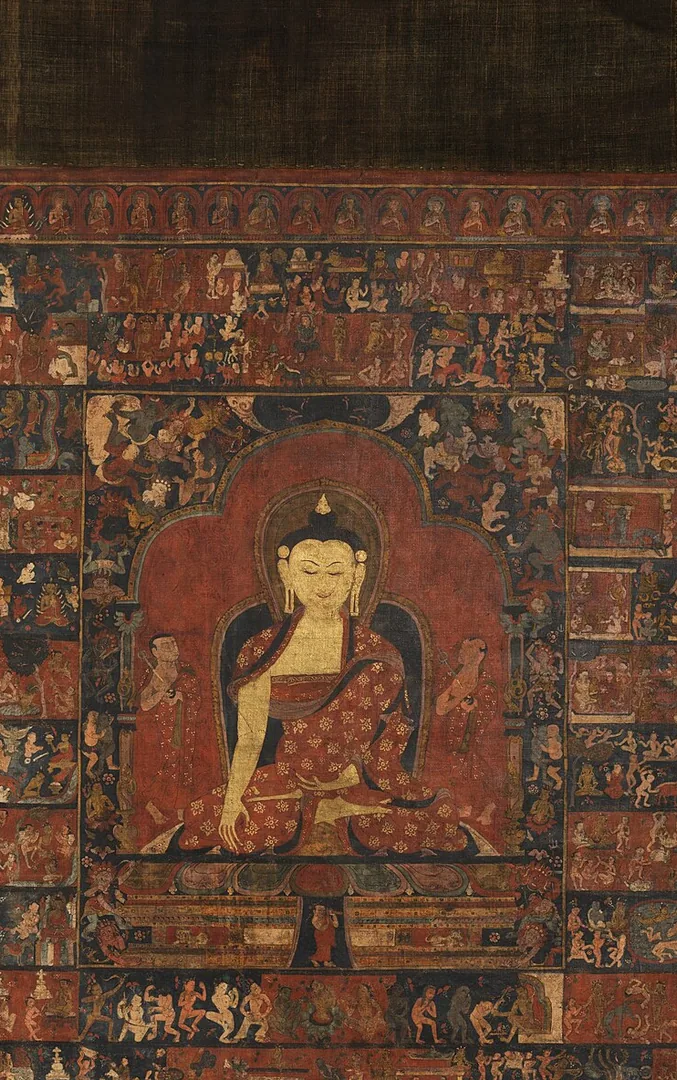
Karma & Interdependence: Why It Is Never Fatalism
In Sanskrit and Tibetan (las), karma literally means “action,” never “predestined fate.” While past choices shape today’s conditions, how one responds right now writes the next cause.
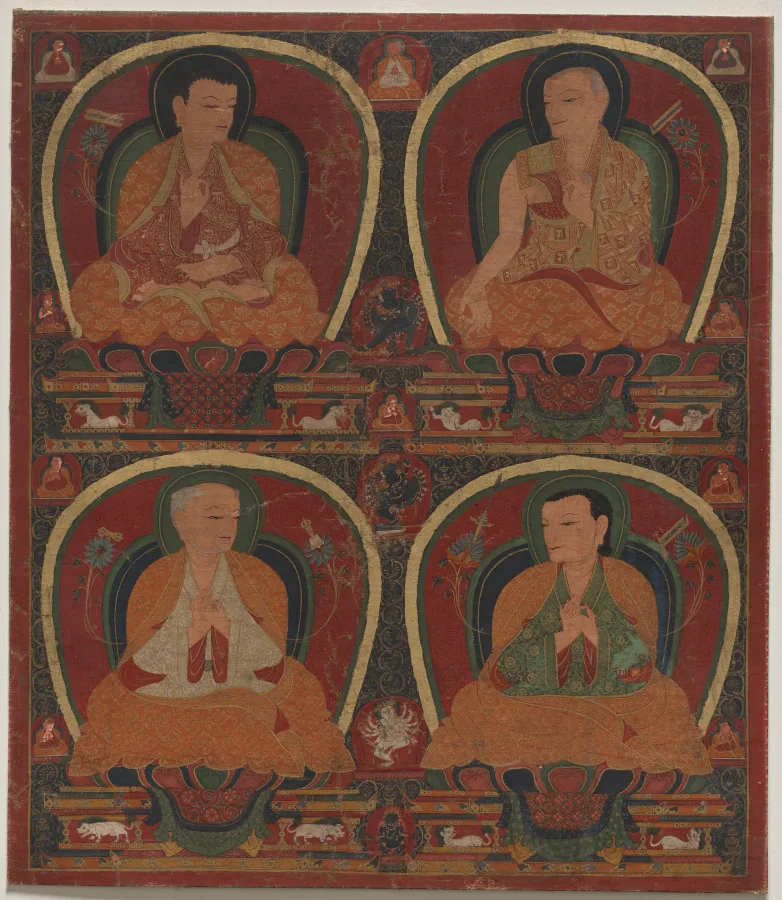
The Four Tibetan Schools & Bön Explained Clearly
Sharing the exact same Kangyur and Tengyur Buddhist canon, Tibet’s four major Buddhist schools differ not in core creed, but in historical translation era, pedagogical sequence, and meditative emphasis.