Oṃ A Ra Pa Ca Na Dhīḥ (Mañjuśrī Mantra)
The Gāndhārī Wisdom Syllabary & Seed Syllable Dhīḥ
Preserving the first five letters of the ancient Gāndhārī Kharoṣṭhī alphabet used in early Prajñāpāramitā manuscripts, this mantra trains the mind in lucid, unhurried discernment.
Opening stillness before inquiry.
How an Ancient Alphabet Became a Wisdom Mantra
Modern philologists (including Richard Salomon and Edward Conze) uncovered a remarkable historical link: whereas standard Sanskrit alphabetical order begins A-Ā-I-Ī, early Buddhist scribes in ancient Gandhāra organized their contemplative Kharoṣṭhī syllabary beginning A-Ra-Pa-Ca-Na! Even today, we call an alphabet “A-B-C” after its opening letters; in early Mahāyāna India, this mystical alphabet was called “Arapacana,” making Mañjuśrī himself the living embodiment of language awakening into wisdom.
In the Large Perfection of Wisdom Sūtra (Pañcaviṃśatisāhasrikā), each of the five letters opens a philosophical doorway into emptiness, sealed by the golden seed syllable Dhīḥ—from the Sanskrit root dhī (“lucid intelligence, mindfulness, poetic vision”):
| Letter | Sanskrit Keyword | Philosophical Gateway |
|---|---|---|
| A (ཨ) | Ādyanutpāda (unborn from the start) | No phenomenon arises in isolated self-existence |
| RA (ར) | Rajas-apagata (free of dust) | Awareness is naturally free from conceptual stain |
| PA (པ) | Paramārtha (ultimate truth) | Seeing beyond rigid binary extremes |
| CA (ཙ) | Cyavana / Carya (no fixed transit) | Change occurs fluidly without a static core |
| NA (ན) | Nāma-apagata (beyond mere names) | Refusing to mistake verbal labels for reality itself |
How It Is Practiced in Living Tradition
Recited at daybreak by students and scholars; traditionally ending with repeated rolls of “Dhīḥ-dhīḥ-dhīḥ…” on a single breath to sharpen vocal and mental focus.
Common Questions & Clarifications
Does reciting Mañjuśrī’s mantra promise exam luck without studying?
No. Tibetan teachers state plainly that Mañjuśrī’s blessing works by quieting panic and distraction so that what you have genuinely studied can surface clearly.
Why do practitioners roll “Dhīḥ-dhīḥ-dhīḥ…” rapidly on one breath at the end?
In Tibetan oral pedagogy, repeating the seed syllable Dhīḥ 21 or 108 times on a single exhalation trains crisp articulation of the tongue channels (enhancing debate eloquence and memory) while gathering scattered attention to a single point.
Primary Sources & Further Reading
- Pañcaviṃśatisāhasrikā Prajñāpāramitā (25,000-Line Perfection of Wisdom)
- Richard Salomon, “New Evidence for a Gāndhārī Origin of the Arapacana Syllabary,” JAOS (1990)
Connected in the Mandala Graph
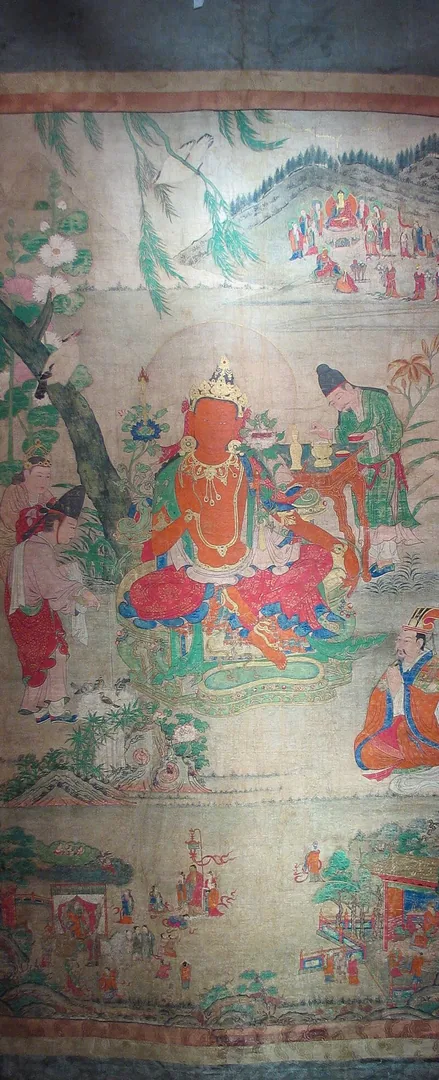
Mañjuśrī (Jampelyang)
Radiant saffron-gold in hue, Mañjuśrī raises a blazing sword overhead with his right hand to slice right through conceptual confusion, while holding the Prajñāpāramitā Sūtra on a lotus at his heart.
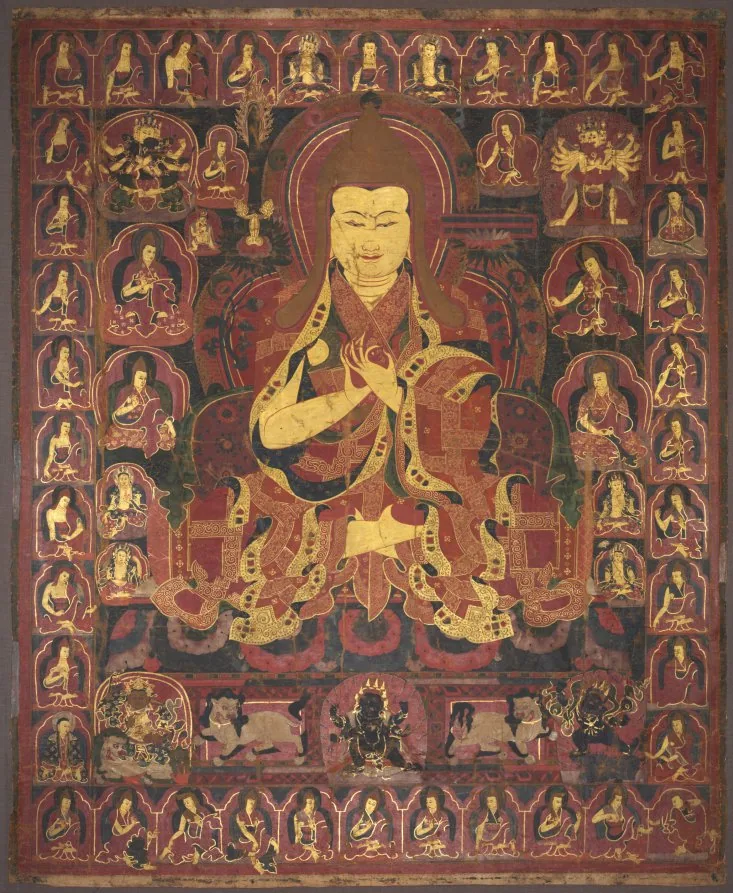
Je Tsongkhapa (Lobsang Drakpa · 1357–1419)
Born in Amdo Tsongkha (modern Qinghai Kumbum) in 1357, Je Rinpoche studied across Sakya, Kagyu, Jonang, and Kadampa masters before founding Ganden Monastery—uniting rigorous Nālandā logic, pure Vinaya discipline, and Tantric contemplation into one seamless graduated path (Lamrim).
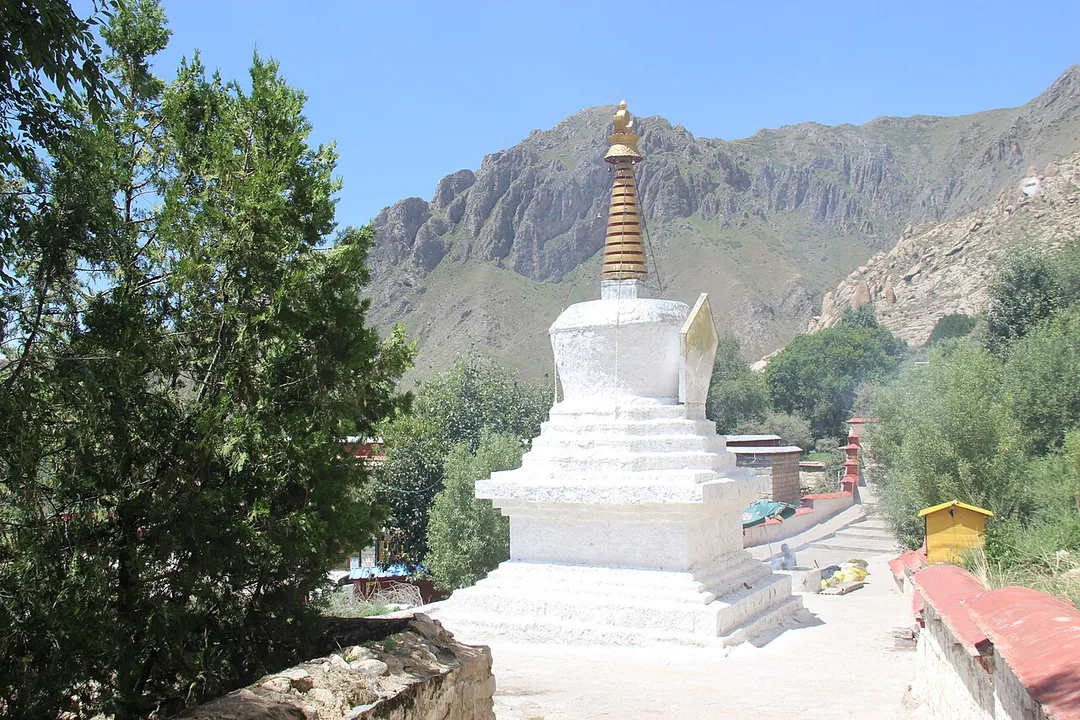
Tibetan Monastic Debate & the Three Great Seats (Sera, Drepung, Ganden)
Every afternoon under the trees of Sera, Drepung, and Ganden monasteries, hundreds of monks pair off—one standing to test definitions with sharp claps, one seated calmly defending consistency—preserving classical Indian Nālandā logic (pramāṇa) as a living anti-dogma discipline.
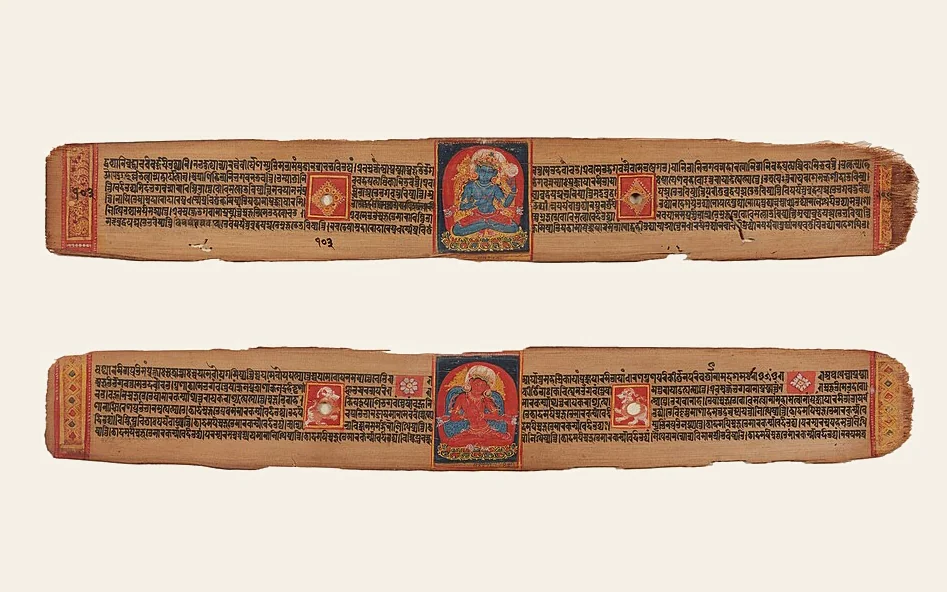
The Heart Sūtra (Sherab Nyingpo · 心经)
In 260 Chinese characters (and a slightly longer framed dialogue in the Tibetan Kangyur), Avalokiteśvara explains to Śāriputra why seeing emptiness—interdependent openness—dissolves fear.