Medicine Buddha Dhāraṇī (Bekandze Mantra)
Three Levels of Healing in Tibetan Medical & Tantric Tradition
Pronounced “Bekandze” in Tibetan, the threefold repetition of Bhaiṣajye (“healing remedy”) mirrors Tibetan medicine’s holistic view that bodily recovery, emotional calm, and wisdom belong together.
“Thus it is:” — Opening formula introducing a healing dhāraṇī.
Why “Bekandze” Is Spoken Three Times—and Why It Sounds Different from Sanskrit
Tibetan commentaries explain the triad with striking clarity. The first Bekandze prays for relief from manifest physical illness and pain. The second Bekandze addresses the emotional cascade triggered by sickness—sleepless dread in hospital corridors, resentment, or helplessness. The third, Mahā-bekandze (“Great Healing”), points to the root medicine of interdependence and compassion, freeing us from the deeper distress of feeling utterly alone against mortality.
Readers comparing the scripts often ask why Sanskrit Bhaiṣajye is chanted “Bekandze” across Tibet. Seventh-century Tibetan translators transliterated the Sanskrit letter-for-letter as བྷཻ་ཥ་ཛྱེ, and over thirteen centuries of spoken Tibetan phonology the diphthong ai shifted to e, the retroflex-palatal cluster -ṣaj- adapted to -kan-, and -ye became the Tibetan affricate -dze.
| Phrase | Tibetan Phonetic | Tibetan Medical Level | Psychological & Dharmic Scope |
|---|---|---|---|
| Tadyathā Oṃ | Te-ya-tha Om | Opening threshold | “Thus it is”—aligning breath, body & clarity |
| 1st Bhaiṣajye | Be-kan-dze | Somatic humors (rlung, mkhris, bad-kan) | Soothing acute bodily illness, pain & imbalance |
| 2nd Bhaiṣajye | Be-kan-dze | Afflictive emotions (nyon-mongs) | Quieting fear, sleepless dread & secondary distress |
| Mahā-bhaiṣajye Rāja-samudgate | Ma-ha Be-kan-dze Ra-dza Sa-mung-ga-te | Subtle cognitive obscuration | Supreme Physician’s wisdom transcending dualistic clinging |
How It Is Practiced in Living Tradition
Recited on the 8th day of the Tibetan lunar month, over clean drinking water or prescribed medicine, and dedicated to all patients and caregivers.
Common Questions & Clarifications
Should Tadyathā always be included at the beginning?
Both forms are authentic: formal liturgical recitations include Tadyathā (“Thus it is”), while continuous mala counting often begins either with Tadyathā or directly with Oṃ.
How does this Tibetan heart mantra relate to the longer Chinese “Medicine Buddha Initiation Dhāraṇī”?
They are the exact same dhāraṇī from Xuanzang’s and the Kangyur’s Bhaiṣajyaguru Sūtra! The Chinese liturgy includes the opening homage (“Namo bhagavate bhaiṣajyaguru-vaiḍūrya-prabha-rājāya…”) before Tadyathā, whereas Tibetan daily recitation focuses directly on the essence clause from Tadyathā onward.
Primary Sources & Further Reading
- Bhaiṣajyaguru Sūtra (Toh 504 / Taishō T0450)
- Khenchen Thrangu Rinpoche, Medicine Buddha Teachings
Connected in the Mandala Graph
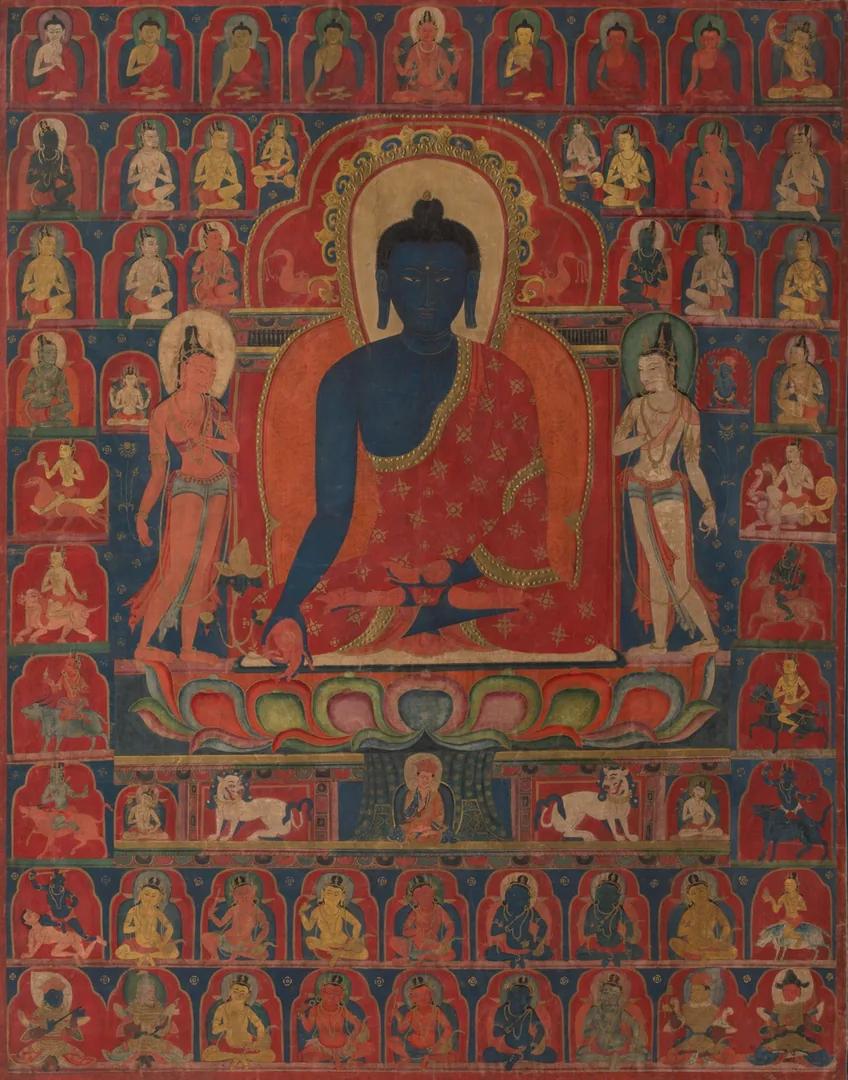
Medicine Buddha (Bhaiṣajyaguru · Sangye Menla)
Radiating deep lapis-lazuli blue, Sangye Menla wears monastic robes, holding an alms bowl of healing nectar in his left hand and a stem of golden myrobalan (arura) in his outstretched right hand.
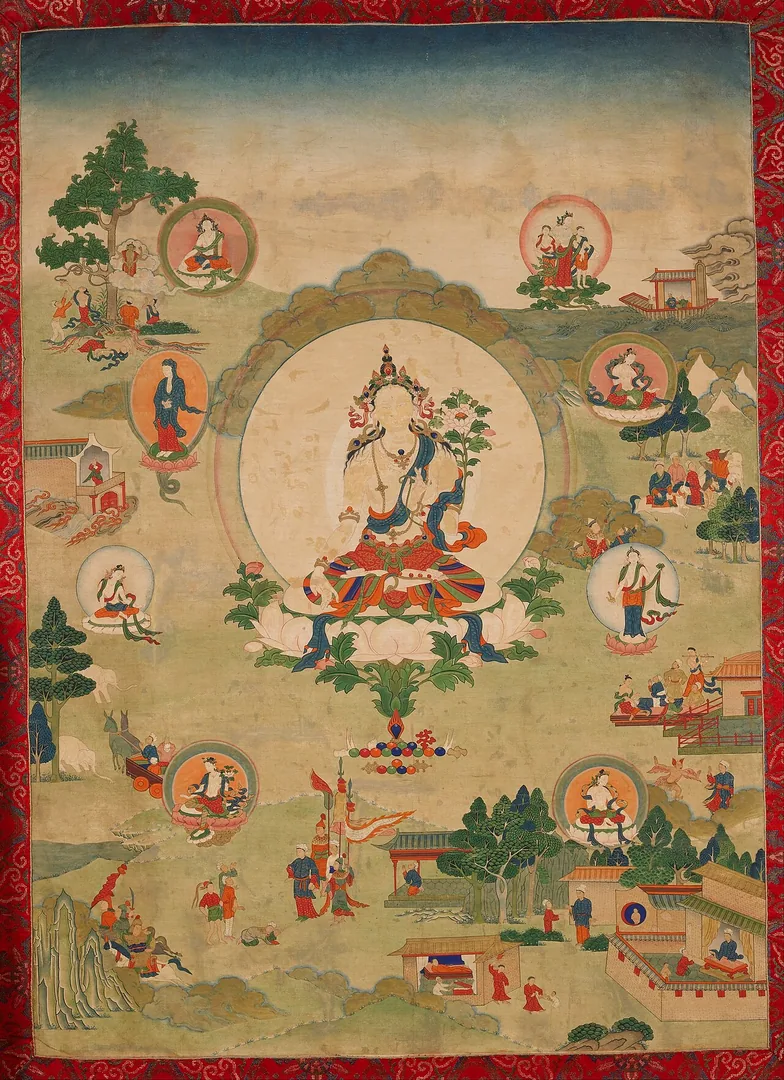
White Tārā (Sgrol-dkar)
Distinguished by seven eyes—on her forehead, palms, soles, and face—White Tārā sits in full vajra posture radiating autumn-moon serenity, forming one of Tibet’s Three Long-Life Deities.
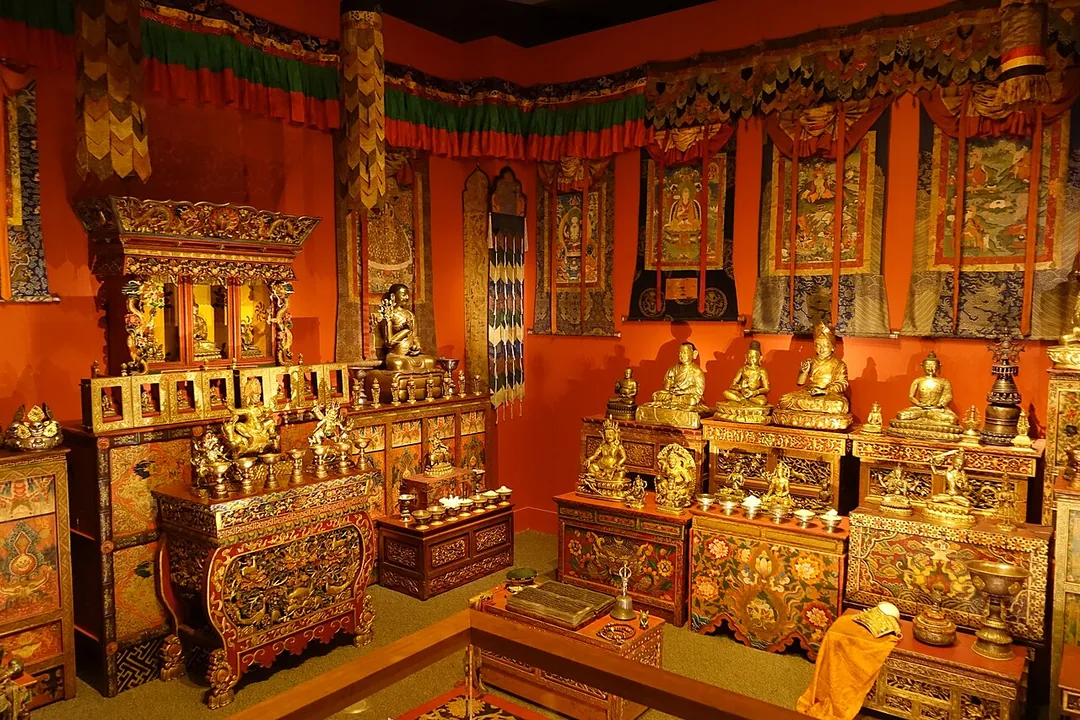
Dedication of Merit (Bsngo-ba · 回向)
No Tibetan contemplation, sutra reading, or prayer-wheel turn ends abruptly; it concludes with bsngo-ba (“turning toward”)—deliberately widening a private wish so everyone walking the same hard road is included.