Bhavacakra: The Wheel of Life (Srid-pa’i ’khor-lo)
How to Read the Four Concentric Rings from Hub to Rim
Painted on the outer vestibule wall of nearly every Tibetan monastery according to instructions in the Vinaya (Toh 3), the Wheel of Becoming maps how habitual reactivity spins into suffering—and precisely where awareness steps free.
The Earliest Visual Infographic in Buddhist History
According to the Mūlasarvāstivāda Vinaya preserved in the Tibetan Kangyur (Toh 3), King Udrāyana once sent King Bimbisāra a priceless jeweled armor. Wanting to return something of even greater value, Bimbisāra asked the Buddha what gift could awaken someone who had never met a teacher. Śākyamuni personally specified the layout of a five-spoked (later six-spoked) wheel and instructed that it be painted on monastery entrance porches so ordinary passersby could grasp the entire Dharma visually.
Read from the center outward, the whole mechanism fits together with surgical clarity: at the very hub (Ring 1), a rooster (craving), a green snake (hatred), and a dark pig (ignorance) bite one another’s tails—showing how blindness fuels attachment and anger in a closed loop. Around the hub (Ring 2), a bright left half-circle shows beings rising through ethical mindfulness, while a dark right half-circle shows beings pulled downward by destructive compulsion.
Why Impermanence Holds the Wheel—and Why the Buddha Points Outside It
Ring 3 expands into the Six Realms (gods, warring demi-gods, humans, animals, hungry ghosts, and hells)—read in Tibetan lojong manuals both cosmologically and as six psychological states a human mind can cycle through in a single afternoon. Notice that inside every single realm stands an emanation of Avalokiteśvara or the Buddha: holding a lute to wake complacent gods from pride, armor among demi-gods, an alms bowl among humans, a book among animals, nectar among hungry ghosts, and purifying flame/water in the hells.
Around the outer rim (Ring 4) run twelve scenes of the Twelve Links of Dependent Origination—beginning with a blind elder (ignorance). Clutching the entire wheel in claws and fangs is Yama, Lord of Impermanence: terrifying only when we pretend things last forever, yet actually holding up an honest mirror. Best of all, look outside the wheel in the upper corners: Śākyamuni Buddha stands free in open sky pointing his finger toward a cool full moon—visually promising that because the wheel is built from conditions, ceasing to grasp between “pleasant/unpleasant feeling” (Link 7) and “craving” (Link 8) sets the mind free.
How It Is Practiced in Living Tradition
Monastic guides traditionally pause with pilgrims and children at the porch mural before entering the shrine room, turning abstract Abhidharma philosophy into vivid self-reflection.
Common Questions & Clarifications
Why is the pig at the very center sometimes shown with both the snake and rooster emerging from its mouth?
That detail illustrates a precise Buddhist insight: both clinging attachment (rooster) and hostile aversion (snake) grow out of fundamental ignorance (pig)—misperceiving interdependent things as isolated “me” versus “them.”
Primary Sources & Further Reading
- Mūlasarvāstivāda Vinayavibhaṅga (Toh 3, Kangyur) & Stephen F. Teiser, Reinventing the Wheel: Paintings of Rebirth in Medieval Buddhist Temples
Connected in the Mandala Graph
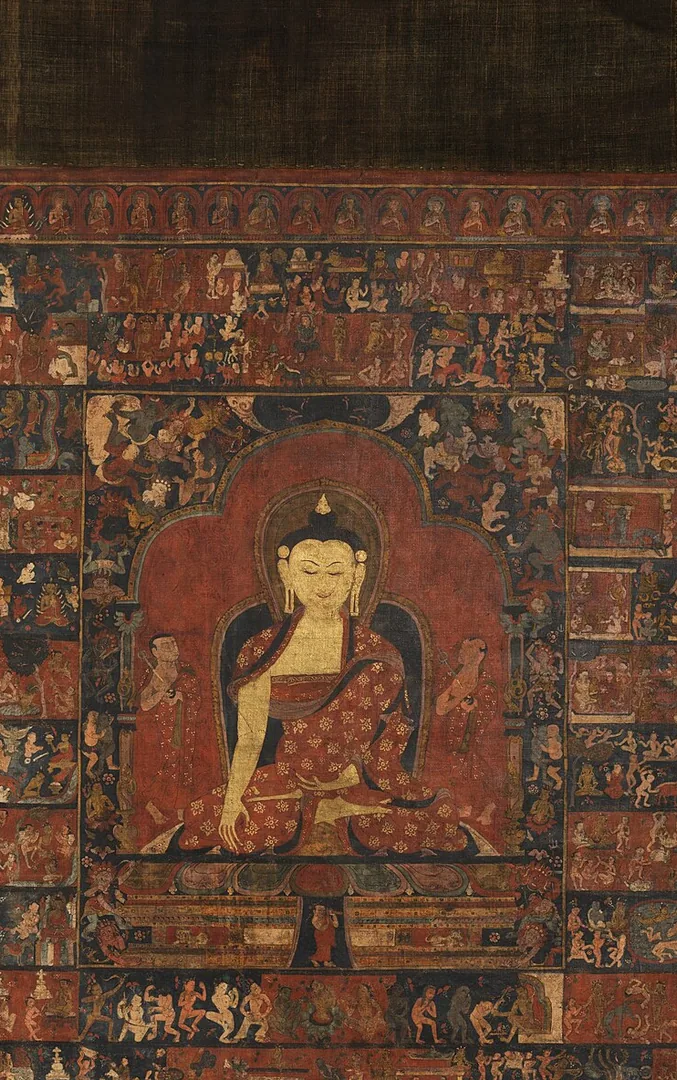
Karma & Interdependence: Why It Is Never Fatalism
In Sanskrit and Tibetan (las), karma literally means “action,” never “predestined fate.” While past choices shape today’s conditions, how one responds right now writes the next cause.
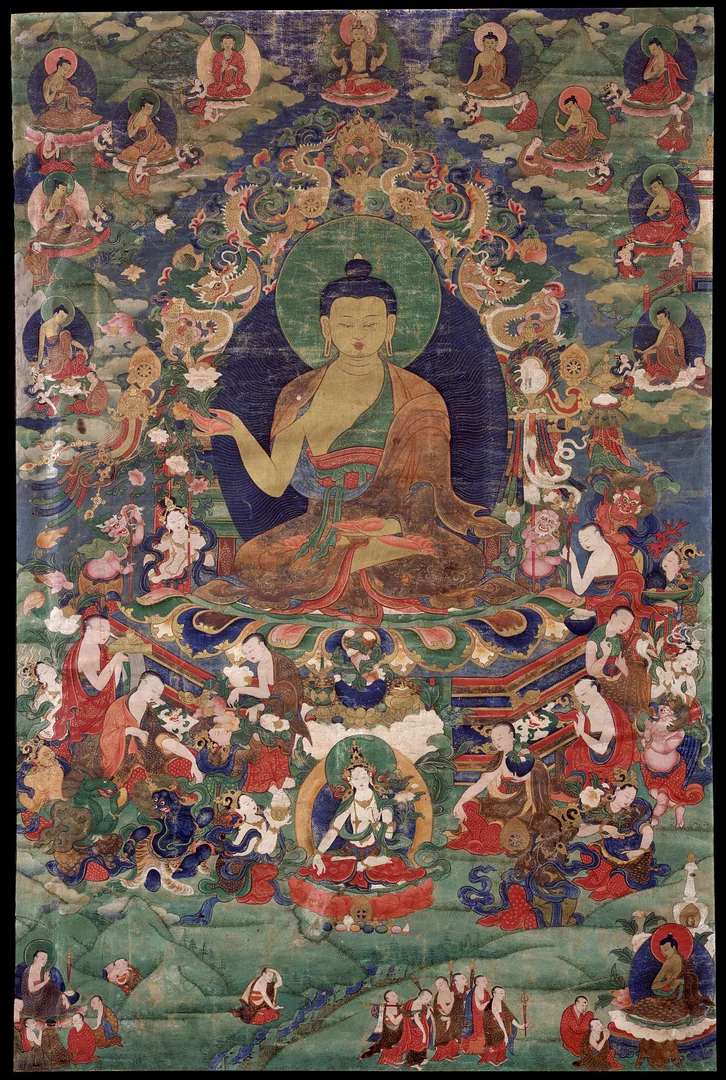
Śākyamuni Buddha (Shakya Thubpa)
Known in Tibetan as Shakya Thubpa (“Mighty Sage of the Śākyas”), the historical Buddha sits in unadorned monastic robes, touching the earth with his right fingertips to witness impartial awakening while cradling an iron alms bowl in his lap.
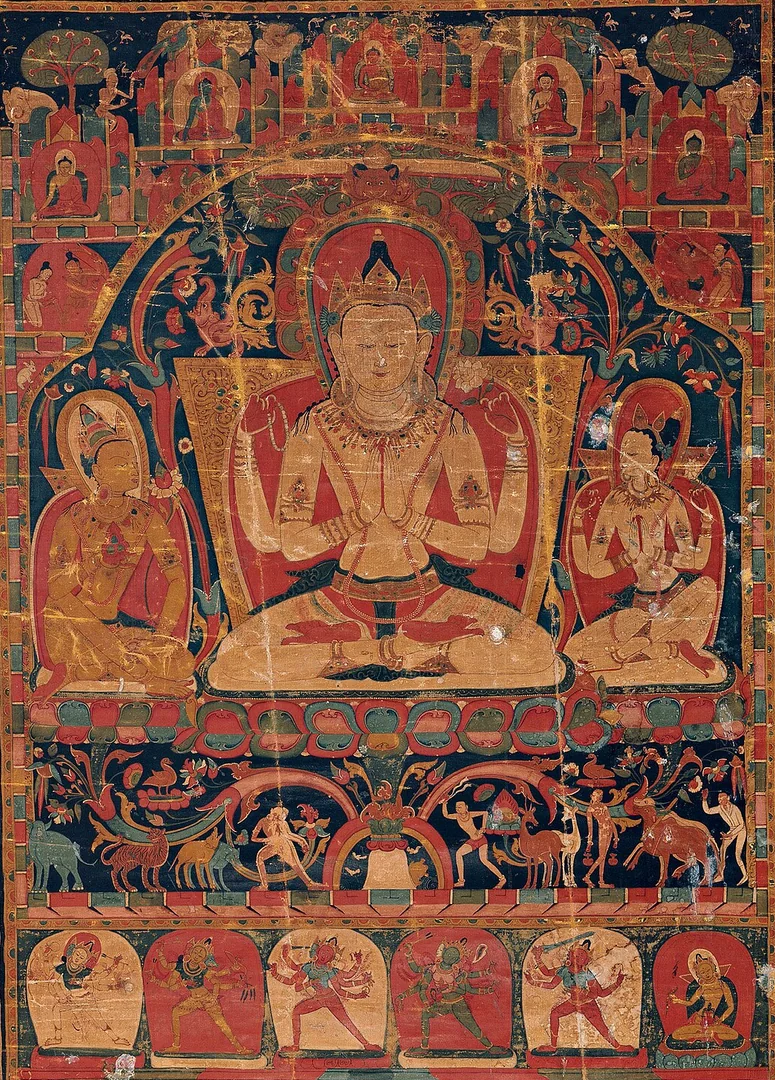
Avalokiteśvara (Chenrezig)
Known in Tibetan as Chenrezig (“One Who Gazes with Unwavering Eyes”), the four-armed white form embodies impartial compassion united with emptiness, associated with the Six-Syllable Mantra Oṃ Maṇi Padme Hūṃ.
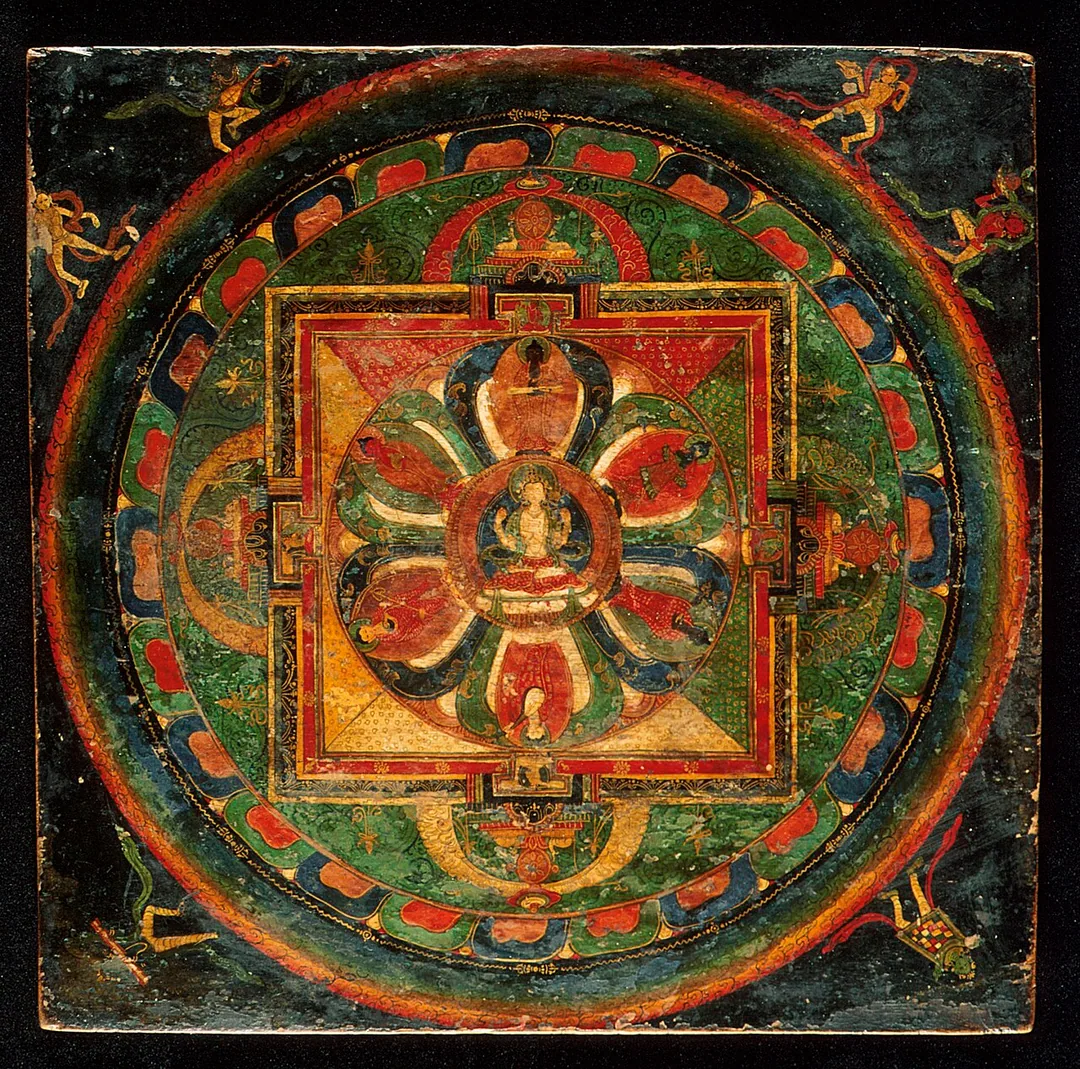
Oṃ Maṇi Padme Hūṃ (Six-Syllable Mantra)
Literally invoking the “Jewel in the Lotus,” these six syllables condense the entire Mahāyāna path: altruistic method (the wish-fulfilling jewel, maṇi) inseparable from wisdom realizing emptiness (the lotus, padma).