Amitāyus & the Three Long-Life Deities (Tshepakmé · 长寿佛)
Crowned Sambhogakāya Form of Boundless Life, Ambrosia Vase & Dual-Aspect Comparison with Amitābha
In Sanskrit and Chinese Pure Land texts, Amitābha (“Boundless Light”) and Amitāyus (“Boundless Life”) are two names of one Buddha; in Tibetan art, they divide into two crystal-clear visual forms—monastic robe with begging bowl versus crowned royal splendor holding the nectar vase of longevity.
ཨོཾ་ཨ་མ་ར་ཎི་ཛཱི་བནྟི་ཡེ་སྭཱ་ཧཱ།
Devanāgarī: ॐ अमरणि जीवन्तिये स्वाहा · Liturgical Reading: Om a-ma-ra-ni dzi-wen-ti-ye so-ha
Canonical short essence mantra of Amitāyus: “Oṃ! Unto deathless wisdom (amaraṇi) and the flourishing of vital life for awakening (jīvantiye)—svāhā!”
One Lotus-Family Essence, Two Visual Bodies: Amitābha vs. Amitāyus
In the Sanskrit Sukhāvatīvyūha Sūtras (Toh 49 / Toh 107 ↔ T. 360 / T. 366), the Buddha of the Western Pure Land is praised simultaneously as Amitābha (“Immeasurable Light,” འོད་དཔག་མེད།) and Amitāyus (“Immeasurable Life and Wisdom,” ཚེ་དཔག་མེད།), because unobstructed wisdom-awareness naturally transcends both spatial limitation (light) and temporal decay (life). East Asian Pure Land sculpture generally merges both names into a single monastic Buddha figure.
Himalayan art, however, uses the Three-Kāya (སྐུ་གསུམ།) visual grammar to give practitioners an unmistakable liturgical distinction: when focusing on rebirth in (Sukhāvatī) and letting go peacefully at death (), one contemplates Amitābha in unadorned Nirmāṇakāya monastic robes holding an alms bowl; when restoring depleted vitality (bla-tshe) so one has healthy years remaining to study, serve others, and practice Dharma, one contemplates Amitāyus arrayed in radiant Sambhogakāya silks and a five-jeweled crown, cradling the Ambrosia Vase of Immortality (ཚེ་བུམ།, tshe-bum) sprouting a wish-fulfilling Ashoka blossom.
| Figure & Tibetan Name | Crown & Attire | Hands & Vessel | Distinctive Role in Himalayan Practice |
|---|---|---|---|
| Amitābha · འོད་དཔག་མེད། (Öpakmé) | Bare blue-black Buddha topknot (uṣṇīṣa) + plain patchwork monk robes | Dhyāna mudrā holding dark lapis begging bowl | Lord of Dewachen Pure Land; anchor of pure-land aspiration & bardo/phowa guidance |
| Amitāyus · ཚེ་དཔག་མེད། (Tshepakmé — Triad Center) | 5-jeweled Sambhogakāya crown, gold earrings, necklaces & flowing天衣 silks | Dhyāna mudrā cradling golden tshe-bum vase topped with jewel-tree | Central sovereign of Three Long-Life Deities; replenishes depleted life-force & wisdom |
| White Tārā · སྒྲོལ་དཀར། (Drölkar — Lower Left) | Snow-white peaceful goddess with Seven Eyes of compassionate vigilance | Right hand varada giving; left hand white utpala lotus at heart | Swift maternal protection soothing illness, exhaustion & untimely obstacles |
| Uṣṇīṣavijayā · གཙུག་ཏོར་རྣམ་རྒྱལ་མ། (Namgyalma — Lower Right) | Snow-white 3-faced (white/yellow/blue), 8-armed crown-born goddess | Holds crossed viśvavajra, miniature Amitābha on lotus, bow/arrow & nectar vase | Purifies heavy karmic obscurations & seals indestructible auspiciousness (often enshrined in stupas) |
Cultural Anthropology: The Aparimitāyurjñāna Sūtra & Filial Merit in Tibet
Across Dunhuang’s Tang-Tibetan library cave (where thousands of 9th-century Tibetan and Chinese copies of the Aparimitāyurjñāna Sūtra, Toh 674 / T. 936, were discovered side by side!) and contemporary Himalayan households, commissioning or reciting the Tshe-mdo (Longevity Sūtra) and offering a Three Long-Life Deities (ཚེ་ལྷ་རྣམ་གསུམ།) thangka remains the classic way sons and daughters honor aging parents or beloved teachers.
Crucially, Tibetan masters from Machig Labdrön to Tangtong Gyalpo emphasize that Buddhist “longevity” is never selfish clinging to youth—its root cause is protecting life (སྲོག་བསླུ།, tsethar), non-harming, and dedicating every extra breath of health toward lessening the suffering of all mother sentient beings.
How It Is Practiced in Living Tradition
The Aparimitāyurjñāna Sūtra (Toh 674–675) and short ten-syllable essence mantra are widely recited in open communal prayers for parents, elders, and teachers; elaborate tantric longevity empowerments (tshe-dbang) using consecrated longevity pills (tshe-ril) and nectar are conferred by qualified lineage masters.
Common Questions & Clarifications
What is the colorful ribboned arrow (“Dadhar”) sometimes seen beside Amitāyus on Tibetan altars?
Called a dadhar (མདའ་དར།, silk-bannered longevity arrow), its straight bamboo shaft represents unswerving mindfulness and central-channel vitality, while its five silk ribbons gather the pure essence of the five elements (earth, water, fire, wind, space) into harmony.
Primary Sources & Further Reading
Connected in the Mandala Graph
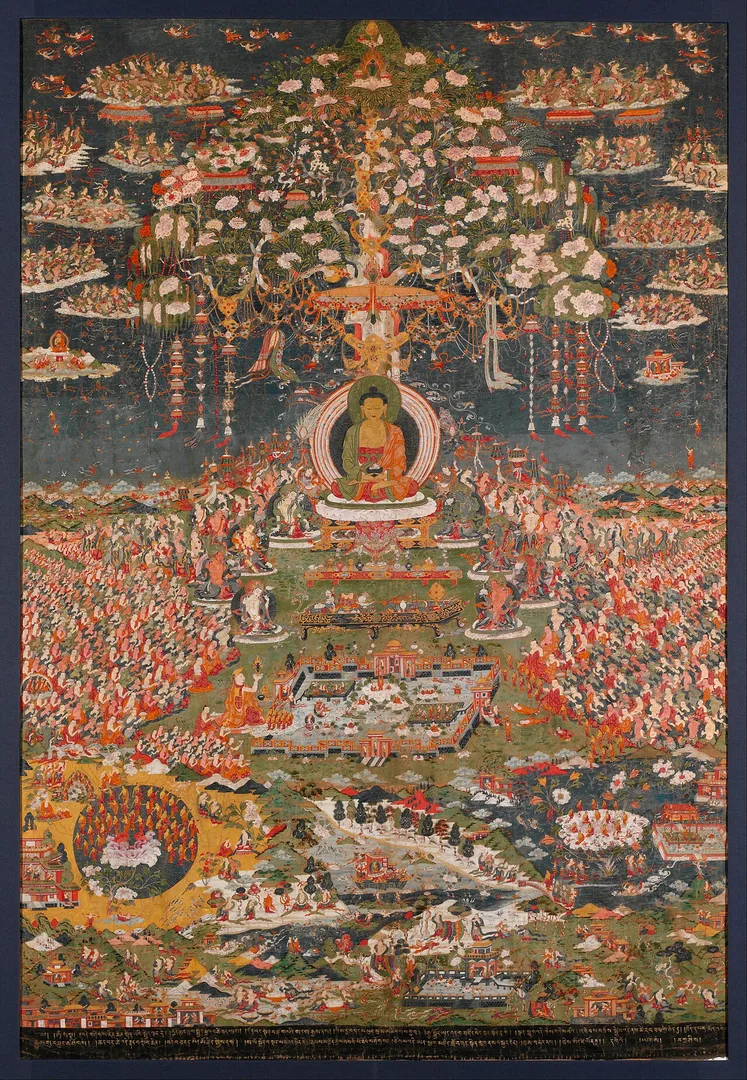
Amitābha (Öpakmé · Buddha of Infinite Light)
Radiating warm sunset-ruby red in the West of the Tibetan mandala, Amitābha (“Infinite Light,” Tibetan Öpakmé) rests both hands in meditation equipoise cradling an alms bowl of ambrosial nectar (amṛta), presiding over the Lotus Family to which Chenrezig and Padmasambhava belong.
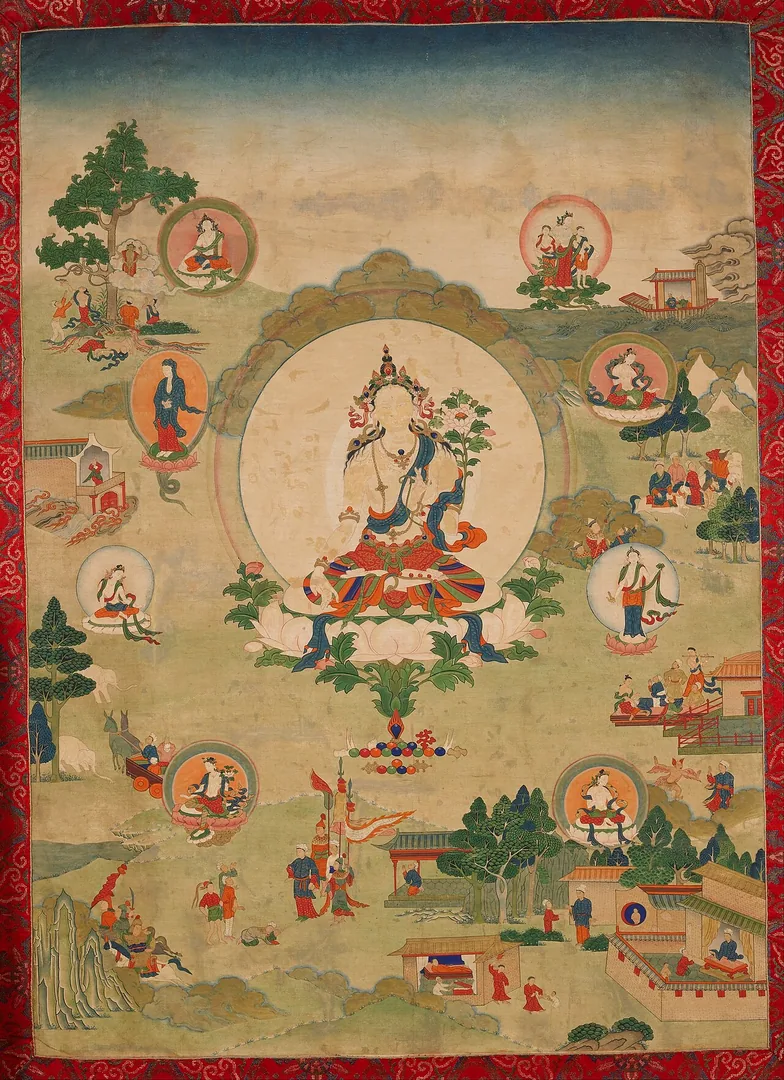
White Tārā (Sgrol-dkar)
Distinguished by seven eyes—on her forehead, palms, soles, and face—White Tārā sits in full vajra posture radiating autumn-moon serenity, forming one of Tibet’s Three Long-Life Deities.
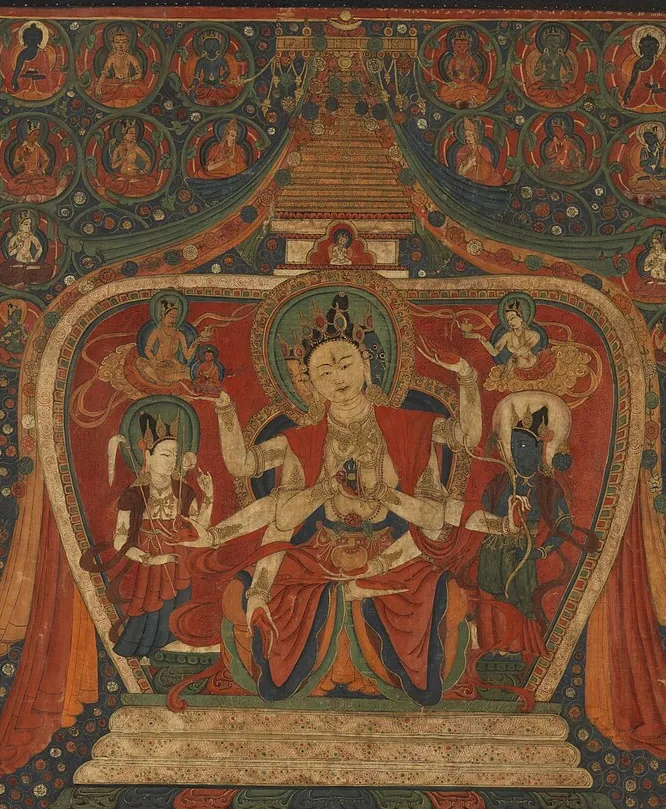
Uṣṇīṣavijayā (Namgyalma · Victorious Crown Wisdom)
Emanating as blinding white light from the crown protuberance (uṣṇīṣa) of Śākyamuni Buddha, three-faced eight-armed Namgyalma unites peaceful healing, protective strength, and karmic purification—completing Tibet’s revered Three Long-Life Deities.
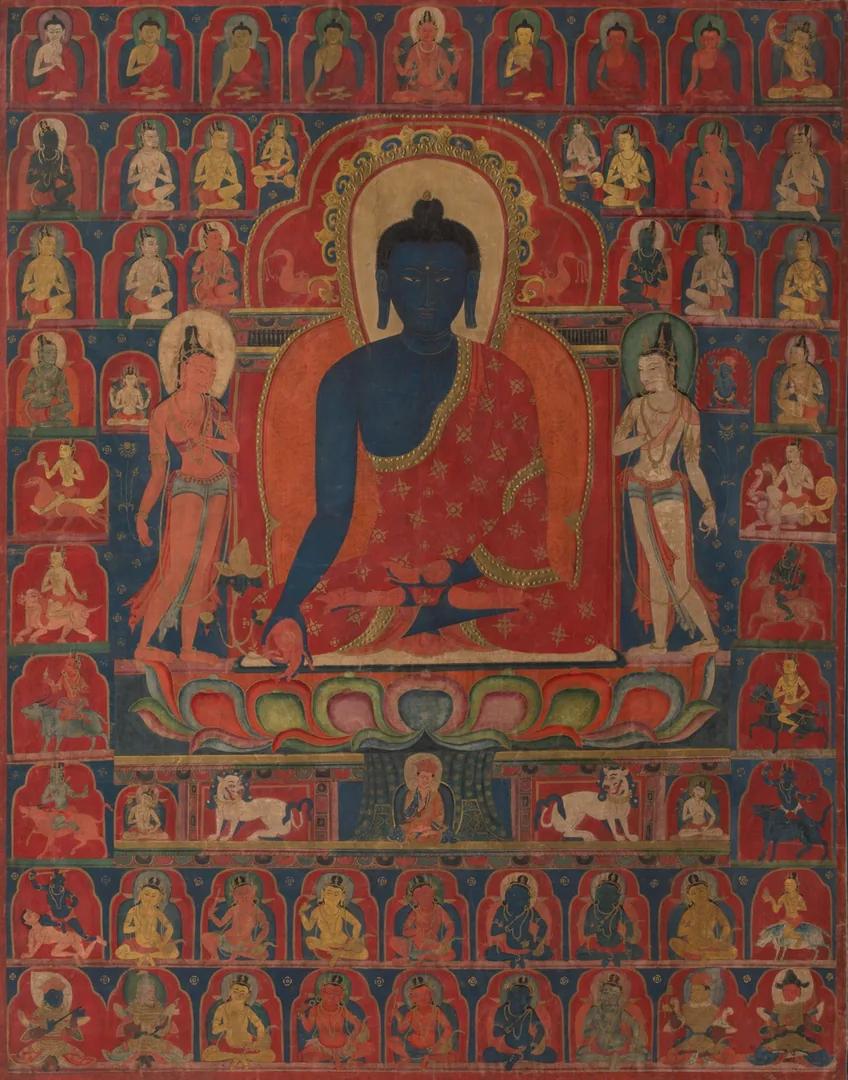
Medicine Buddha (Bhaiṣajyaguru · Sangye Menla)
Radiating deep lapis-lazuli blue, Sangye Menla wears monastic robes, holding an alms bowl of healing nectar in his left hand and a stem of golden myrobalan (arura) in his outstretched right hand.