The Potala Palace (Pho-brang Po-ta-la · Lhasa)
Why It Shares Its Name with Putuoshan—and How Stone, Tamarisk & Milk Built Thirteen Stories
Rising 117 meters atop Marpori (“Red Hill”) above the Lhasa valley, the Potala takes its name from Mount Potalaka—Avalokiteśvara’s pure abode in the Avataṃsaka Sūtra—fusing 7th-century meditation caves with the 17th-century White and Red Palaces.
Potala and Putuoshan: Two Transliterations of One Sanskrit Name
In the Gaṇḍavyūha chapter of the Avataṃsaka Sūtra, the pilgrim Sudhana visits the bodhisattva of compassion Avalokiteśvara on a luminous mountain named Potalaka. Maritime East Asian Buddhism mapped Potalaka onto the misty island of Putuoshan off Zhejiang; Tibetan tradition recognized Lhasa’s Red Hill (Marpori)—where 7th-century King Songtsen Gampo meditated—as Tibet’s earthly Potalaka, enshrining the sandalwood Ārya Lokeshvara statue inside the Phakpa Lhakhang at the palace’s oldest core.
Architectural Code: White Walls, Crimson Ochre, and Tamarisk Parapets
Rebuilt on a monumental scale starting in 1645 by the Great Fifth Dalai Lama Ngawang Lobsang Gyatso and completed in 1694 by Regent Sangye Gyatso, the Potala uses battered inward-sloping granite walls up to five meters thick at the base (infused with molten copper in key joints for earthquake resilience) and lightweight spongy red-willow/tamarisk bundles (penma) along the upper parapets to drastically reduce roof load while signifying sacred authority.
| Zone / Element | Pigment & Material | Functional & Symbolic Role |
|---|---|---|
| White Palace (Potrang Karpo) | White clay mixed with milk, honey & sugar washes | Peaceful auspiciousness; living quarters, offices & seminary |
| Red Palace (Potrang Marpo) | Red earth ochre from western plateaus | Wisdom & sacred power; central chapels, 3D mandalas & reliquary stupas |
| Yellow Walls (Zhol / Courtyard) | Ochre mineral wash | Enriching merit & monastic assembly spaces |
| Penma Parapet Frieze | Bundled alpine tamarisk twigs dyed deep maroon + brass emblems | Cuts upper structural weight by ~60%; reserved exclusively for monasteries & palaces |
How It Is Practiced in Living Tradition
Encircled daily by pilgrims walking the Tsekor path lined with hundreds of brass prayer wheels around the foot of Red Hill, and refreshed each autumn before Lhabab Düchen by volunteers pouring whitewash down its walls.
Common Questions & Clarifications
Why are the walls of the Potala washed with milk and sugar every autumn?
Beyond devotional offering, casein proteins in yak milk and natural sugars act as an organic binder that helps the white lime-clay adhere tightly to stone through freezing Lhasa winters without flaking.
Primary Sources & Further Reading
- UNESCO World Heritage Dossier: Historic Ensemble of the Potala Palace, Lhasa (Criteria i, iv, vi)
Connected in the Mandala Graph
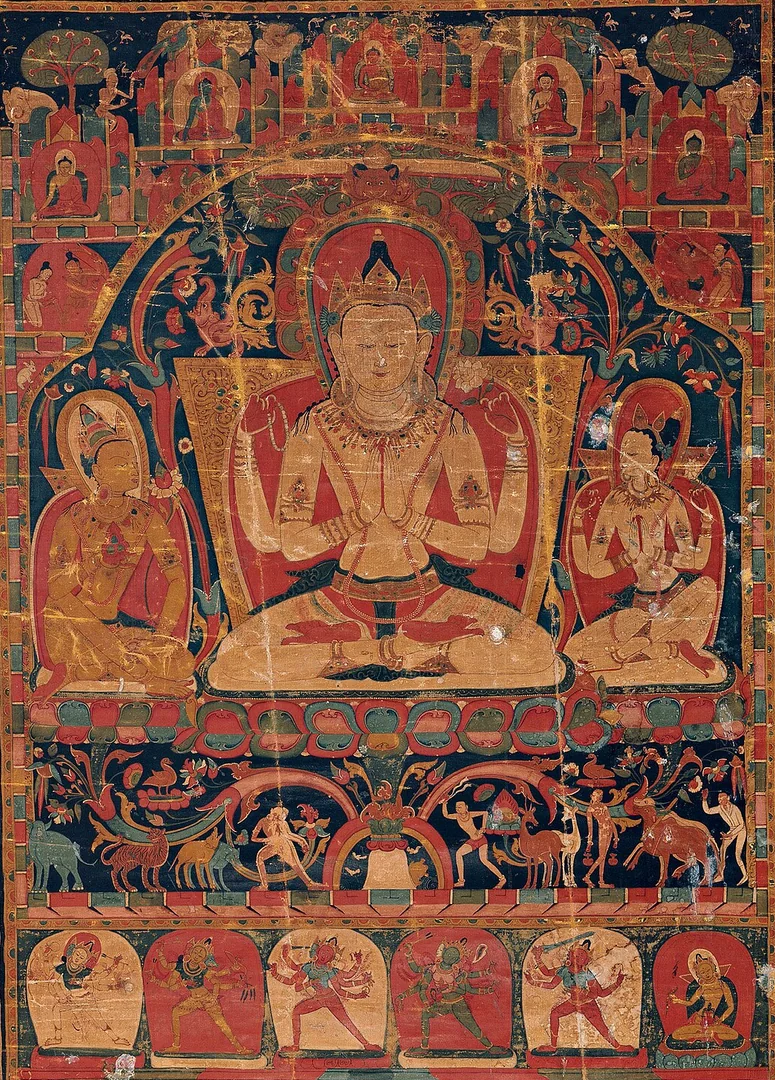
Avalokiteśvara (Chenrezig)
Known in Tibetan as Chenrezig (“One Who Gazes with Unwavering Eyes”), the four-armed white form embodies impartial compassion united with emptiness, associated with the Six-Syllable Mantra Oṃ Maṇi Padme Hūṃ.
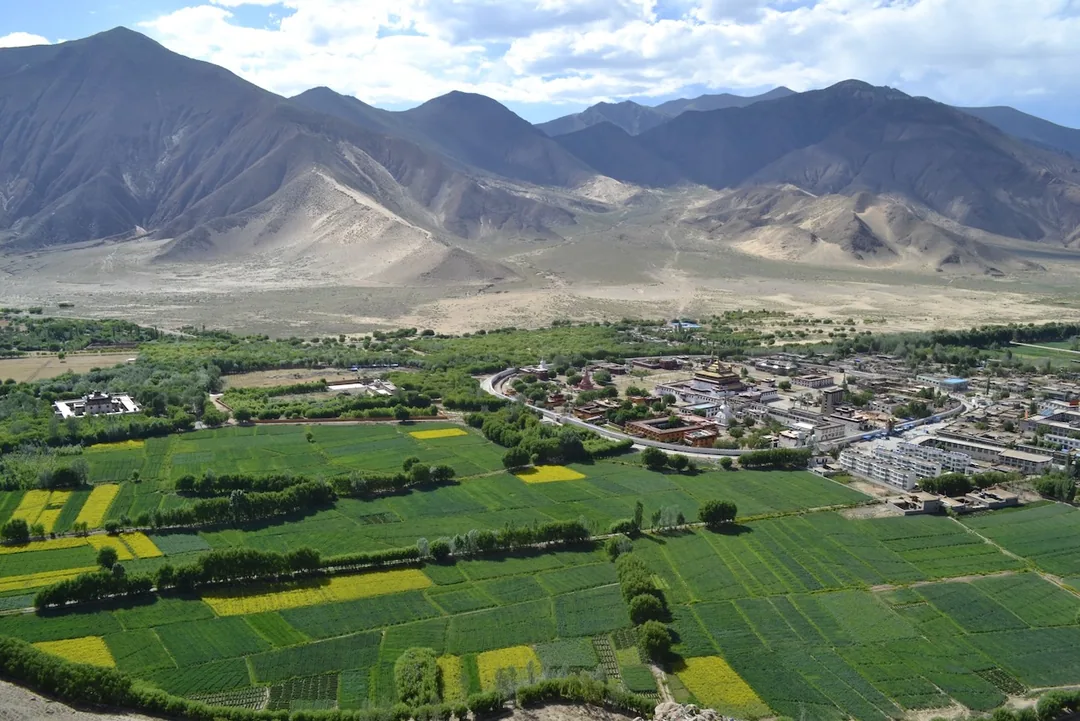
Jokhang Temple & Samye Monastery
Built in the 7th and 8th centuries respectively, Lhasa’s Jokhang anchors Tibetan devotional pilgrimage around the Jowo Śākyamuni, while Samye in Lhoka realizes an entire three-dimensional mandala in stone, timber, and earth.
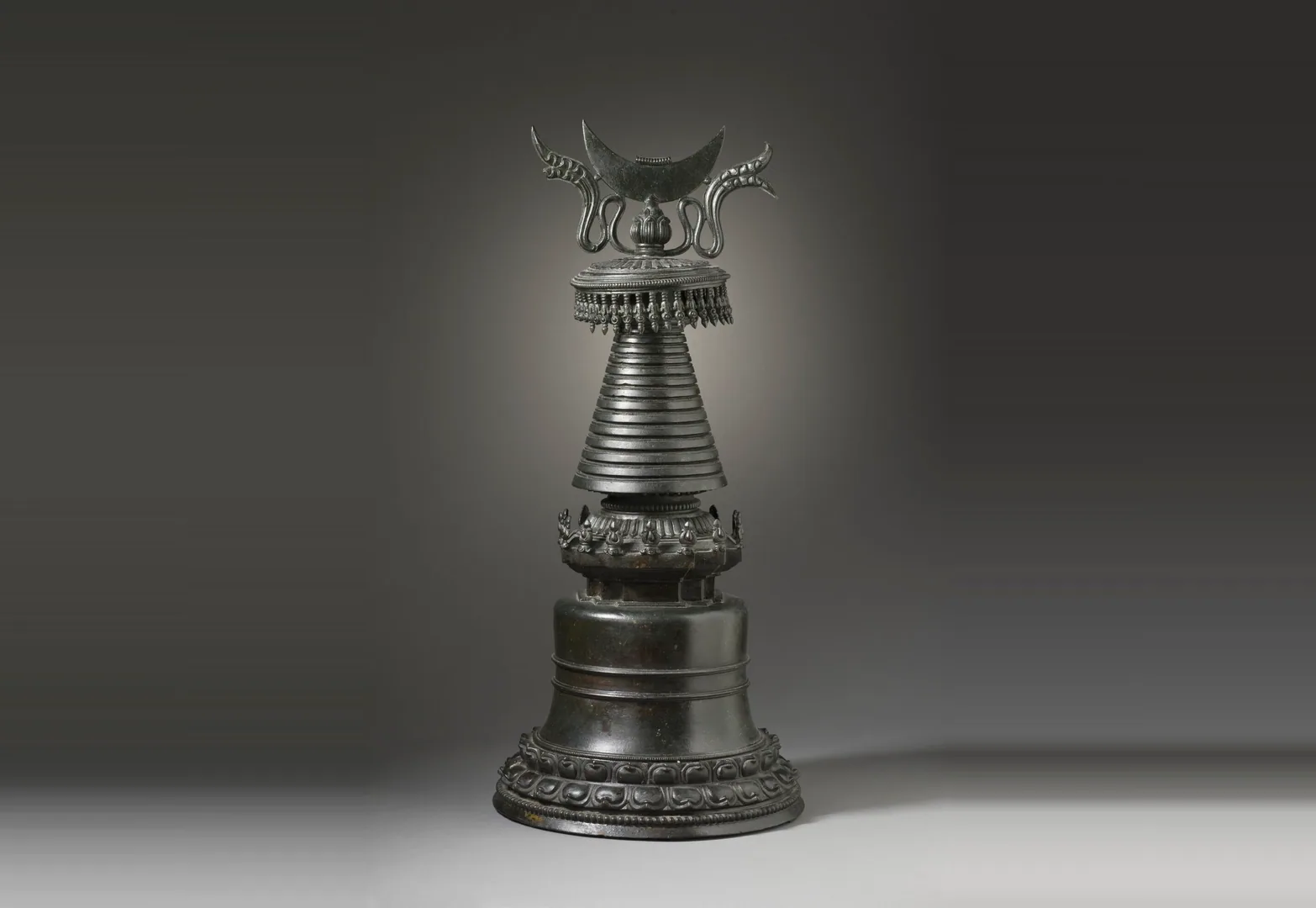
The Tibetan Stupa (Chörten · མཆོད་རྟེན།) & Eight Great Forms
Translated into Tibetan as mchod-rten (“receptacle of offerings”), every Himalayan whitewashed stupa stacks square earth, rounded water, conical fire, crescent air, and dissolving space into a three-dimensional statue of the Buddha’s Dharmakāya mind.
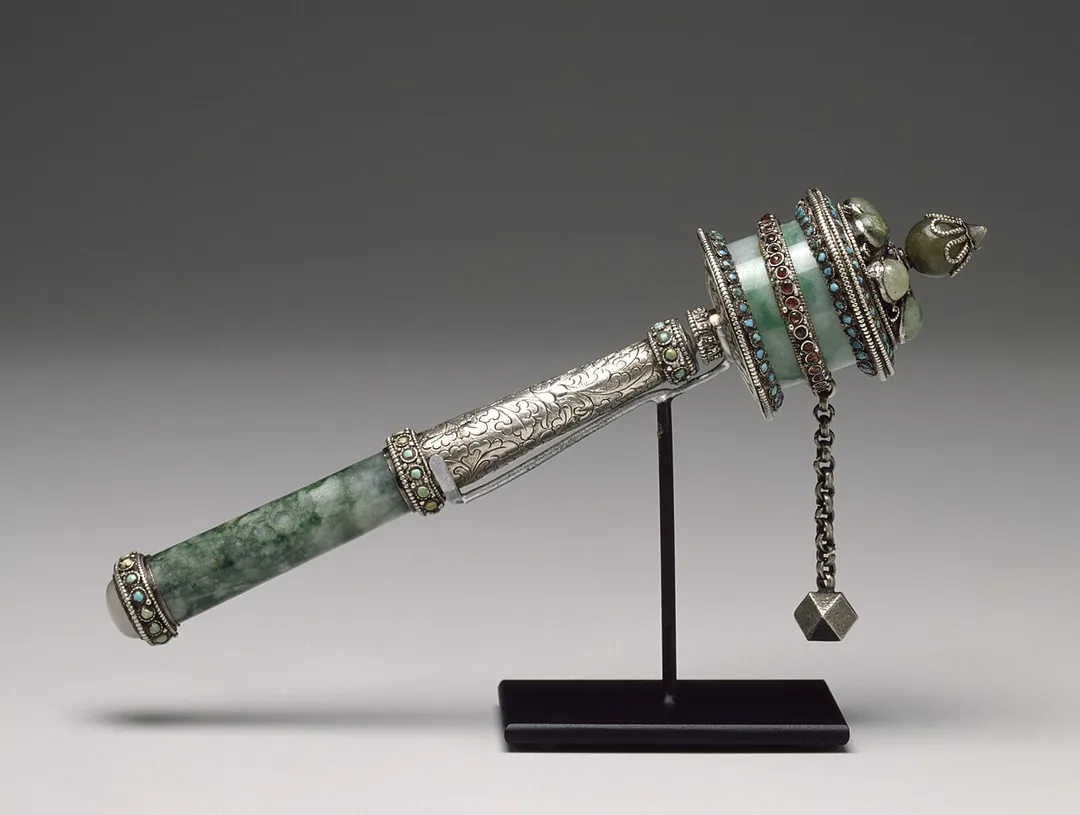
Tibetan Prayer Wheel (Mani Khorlo)
Far more than handheld brass cylinders, Tibetan prayer wheels harness mountain streams, high-pass wind, and rising butter-lamp heat so consecrated texts keep turning even while human bodies sleep.