Jokhang Temple & Samye Monastery
How Lhasa’s Sacred Center & Tibet’s First Monastery Were Designed
Built in the 7th and 8th centuries respectively, Lhasa’s Jokhang anchors Tibetan devotional pilgrimage around the Jowo Śākyamuni, while Samye in Lhoka realizes an entire three-dimensional mandala in stone, timber, and earth.
Jokhang: Why Lhasa Grew Around a Temple Rather Than a Palace
Urban historians note that old Lhasa was organized not around a fortress, but around three concentric circumambulation circuits (kora) radiating outward from the Jokhang’s Jowo Śākyamuni statue: the inner Nangkhor corridor lined with hundreds of copper prayer wheels inside the temple, the middle Barkhor street forming the city’s vibrant marketplace, and the five-mile outer Lingkhor encompassing the Potala.
Samye: Walking Inside a Three-Dimensional Mandala
Modeled after Odantapurī Monastery in Bihar, Samye’s circular perimeter wall encloses a literal cosmogram: the central three-story Utse represents Mount Meru, surrounded by four cardinal temples for the Four Continents, eight sub-temples for subcontinents, Sun and Moon chapels, and four corner stupas in white, red, green, and black. Even its central hall intentionally fused Tibetan stone masonry on the ground floor, Tang Chinese timber eaves on the middle floor, and Indian-style wood framing at the summit.
How It Is Practiced in Living Tradition
Pilgrims walk the Barkhor and Samye perimeter clockwise from before dawn into the evening, turning handheld wheels or measuring the road in full-body prostrations.
Common Questions & Clarifications
Why were the first seven Tibetan monks at Samye called “The Seven Men Tested”?
Before establishing permanent monasticism, King Trisong Detsen and Śāntarakṣita ordained seven young Tibetans to test whether native Tibetans could thrive under Indian Vinaya monastic vows—they succeeded brilliantly, founding Tibet’s ordained Sangha.
Primary Sources & Further Reading
- André Alexander, The Temples of Lhasa: Tibetan Buddhist Architecture from the 7th to the 21st Centuries
Connected in the Mandala Graph
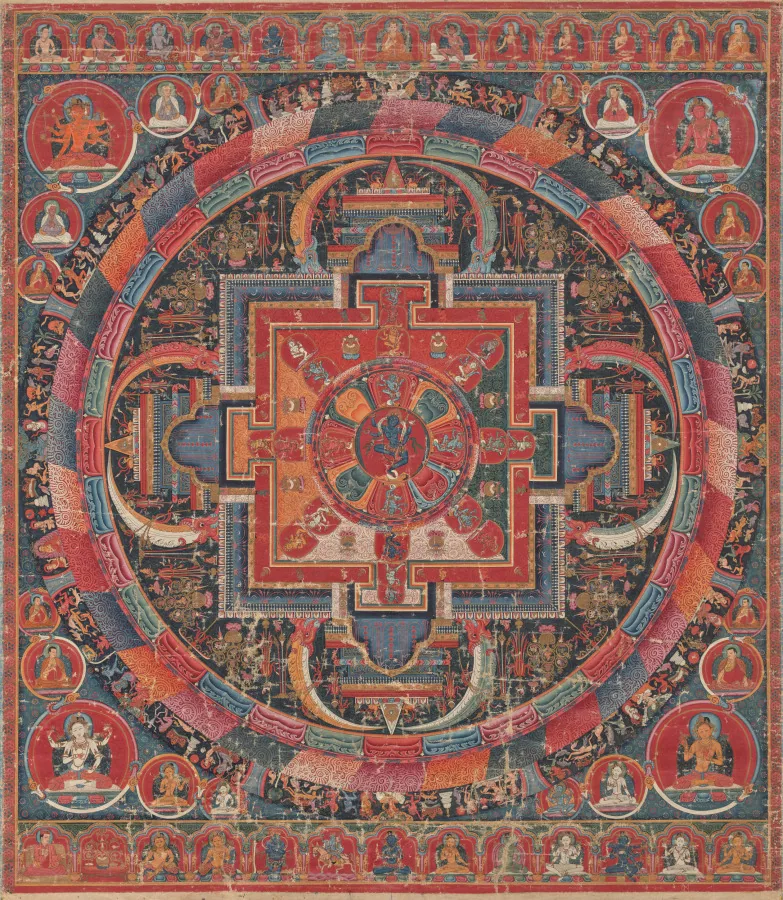
The Mandala (Kyilkhor · དཀྱིལ་འཁོར།)
Rendered in Tibetan as dkyil-’khor (“center and periphery”), a mandala is not decorative symmetry—it is a two-dimensional architectural floor plan of an awakened three-dimensional palace.
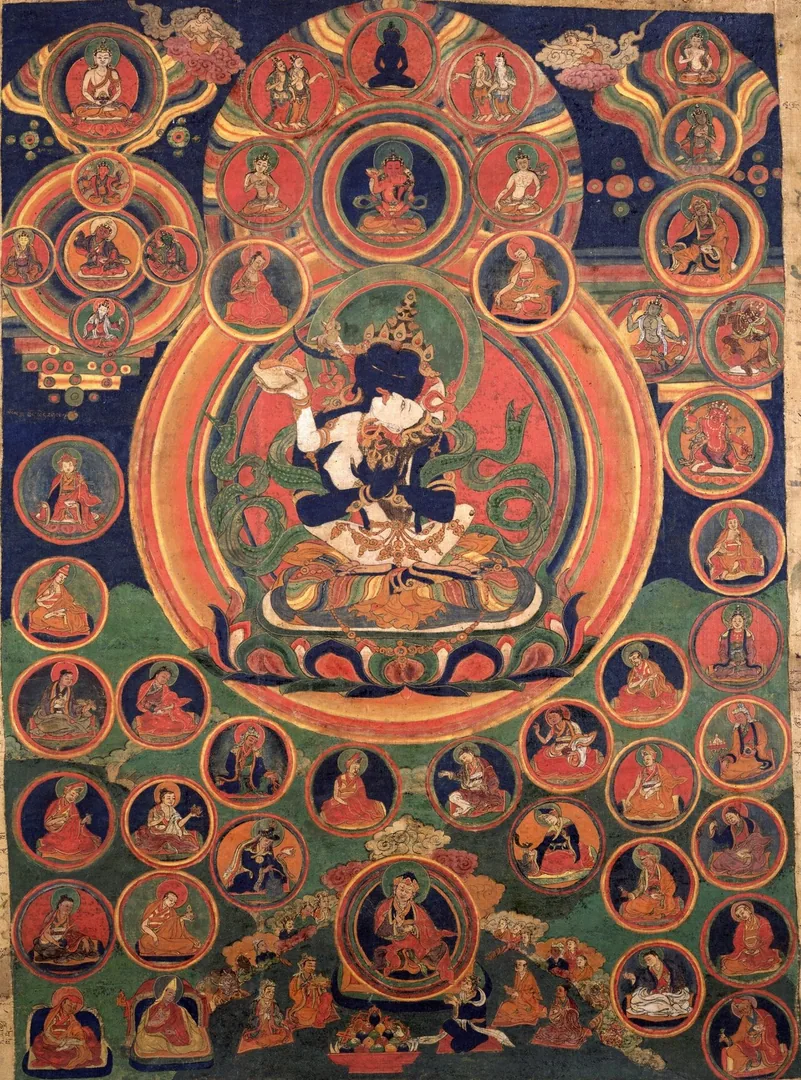
Padmasambhava (Guru Rinpoche)
Invited from Oddiyāna and Nālandā to Tibet by King Trisong Detsen in the 8th century, Padmasambhava (“Lotus-Born”) consecrated Samye Monastery and harmonized Himalayan indigenous spirits with Buddhist Dharma.
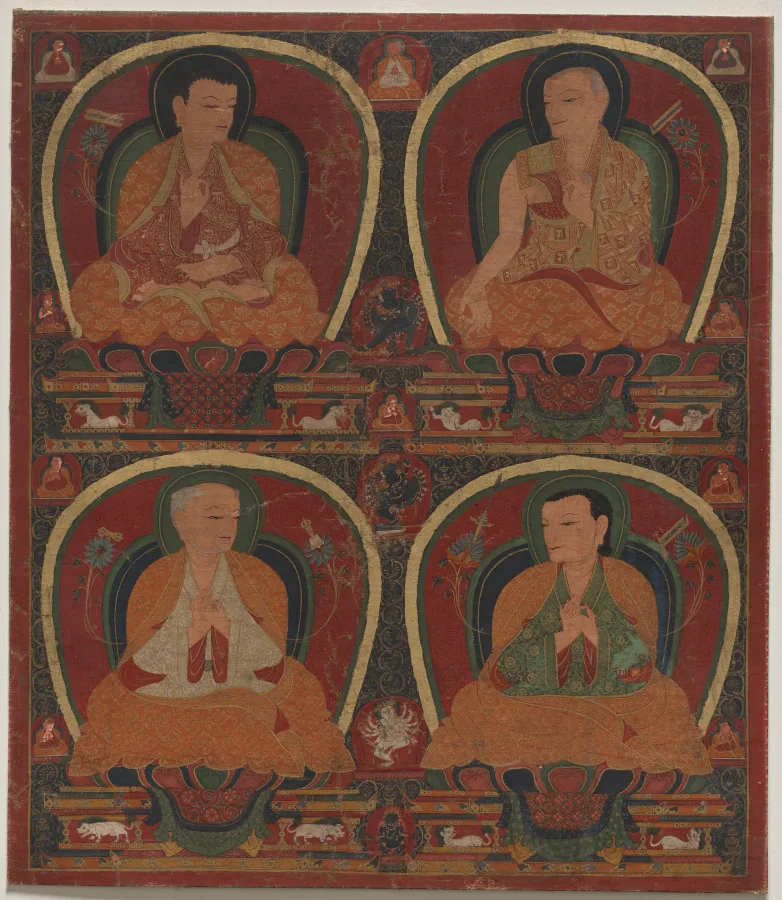
The Four Tibetan Schools & Bön Explained Clearly
Sharing the exact same Kangyur and Tengyur Buddhist canon, Tibet’s four major Buddhist schools differ not in core creed, but in historical translation era, pedagogical sequence, and meditative emphasis.
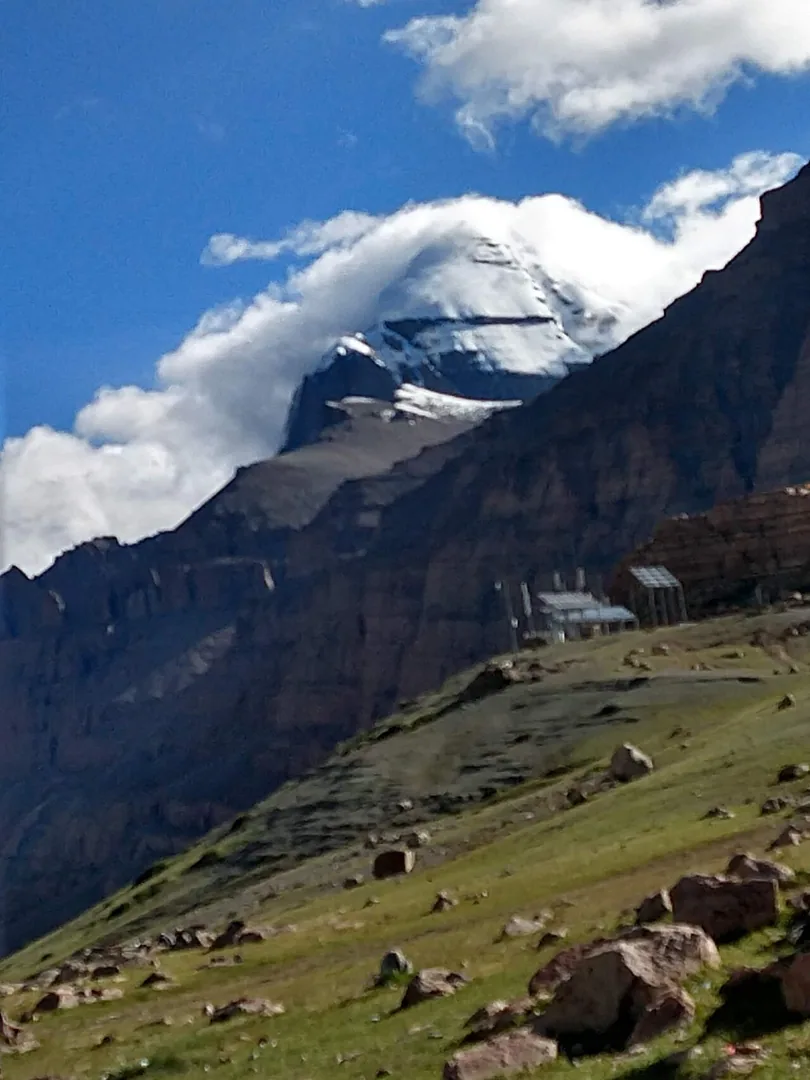
Mount Kailash (Gang Rinpoche) & Kora
Known in Tibetan as Gang Rinpoche (“Precious Jewel of Snows”), this four-sided peak in western Ngari feeds four of Asia’s greatest rivers and remains intentionally unclimbed out of shared reverence across Tibetan Buddhism, Bön, Hinduism, and Jainism.