Oṃ Āḥ Hūṃ Vajra Guru Padma Siddhi Hūṃ (Vajra Guru Mantra)
Padmasambhava’s Twelve-Syllable Invocation · Three Vajras & Three Kāyas
Known across the Himalayas as the Vajra Guru Mantra, these twelve syllables align body, speech, and mind (Oṃ Āḥ Hūṃ) with indestructible wisdom (Vajra), noble guidance (Guru), and unstained compassion (Padma) to clear obstacles on the path.
Awakened Body (Nirmāṇakāya): grounds scattered physical energy into stillness.
Structure of the Twelve Syllables: Outer, Inner, and Secret
In the classic 14th-century commentary revealed by Karma Lingpa and elaborated by Jamgön Mipham Rinpoche, the Vajra Guru Mantra is structured like a precision mandala. The opening triad Oṃ Āḥ Hūṃ purifies grasping in body, speech, and mind. Next, Vajra (“diamond”) invokes the immutable Dharmakāya (Amitābha’s timeless nature); Guru (“weighty with spiritual qualities”) invokes the luminous Sambhogakāya (Avalokiteśvara); and Padma (“lotus”) invokes the Nirmāṇakāya—Padmasambhava appearing in history within the Lotus Family of discerning warmth.
Finally, Siddhi (“accomplishment”) asks for both ordinary harmony in navigating life’s storms and supreme awakening from ego-fixation, while the closing Hūṃ draws that clarity directly into the present moment: “May it ripen right here in my heart.”
Why Sanskrit “Vajra” and “Padma” Sound Like “Benza” and “Pema” in Tibet
Just as in Oṃ Maṇi Padme Hūṃ, Tibetan scribes preserved exact Sanskrit spelling via stacked consonant ligatures (བཛྲ for vajra, པདྨ for padma), while Tibetan oral recitation adapted foreign consonant clusters to Himalayan phonology: initial v shifted to b, nasalized -jr- became -nza ("ben-za"), and -dma softened into -ma ("pe-ma"). Both the Sanskrit pronunciation (Om āḥ hūṃ vajra guru padma siddhi hūṃ) and the Tibetan lineage reading (Om ah hung benza guru pema sidhi hung) are completely authentic.
How It Is Practiced in Living Tradition
Paired with the Seven-Line Prayer (Tsik Dün Soldeb) on the 10th day of every Tibetan month, during mountain crossings, and in turbulent historical or personal transitions.
Common Questions & Clarifications
Is the Vajra Guru Mantra restricted only to the Nyingma school?
Not at all. While Nyingma preserves Padmasambhava’s terma cycles most extensively, Kagyu, Sakya, and Gelug monasteries—including the Dalai Lamas and Karmapas—regularly recite the Seven-Line Prayer and Vajra Guru Mantra to clear obstacles for the entire Dharma.
Primary Sources & Further Reading
- Tulku Thondup, The Power of Mantra: Vital Practices for Transformation (Karma Lingpa text)
- Jamgön Mipham Rinpoche, White Lotus: An Explanation of the Seven-Line Prayer to Guru Padmasambhava
Connected in the Mandala Graph
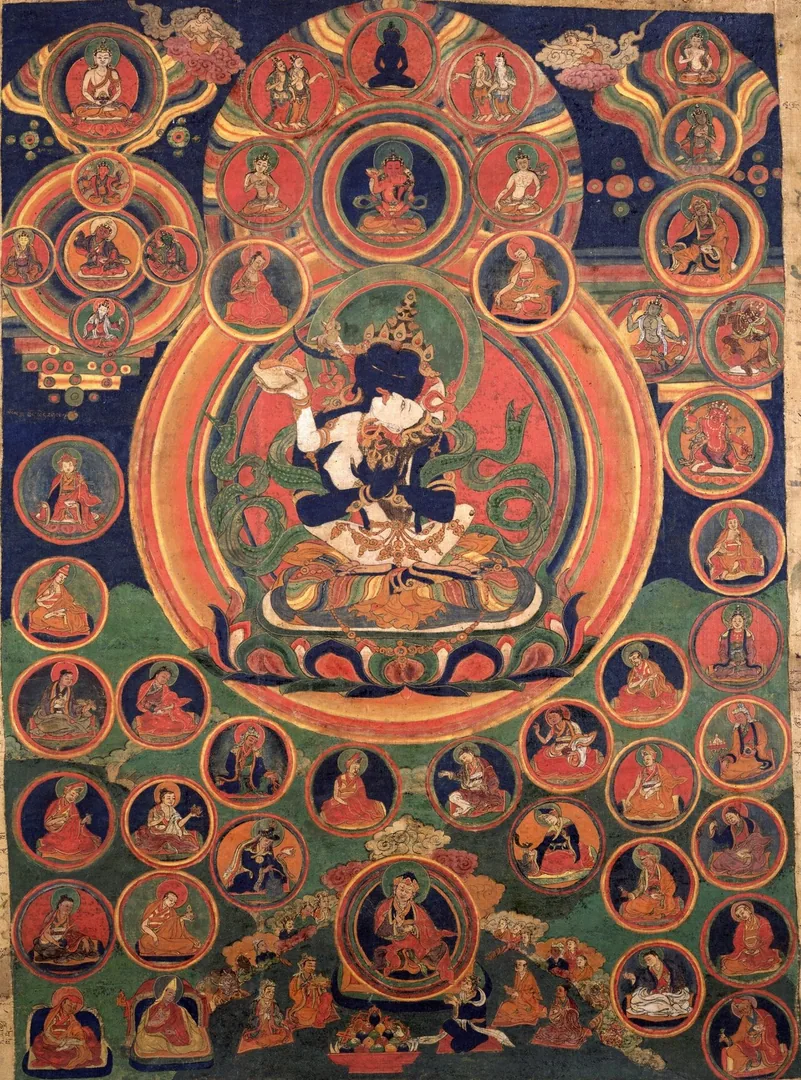
Padmasambhava (Guru Rinpoche)
Invited from Oddiyāna and Nālandā to Tibet by King Trisong Detsen in the 8th century, Padmasambhava (“Lotus-Born”) consecrated Samye Monastery and harmonized Himalayan indigenous spirits with Buddhist Dharma.
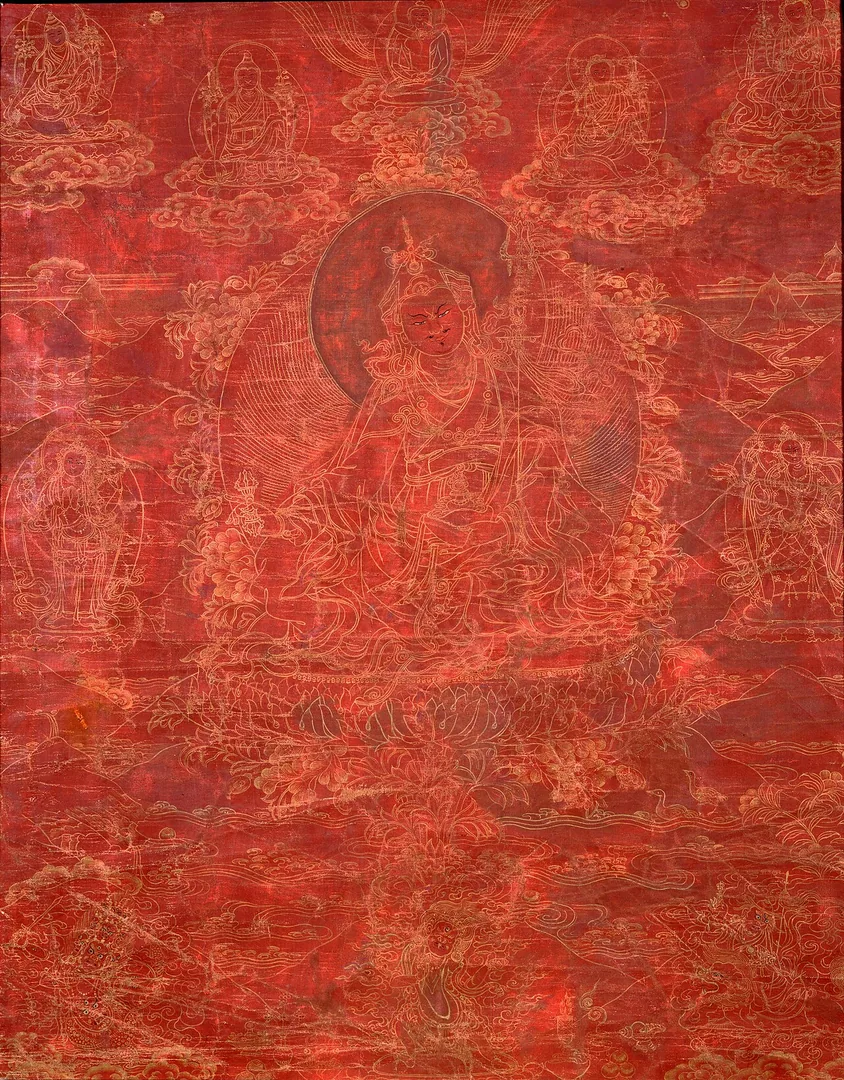
The Seven-Line Prayer to Guru Rinpoche (Tsik Dün Soldeb)
Revered across the Himalayas as the primordial invocation spoken by wisdom ḍākinīs at Nālandā, these seven metered Tibetan lines summon Padmasambhava outwardly as historical teacher and inwardly as the unborn clarity of one’s own mind (rigpa).
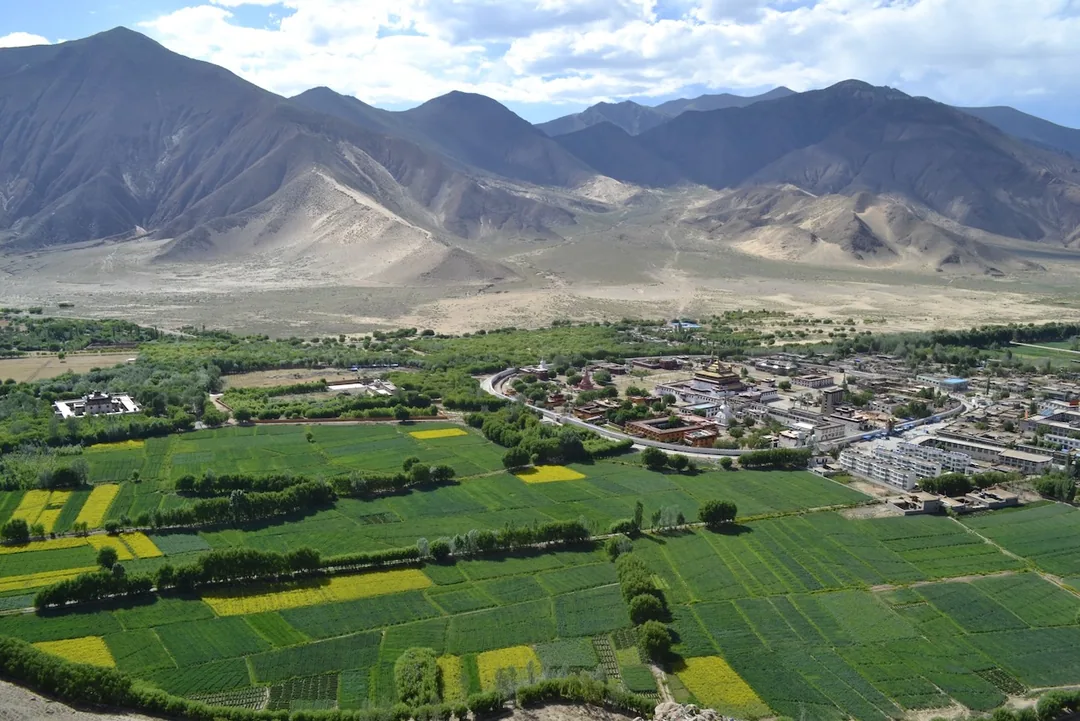
Jokhang Temple & Samye Monastery
Built in the 7th and 8th centuries respectively, Lhasa’s Jokhang anchors Tibetan devotional pilgrimage around the Jowo Śākyamuni, while Samye in Lhoka realizes an entire three-dimensional mandala in stone, timber, and earth.
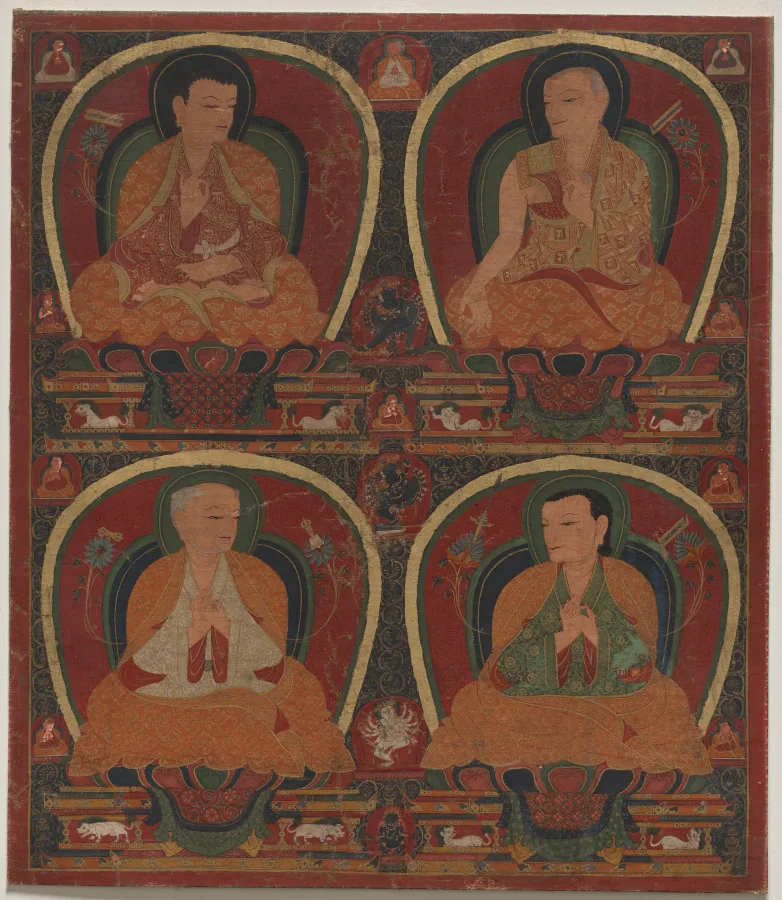
The Four Tibetan Schools & Bön Explained Clearly
Sharing the exact same Kangyur and Tengyur Buddhist canon, Tibet’s four major Buddhist schools differ not in core creed, but in historical translation era, pedagogical sequence, and meditative emphasis.