Padmasambhava (Guru Rinpoche)
8th-Century Tantric Master Who Established Buddhism in Tibet
Invited from Oddiyāna and Nālandā to Tibet by King Trisong Detsen in the 8th century, Padmasambhava (“Lotus-Born”) consecrated Samye Monastery and harmonized Himalayan indigenous spirits with Buddhist Dharma.
History & Legend: How Samye Was Built
When King Trisong Detsen invited the great Indian logician Śāntarakṣita from Nālandā to build Tibet’s first monastery at Samye, chronicles record that daytime construction repeatedly collapsed in storms and local resistance at night. Śāntarakṣita advised inviting Padmasambhava—not because philosophy lacked truth, but because integrating a new worldview into rugged alpine culture required ritual genius that transformed, rather than bulldozed, indigenous mountain deities into sworn protectors of the Dharma.
Decoding His Layered Robes and Trident
Unlike monastic portraits depicting a single saffron robe, Padmasambhava wears three distinct layers: white inner tantric garments, maroon monastic robes, and a dark-blue royal cloak—visually declaring that Vinaya ethics, Bodhisattva compassion, and Vajrayāna view coexist without contradiction in a single practitioner.
How It Is Practiced in Living Tradition
Every 10th day of the Tibetan lunar calendar (Tsechu) is observed across Bhutan and Tibet with communal Tsok feasts, Seven-Line Prayer recitation, and remembrance of Guru Rinpoche’s deeds.
Common Questions & Clarifications
Why are Guru Rinpoche’s eyes painted wide open rather than half-closed?
Known as the “wrathful-peaceful gaze” (zhi-khro), wide-open eyes signify wakeful Dzogchen awareness fully engaged with chaotic reality rather than retreating into trance.
Primary Sources & Further Reading
- Testament of Ba (dBa’ bzhed, 9th–11th c. Tibetan royal chronicle)
- Yeshe Tsogyal (attrib.), The Lotus-Born: The Life Story of Padmasambhava
Connected in the Mandala Graph
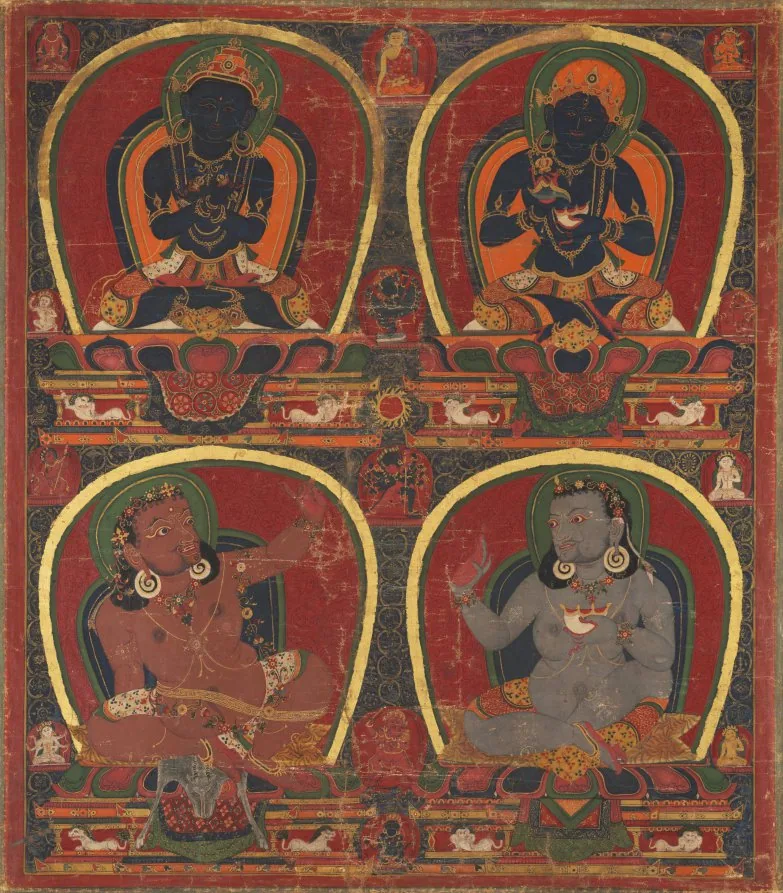
Oṃ Āḥ Hūṃ Vajra Guru Padma Siddhi Hūṃ (Vajra Guru Mantra)
Known across the Himalayas as the Vajra Guru Mantra, these twelve syllables align body, speech, and mind (Oṃ Āḥ Hūṃ) with indestructible wisdom (Vajra), noble guidance (Guru), and unstained compassion (Padma) to clear obstacles on the path.
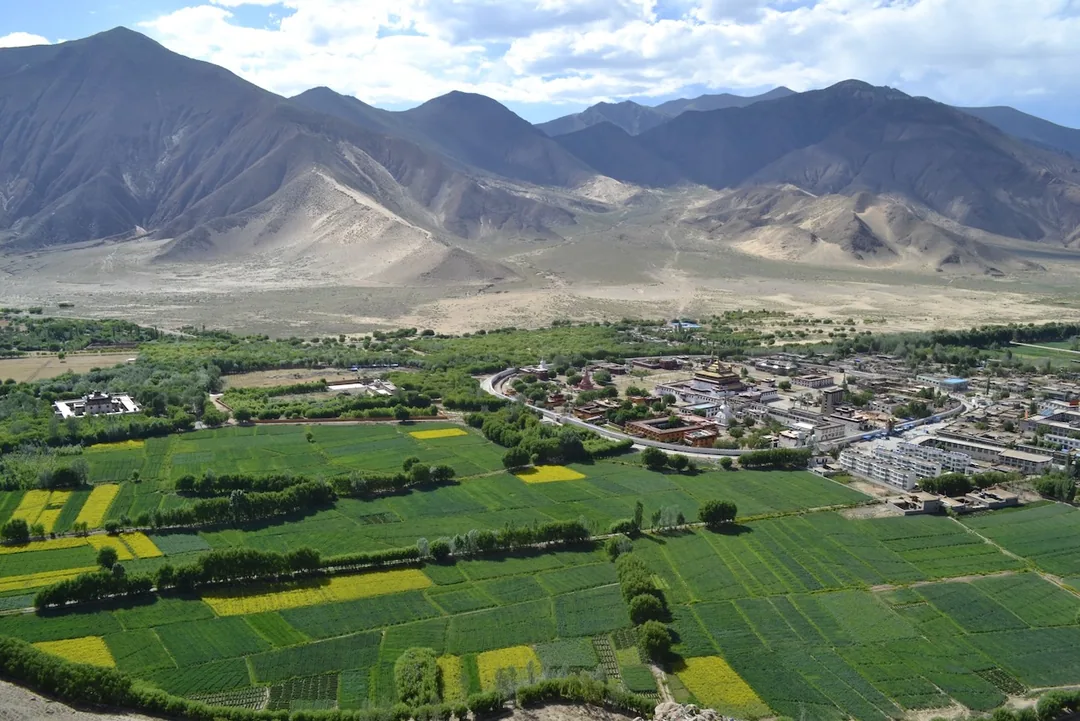
Jokhang Temple & Samye Monastery
Built in the 7th and 8th centuries respectively, Lhasa’s Jokhang anchors Tibetan devotional pilgrimage around the Jowo Śākyamuni, while Samye in Lhoka realizes an entire three-dimensional mandala in stone, timber, and earth.
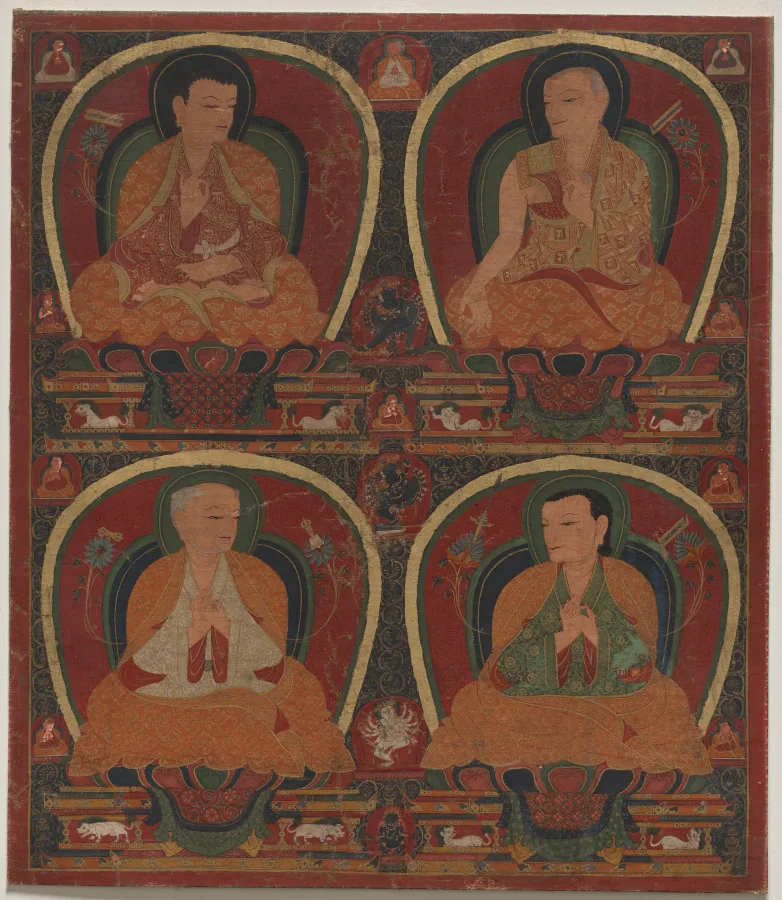
The Four Tibetan Schools & Bön Explained Clearly
Sharing the exact same Kangyur and Tengyur Buddhist canon, Tibet’s four major Buddhist schools differ not in core creed, but in historical translation era, pedagogical sequence, and meditative emphasis.
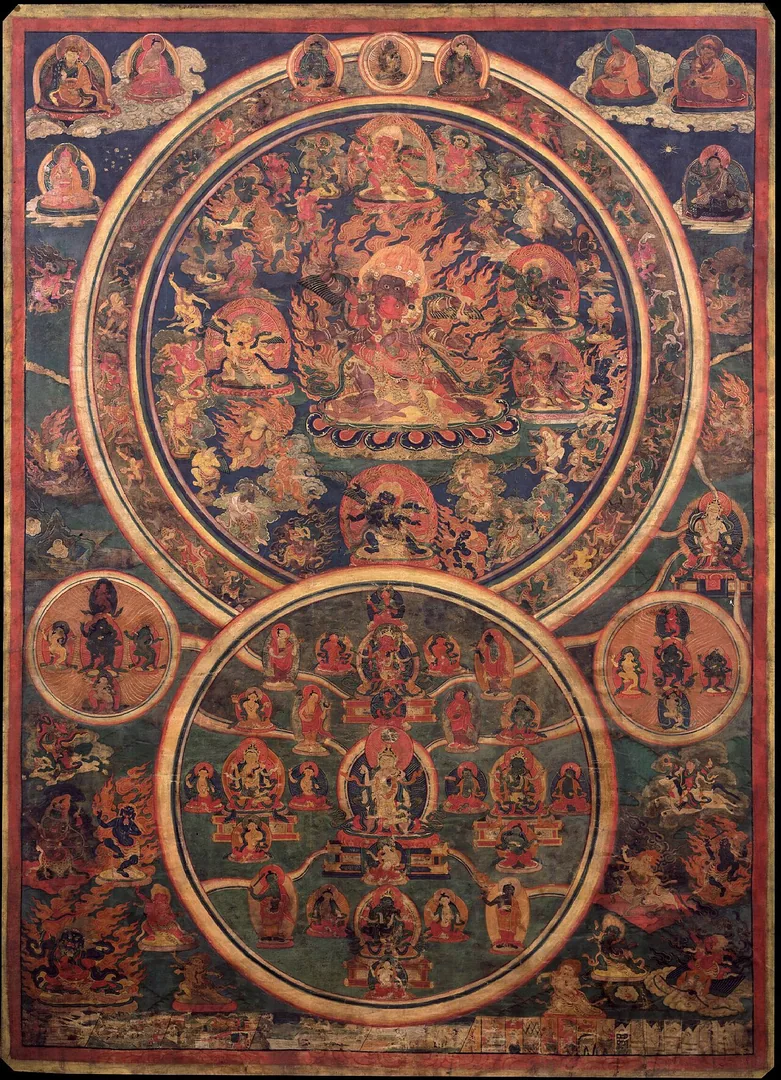
Bardo: The Six In-Between States
Literally “interval between two things” (bar-do), the famous Tibetan Book of the Dead (Bardo Thödol) maps not only death and rebirth, but six everyday transitional spaces—starting with this waking moment.