The Eight Auspicious Symbols (Ashtamangala)
Iconographic Origins & Visual Vocabulary of Himalayan Art
Originally royal coronation offerings in ancient India and reinterpreted as attributes of the Buddha’s awakened body, speech, and mind, these eight emblems form the foundational grammar of Tibetan visual design.
Cool shade protecting mind from the heat of affliction.
Swimming freely without fear of drowning in samsara.
Inexhaustible vessel of wisdom that never diminishes when shared.
Rooted in river mud yet opening unstained in clear air.
Clockwise spiral proclaiming fearless, far-reaching truth.
No beginning and no end: interdependence of all phenomena.
Triumph of clear discernment over ignorance and discord.
Eight spokes of the Noble Eightfold Path in ceaseless motion.
From Ancient Indian Royal Gifts to Awakened Qualities
Long before Buddhism crossed the Himalayas, grouping eight auspicious objects (aṣṭamaṅgala) accompanied royal coronations and welcoming ceremonies in classical India. Early Buddhist sutras describe celestial beings—Brahma, Indra, and the Four Directional Kings—offering these exact items to Śākyamuni shortly after his birth and awakening, transforming emblems of worldly sovereignty into visual metaphors for inner freedom.
In Tibetan poetic treatises, the eight emblems map directly onto the Buddha’s awakened form: the Precious Parasol crowns the head as protective compassion; the Pair of Golden Fishes mirrors fearless, perceptive eyes; the Treasure Vase sits at the throat as inexhaustible Dharma speech; the Lotus rests on the tongue as truthful, unstained words; the rare Right-Turning White Conch proclaims teachings without fear; the Endless Knot sits at the heart as boundless interdependence; the Victory Banner marks the body’s triumph over discord; and the Eight-Spoked Golden Wheel marks the soles that walk the Noble Eightfold Path.
| Symbol | Tibetan (Wylie) | Buddha’s Form | Contemplative Meaning |
|---|---|---|---|
| Precious Parasol | རིན་ཆེན་གདུགས། (rin chen gdugs) | Crown / Head | Cooling shade of compassion shielding from heat of affliction |
| Pair of Golden Fishes | གསེར་ཉ། (gser nya) | Eyes | Swimming freely without fear of drowning in samsara |
| Treasure Vase | གཏེར་ཆེན་པོའི་བུམ་པ། (bum pa) | Throat / Neck | Inexhaustible treasury of wisdom & spiritual contentment |
| Sacred Lotus | པདྨ་བཟང་པོ། (pad+ma) | Tongue / Speech | Unstained integrity blooming cleanly out of mud |
| Right-Turning Conch | དུང་དཀར་གྱས་འཁྱིལ། (dung dkar) | Proclaiming Voice | Fearless, far-reaching proclamation waking beings from slumber |
| Endless Knot | དཔལ་བེའུ། (dpal be’u) | Heart-Mind | Seamless interdependence of emptiness & compassion without beginning or end |
| Victory Banner | རྒྱལ་མཚན། (rgyal mtshan) | Sacred Body | Triumph of mindfulness and insight over the four maras |
| Golden Dharma Wheel | ཆོས་ཀྱི་འཁོར་ལོ། (chos ’khor) | Soles of Feet | Eight spokes of the Noble Eightfold Path cutting delusion |
How It Is Practiced in Living Tradition
Drawn in white tsampa flour on thresholds during festivals, carved on wooden lintels, and contemplated as offerings of auspiciousness.
Common Questions & Clarifications
Why is a “right-turning” white conch shell considered extraordinary?
In nature, over 99.99% of Turbinella pyrum conch shells spiral counter-clockwise (sinistral/left-turning); a rare dextral shell spiraling clockwise matches Buddhist circumambulation and was treasured across India and Tibet.
Primary Sources & Further Reading
- Robert Beer, The Handbook of Tibetan Buddhist Symbols
Connected in the Mandala Graph
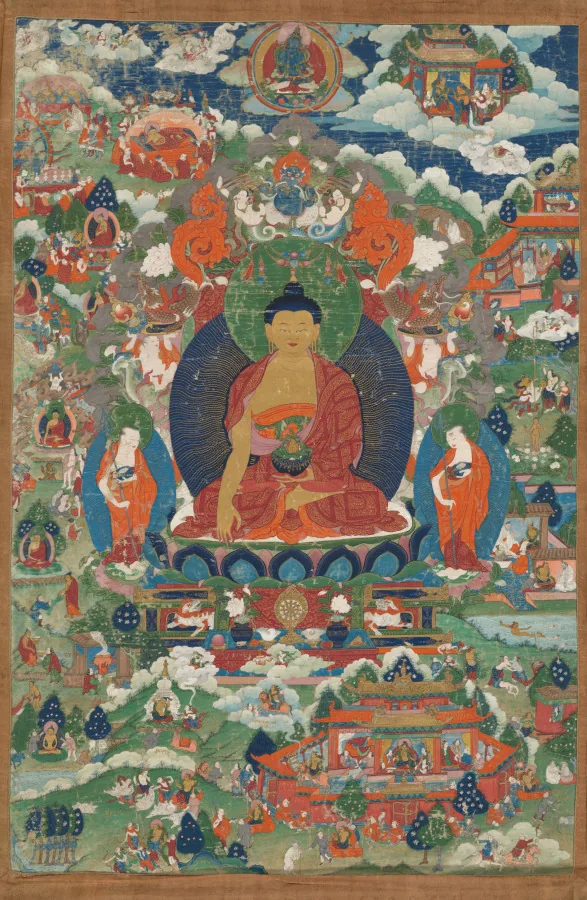
How to Read a Thangka Painting
Meaning “something unrolled” (thang-ka), a Tibetan scroll painting is structured along a strict vertical and proportional grid so portable monasteries on horseback could carry complete contemplative maps.
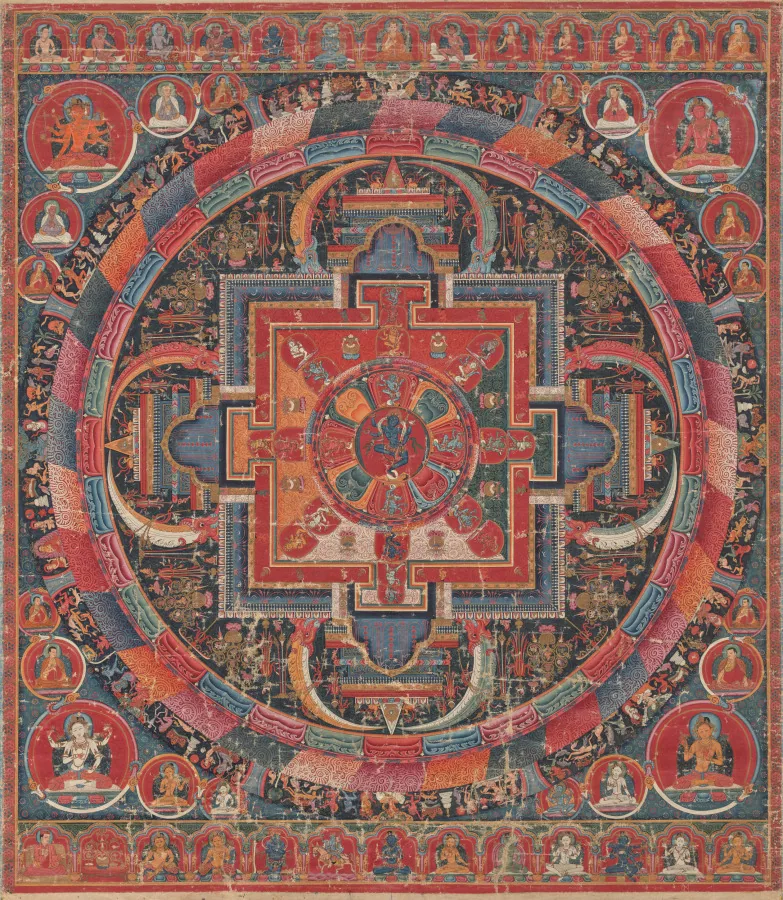
The Mandala (Kyilkhor · དཀྱིལ་འཁོར།)
Rendered in Tibetan as dkyil-’khor (“center and periphery”), a mandala is not decorative symmetry—it is a two-dimensional architectural floor plan of an awakened three-dimensional palace.
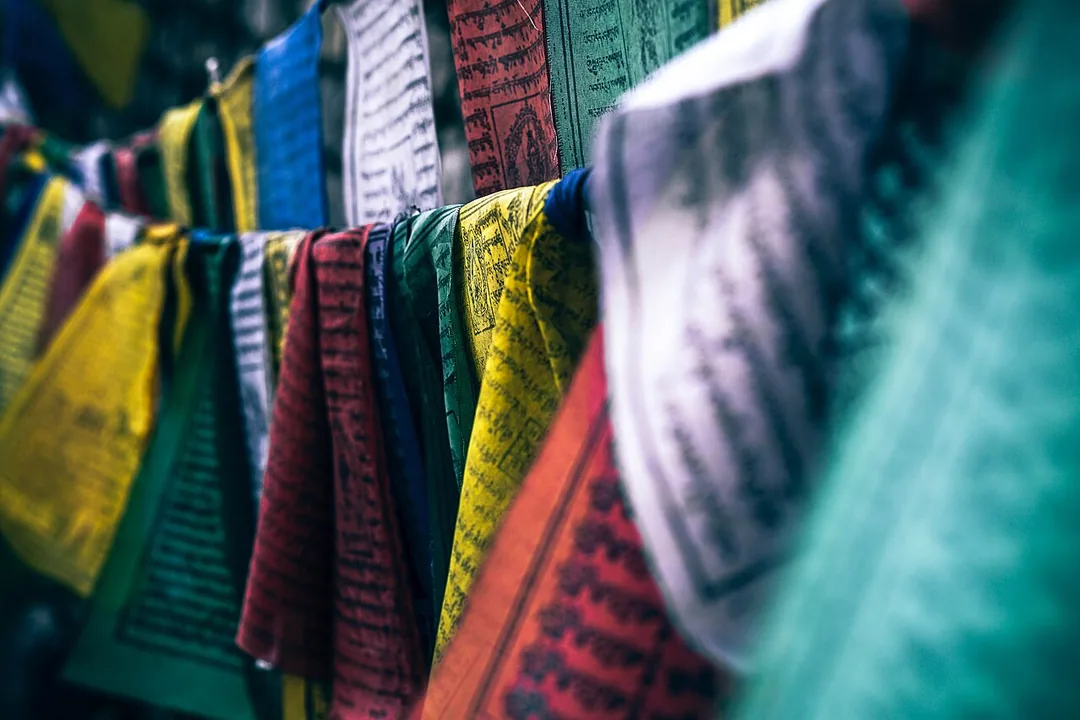
Five-Element Prayer Flags (Lungta · རླུང་རྟ།)
Literally “Wind Horse” (rlung-rta), five-colored cloth banners strung across Himalayan passes arrange the five natural elements in strict sequence so mountain wind carries auspiciousness across the valley.
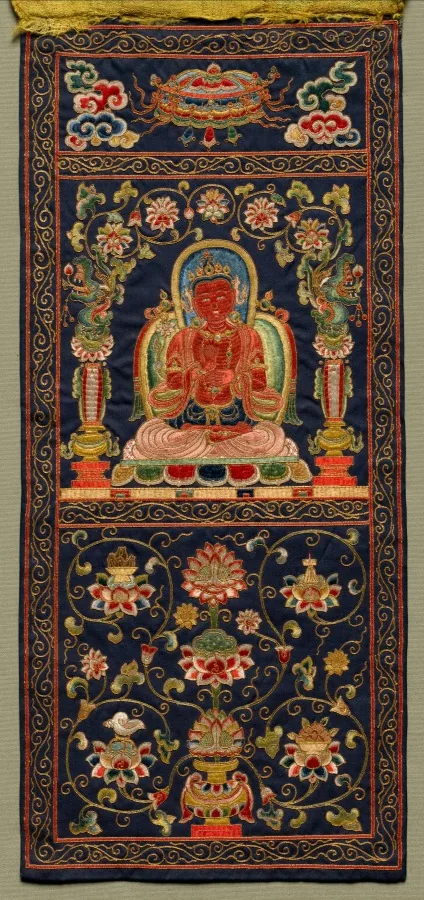
The Khatag Ceremonial Scarf (ཁ་བཏགས།)
Offered at greetings, farewells, empowerments, weddings, and mountain passes, the Tibetan khatag (“face-cloth” of unstained silk) expresses sincere goodwill free of hidden agenda—with subtle folding and offering gestures that speak volumes.