The Mandala (Kyilkhor · དཀྱིལ་འཁོར།)
Architectural Memory Palace & Sand Dissolution Ritual
Rendered in Tibetan as dkyil-’khor (“center and periphery”), a mandala is not decorative symmetry—it is a two-dimensional architectural floor plan of an awakened three-dimensional palace.
How to Read a Mandala Like an Architect
When viewing a Tibetan mandala thangka, imagine flying directly above a multi-tiered palace whose roofs have been lifted away so every courtyard and doorway is visible at once. Moving from the outside in, a practitioner crosses four thresholds: first the Ring of Five-Colored Flame and Vajra Fence (protecting concentration from distraction), then the Lotus Circle (pure motivation), then the square Four-Gated Palace oriented to East, South, West, and North, and finally the central axis where the principal figure resides.
Note a counter-intuitive cartographic detail: in Tibetan mandalas, East is traditionally placed at the bottom (facing the viewer entering the front gate), West at the top, North to the right, and South to the left.
Why Monks Spend Weeks Pouring Colored Sand Only to Sweep It Away
In sand mandala rituals (dul-tson kyil-khor), four monks lean for days over a wooden platform, scraping brass funnels (chak-pur) to lay millions of dyed stone grains with millimeter precision—a single sneeze can ruin hours of work. Yet hours after completion and consecration, the master cuts four lines across the cardinal axes and sweeps the entire palace into a plain jar, pouring the sand into a moving river.
Nothing speaks Tibetan Buddhism’s view more clearly: extreme care and total non-clinging belong together. Beauty is not diminished because it ends; clinging to permanence is what turns beauty into anxiety.
How It Is Practiced in Living Tradition
Used as visual blueprints in tantric contemplation, architectural plans for temples like Samye, and sand offerings for communal peace and ecological blessing.
Common Questions & Clarifications
Are Tibetan mandalas the same as stress-relief mandala coloring books?
Modern coloring mandalas borrow radial symmetry after Carl Jung popularized the term in psychology, whereas authentic Tibetan mandalas follow strict canonical proportions, directional colors, and scriptural iconography.
Primary Sources & Further Reading
- Denise Patry Leidy & Robert A. F. Thurman, Mandala: The Architecture of Enlightenment (Asia Society)
Connected in the Mandala Graph
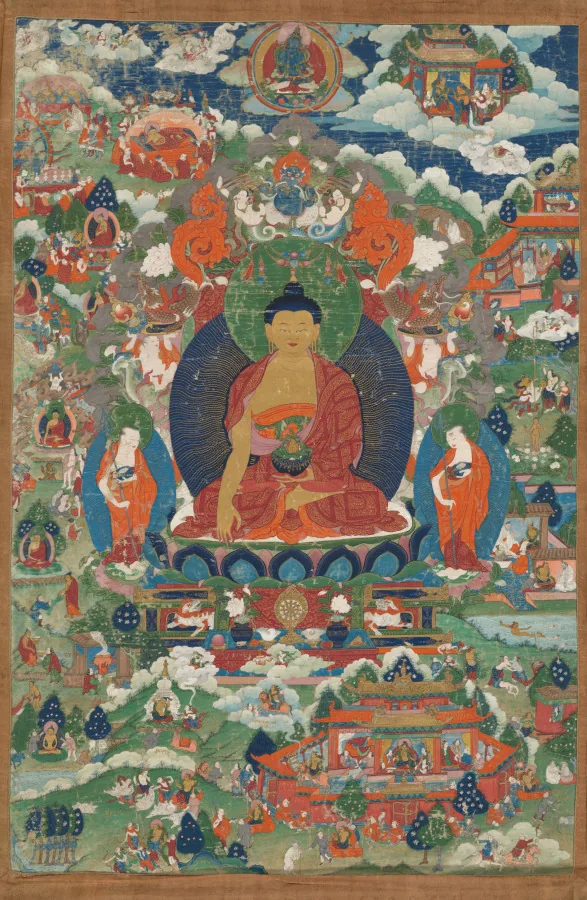
How to Read a Thangka Painting
Meaning “something unrolled” (thang-ka), a Tibetan scroll painting is structured along a strict vertical and proportional grid so portable monasteries on horseback could carry complete contemplative maps.
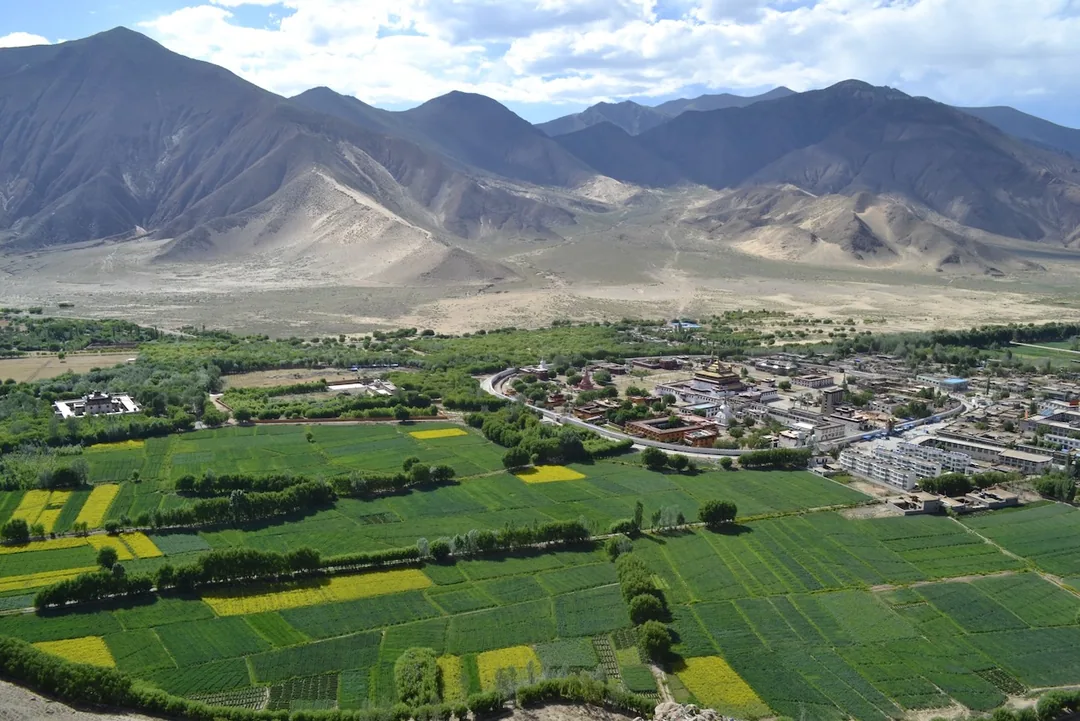
Jokhang Temple & Samye Monastery
Built in the 7th and 8th centuries respectively, Lhasa’s Jokhang anchors Tibetan devotional pilgrimage around the Jowo Śākyamuni, while Samye in Lhoka realizes an entire three-dimensional mandala in stone, timber, and earth.
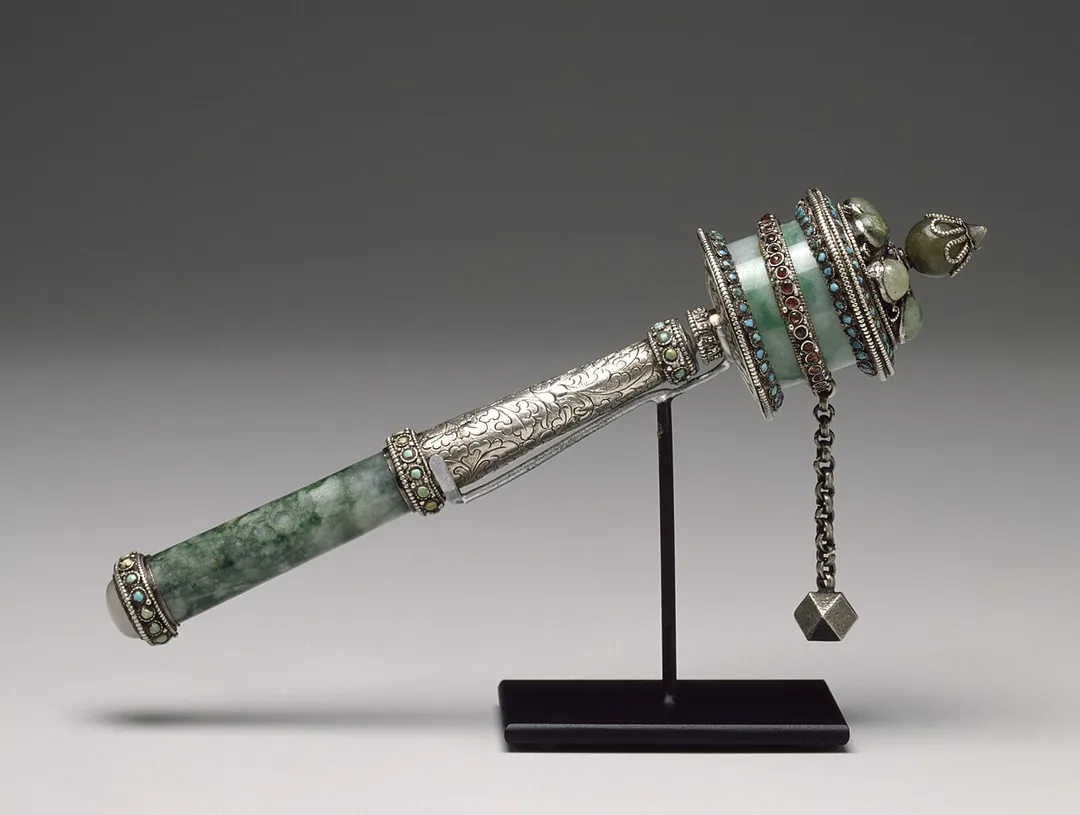
Tibetan Prayer Wheel (Mani Khorlo)
Far more than handheld brass cylinders, Tibetan prayer wheels harness mountain streams, high-pass wind, and rising butter-lamp heat so consecrated texts keep turning even while human bodies sleep.
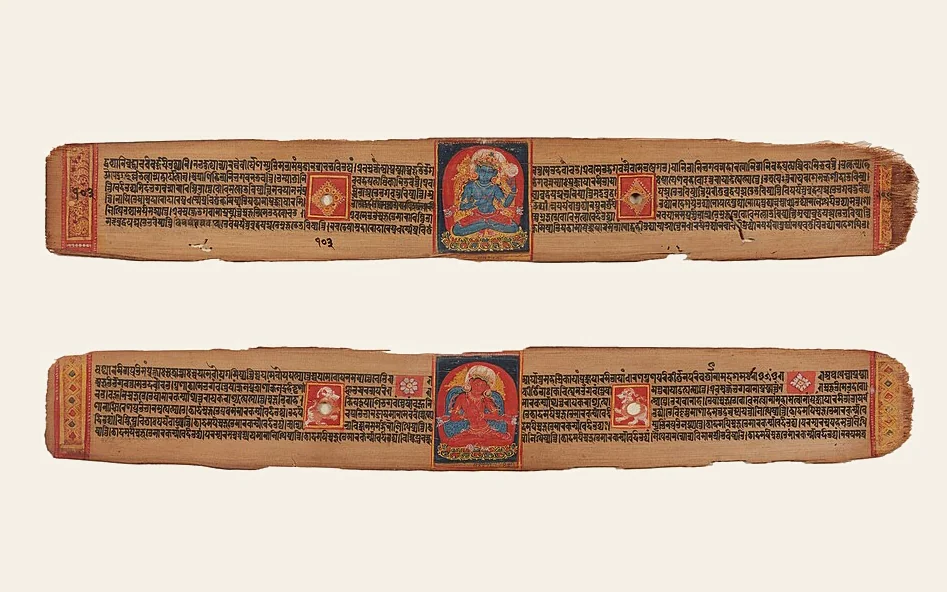
The Heart Sūtra (Sherab Nyingpo · 心经)
In 260 Chinese characters (and a slightly longer framed dialogue in the Tibetan Kangyur), Avalokiteśvara explains to Śāriputra why seeing emptiness—interdependent openness—dissolves fear.