The Khatag Ceremonial Scarf (ཁ་བཏགས།)
Origins, Five Colors & Exact Etiquette for Offering to Lamas, Elders & Friends
Offered at greetings, farewells, empowerments, weddings, and mountain passes, the Tibetan khatag (“face-cloth” of unstained silk) expresses sincere goodwill free of hidden agenda—with subtle folding and offering gestures that speak volumes.
The One Etiquette Detail Almost Every Visitor Misses
Before offering a khatag, fold it lengthwise in half so it forms two neat layers. Hold it in both palms with thumbs resting on the top edge—and make sure the open double edge faces toward the person you are honoring (while the closed crease faces yourself), symbolizing an open, generous heart holding nothing back.
Crucially, you do NOT drape a khatag directly around a high lama’s or monastic’s neck! Depending on whom you greet, Tibetan custom follows three graceful registers:
| Recipient / Setting | Correct Gesture | Traditional Response |
|---|---|---|
| High Lama / Monastic Teacher | Bow slightly and place folded khatag onto the table/throne before them (or into an attendant’s hands) | The lama blesses the same khatag and drapes it back over your bowed neck |
| Temple Statue / Stupa / Thangka | Lay gently across the altar rail, throne base, or stupa steps | Left cleanly as an offering of pure mind |
| Respected Elders | Bow slightly, raise khatag to brow level with both hands, offer into their outstretched hands | Accepted warmly in both hands |
| Peers, Friends & Departing Travelers | Drape gently over both shoulders around the back of their neck with palms joined (“Tashi Delek!”) | Mutual khatag exchange for safe journey |
How It Is Practiced in Living Tradition
Woven historically in Chengdu/Shu silk workshops for the Tea-Horse Road trade to Lhasa, often patterned with the Eight Auspicious Symbols or Five-Colored Sets (Nangod) mirroring the Five Buddha Families.
Common Questions & Clarifications
How should I store a blessed khatag received from a teacher?
When leaving the audience room, fold it neatly rather than tossing it in a bag bottom; at home, drape it cleanly above a thangka frame, shrine shelf, or clean high drawer.
Primary Sources & Further Reading
- Tibetan Library of Works and Archives (LTWA), Customs and Etiquette of Traditional Tibet
Connected in the Mandala Graph
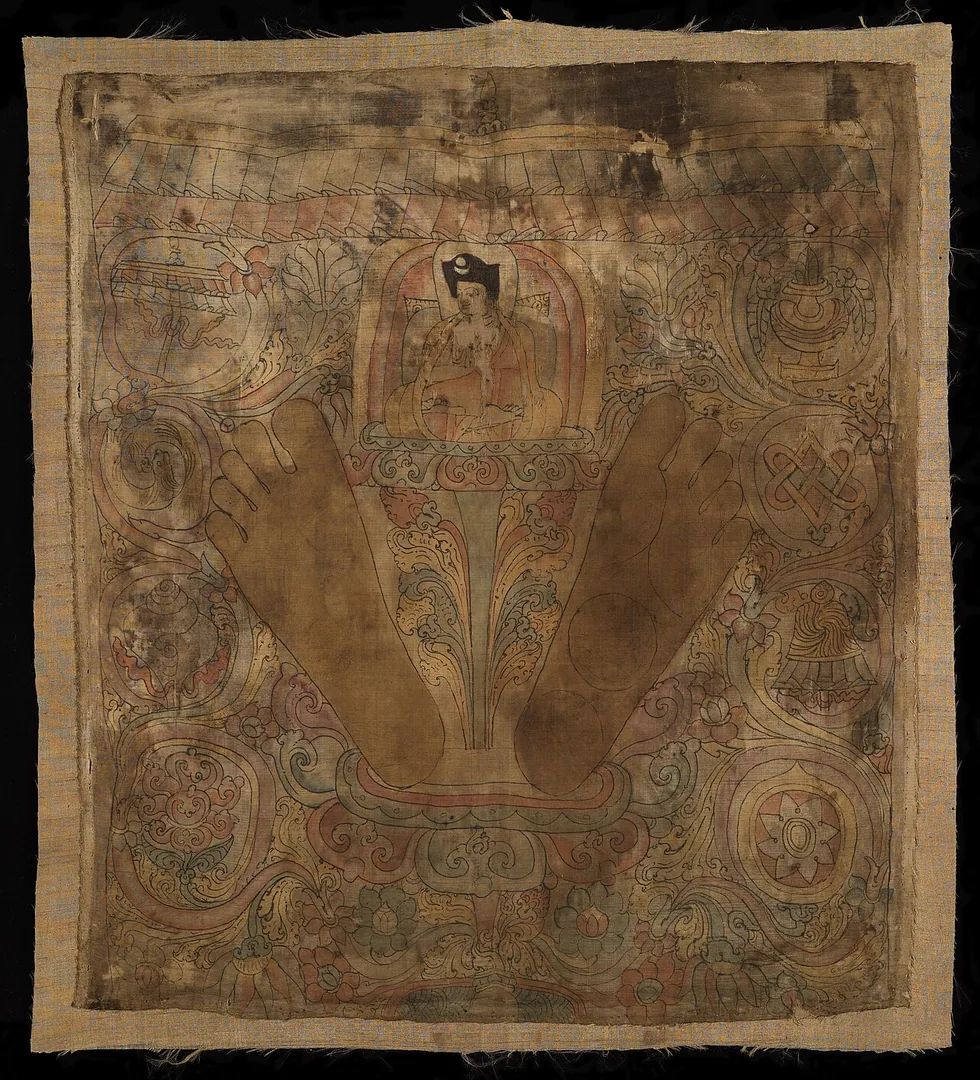
The Eight Auspicious Symbols (Ashtamangala)
Originally royal coronation offerings in ancient India and reinterpreted as attributes of the Buddha’s awakened body, speech, and mind, these eight emblems form the foundational grammar of Tibetan visual design.
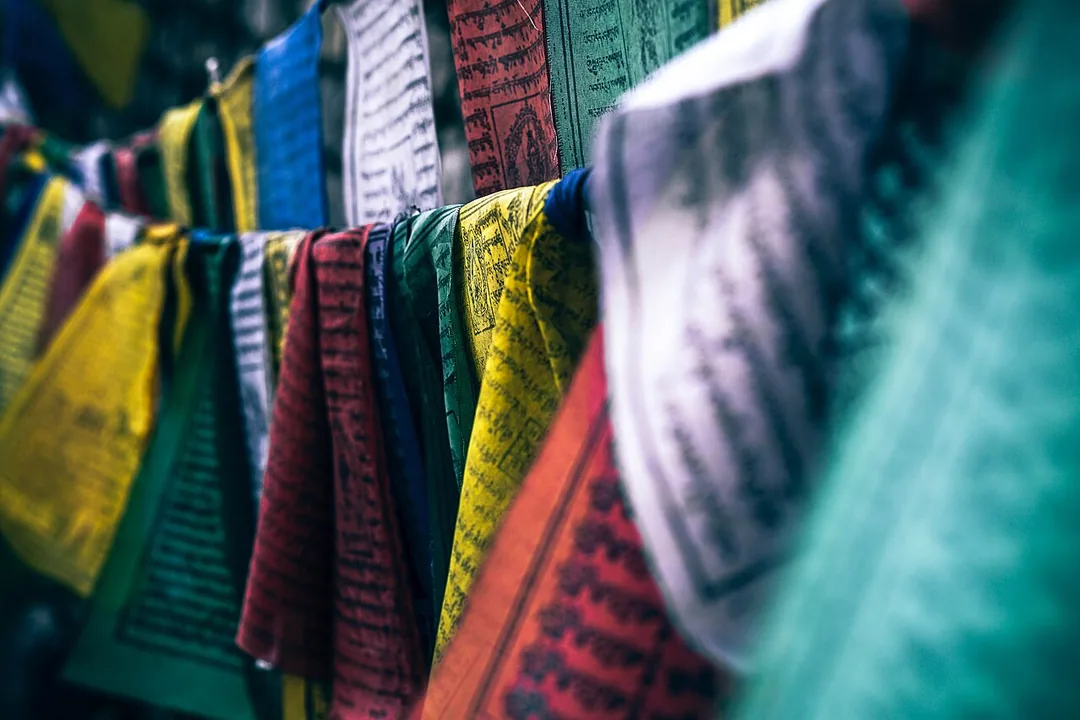
Five-Element Prayer Flags (Lungta · རླུང་རྟ།)
Literally “Wind Horse” (rlung-rta), five-colored cloth banners strung across Himalayan passes arrange the five natural elements in strict sequence so mountain wind carries auspiciousness across the valley.
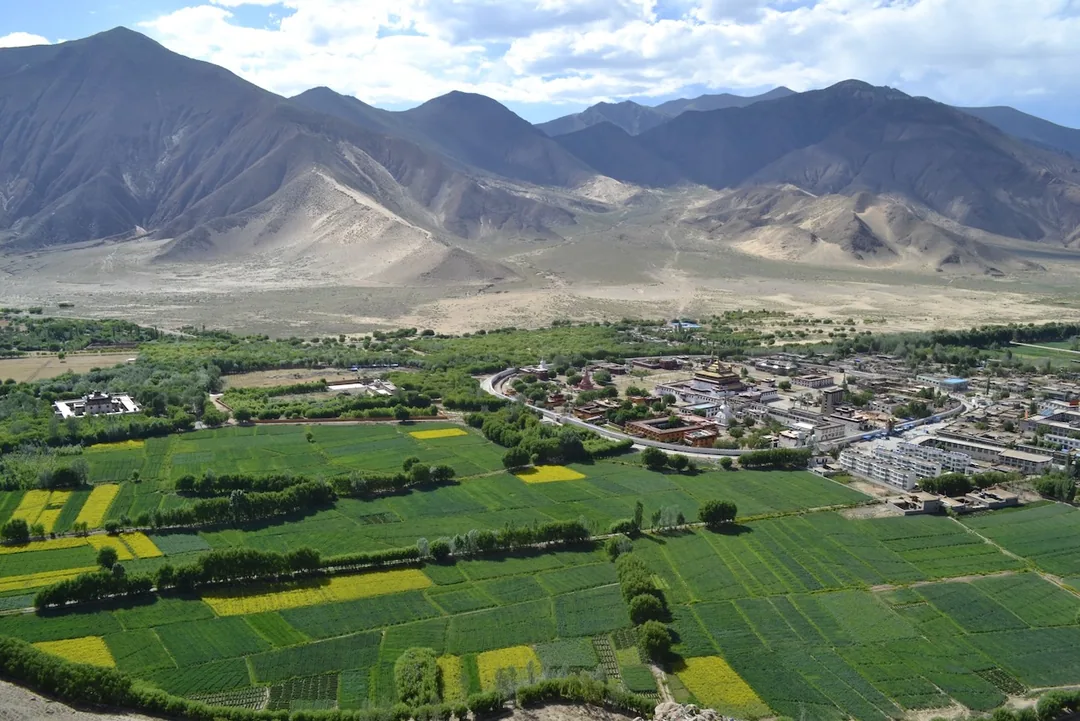
Jokhang Temple & Samye Monastery
Built in the 7th and 8th centuries respectively, Lhasa’s Jokhang anchors Tibetan devotional pilgrimage around the Jowo Śākyamuni, while Samye in Lhoka realizes an entire three-dimensional mandala in stone, timber, and earth.