Bardo: The Six In-Between States
Beyond Ghost Stories: Transitions in Waking, Dreaming, Living & Dying
Literally “interval between two things” (bar-do), the famous Tibetan Book of the Dead (Bardo Thödol) maps not only death and rebirth, but six everyday transitional spaces—starting with this waking moment.
Not Just After Death: Every Uncertain Gap Is a Bardo
Contemporary teachers like Mingyur Rinpoche and Dzongsar Khyentse Rinpoche point out that bar-do describes any threshold where old ground has dissolved and new ground has not yet solidified: the gap between two thoughts, falling asleep into a dream, losing a job, waiting outside an operating room, or mourning someone who has died.
In the Bardo Thödol, fierce and peaceful visions appearing in the interval are explicitly identified as projections of one’s own mind—“like recognizing a lion in a dream as your own dream.” The entire art of navigating bardo, whether in life transitions or at the end of life, is recognizing projections without panic.
| Bardo | Tibetan (Wylie) | Span | Contemplative Practice |
|---|---|---|---|
| 1. Bardo of This Life | skye gnas bar do | Birth until onset of final illness | Hearing, reflection & recognizing habits while awake |
| 2. Bardo of Dream | rmi lam bar do | Falling asleep until waking | Lucid dream yoga: seeing projections as non-solid |
| 3. Bardo of Meditation | bsam gtan bar do | Entering until rising from samādhi | Resting in uncontrived clarity without clinging to bliss |
| 4. Painful Bardo of Dying | ’chi kha’i bar do | Dissolution of elements to ground luminosity | Releasing grasping; resting in Mother-Child Clear Light |
| 5. Luminous Bardo of Dharmatā | chos nyid bar do | Spontaneous peaceful & wrathful mandala display | Recognizing sound, light & rays as one’s own nature |
| 6. Karmic Bardo of Becoming | srid pa bar do | Karmic wind seeking next rebirth (up to 49 days) | Pure perception, Amitābha/Chenrezig prayer & ethical calm |
How It Is Practiced in Living Tradition
For forty-nine days (seven weeks) after a bereavement, Tibetan families light butter lamps, recite Amitābha and Chenrezig prayers, and dedicate merit quietly so both the departed and the grieving household find peace.
Common Questions & Clarifications
Why did “Tibetan Book of the Dead” get that dramatic English title?
In 1927, Oxford editor Walter Evans-Wentz modeled his English title after the famous Egyptian Book of the Dead to attract Western readers—even though the Tibetan original emphasizes “Liberation Through Hearing.”
Primary Sources & Further Reading
- Karma Lingpa (14th c.), The Tibetan Book of the Dead, trans. Gyurme Dorje (Penguin Classics)
Connected in the Mandala Graph
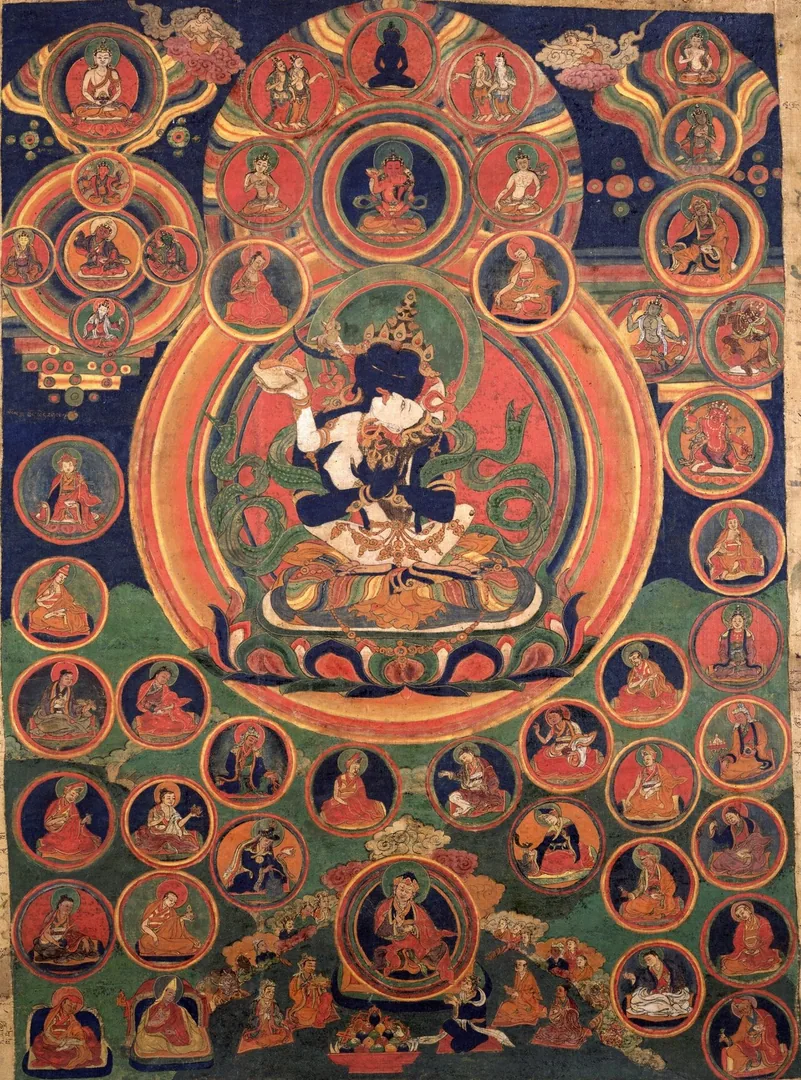
Padmasambhava (Guru Rinpoche)
Invited from Oddiyāna and Nālandā to Tibet by King Trisong Detsen in the 8th century, Padmasambhava (“Lotus-Born”) consecrated Samye Monastery and harmonized Himalayan indigenous spirits with Buddhist Dharma.
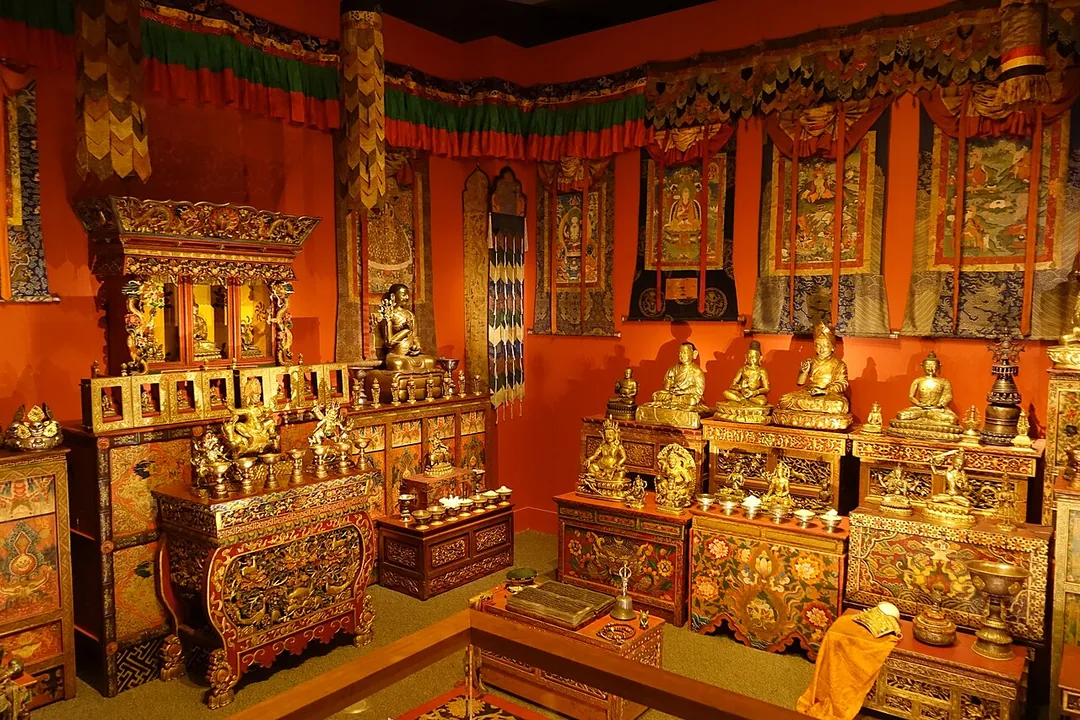
Dedication of Merit (Bsngo-ba · 回向)
No Tibetan contemplation, sutra reading, or prayer-wheel turn ends abruptly; it concludes with bsngo-ba (“turning toward”)—deliberately widening a private wish so everyone walking the same hard road is included.
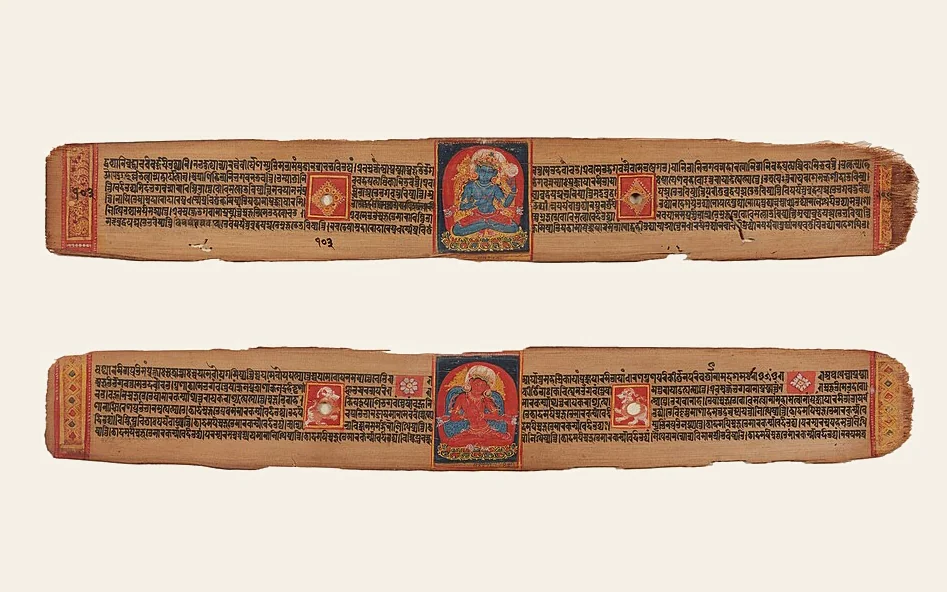
The Heart Sūtra (Sherab Nyingpo · 心经)
In 260 Chinese characters (and a slightly longer framed dialogue in the Tibetan Kangyur), Avalokiteśvara explains to Śāriputra why seeing emptiness—interdependent openness—dissolves fear.
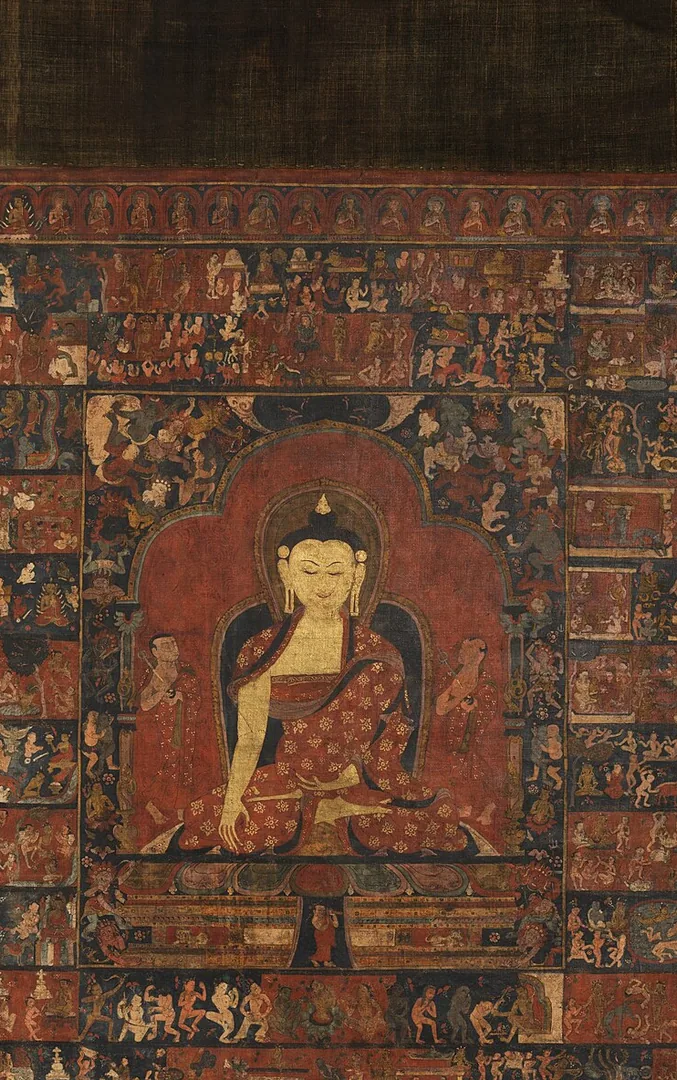
Karma & Interdependence: Why It Is Never Fatalism
In Sanskrit and Tibetan (las), karma literally means “action,” never “predestined fate.” While past choices shape today’s conditions, how one responds right now writes the next cause.